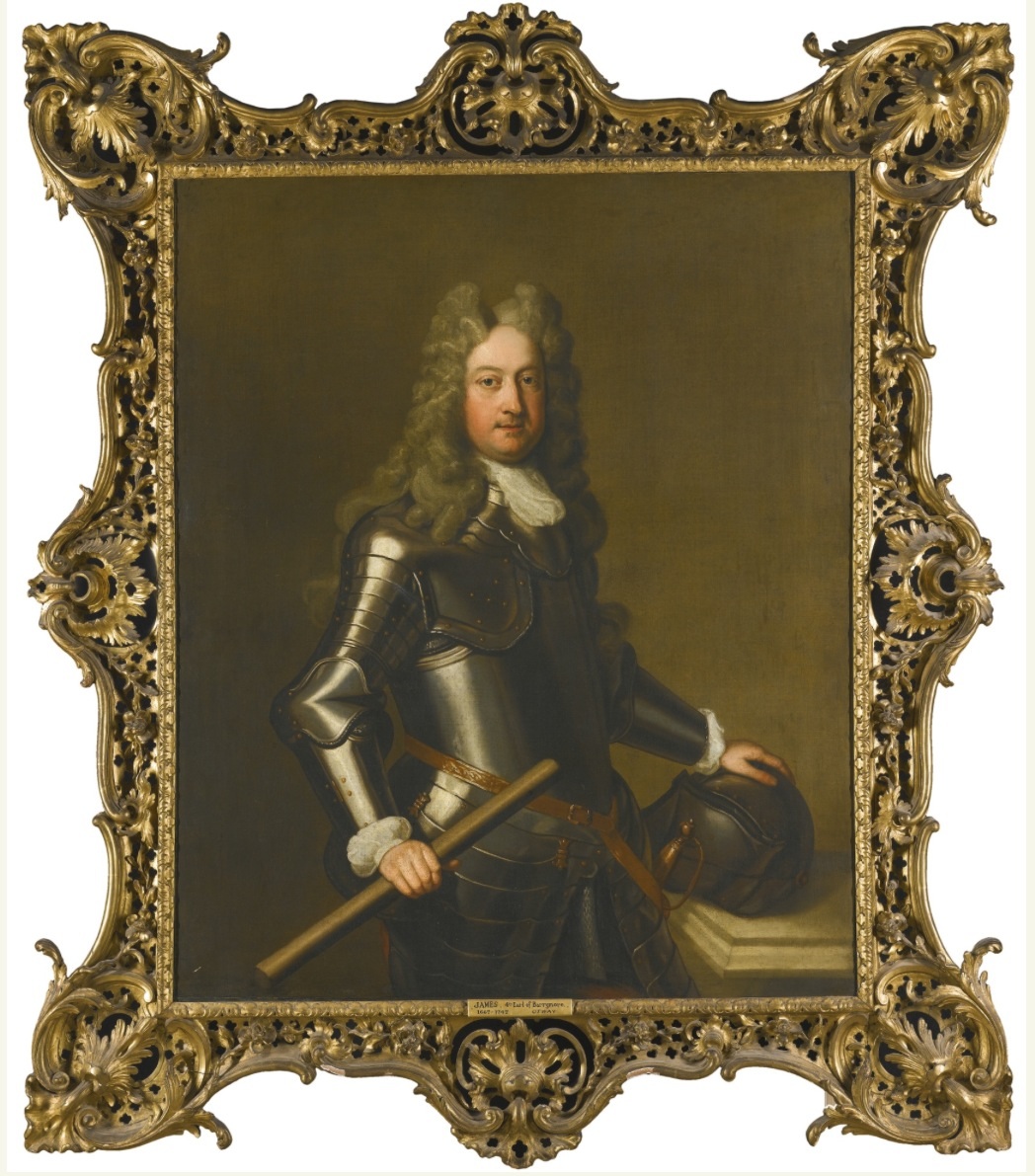
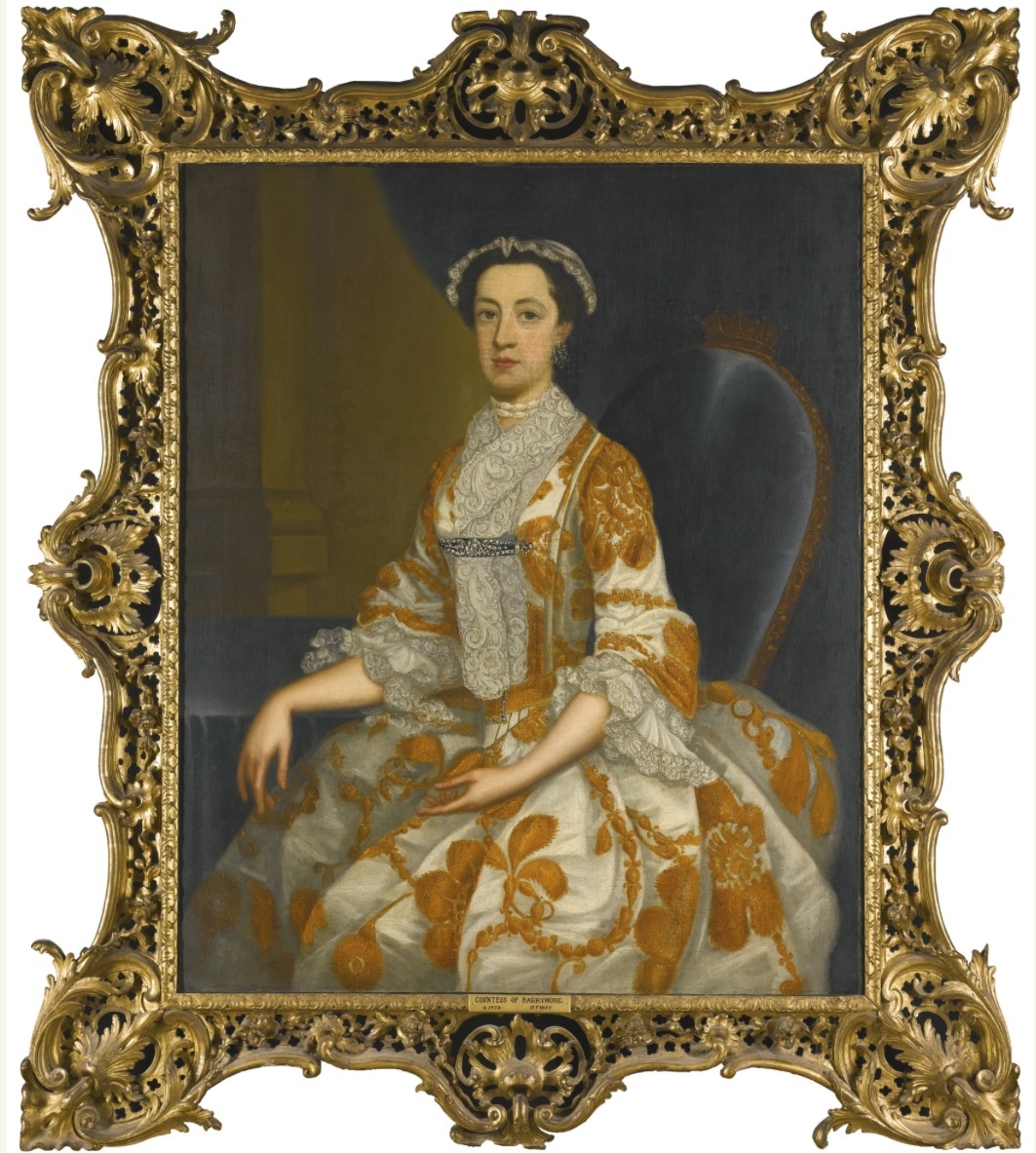
These two portraits of James Barry, fourth Earl of Barrymore and his third wife Lady Anne Chichester are being offered for sale today at Sotheby’s in London. The Barrys were an old, but relatively impoverished Irish family although their finances were greatly improved by the fourth Earl making a succession of advantageous marriages. In the later 18th century they also became noted for their eccentricity: the seventh (and penultimate) Earl who died at the age of 23 in 1793 was one of the period’s most infamous rakes, commonly known as ‘Hellgate.’ (His sister was nicknamed ‘Billingsgate’ owing to her dreadful language, while his younger brothers were respectively called ‘Cripplegate’ due to a club foot and ‘Newgate’ since, as it was a women’s prison, he had never spent time there; in 1791 James Gillray produced a splendid caricature of the three men mocking their various distinctive characteristics). Their rackety lives were not dissimilar from that of another man with the same surname, Redmond Barry, eponymous hero of Thackeray’s 1844 picaresque novel The Luck of Barry Lyndon, and like him they all ended badly.
Meanwhile descendants of the fourth Earl’s fourth son became Smith Barrys and inherited a large estate on Fota Island, County Cork at the centre of which stood what was originally a hunting lodge. This building was enlarged and embellished c.1820 to the designs of Sir Richard Morrison and his son William Vitruvius Morrison. In their charming George II rococo fames, the two portraits (that above judged to be from the studio of Sir Godfrey Kneller, that below attributed to Philip Hussey) formerly hung in Fota House which today is managed by the Irish Heritage Trust and open to the public. How wonderful it would be if this tale concluded better than did that of the Barrys, and after today the portraits once more returned to the house…

Update: on Tuesday, 24th September the two portraits sold for ₤60,000 and ₤43,750 respectively.