A Reflection of the Past

IMG_2997

An engraving showing a cross-section of the interior of the Irish House of Commons in Dublin. Work on this, part of the world’s first purpose-built parliament, began in 1729 to designs by Sir Edward Lovett Pearce. The engraving was made in 1767 by the artist Peter Mazell after a drawing by architect Rowland Omer. It is a valuable source of information about how the House of Commons looked since the original domed chamber was destroyed by fire in 1792 and, for the last years of the Irish parliament’s life prior to the 1800 Act of Union, replaced by a simpler structure. The engraving hangs on the stairs of Furness, County Kildare (the upper landing window can be seen reflected in the glass): appropriate because in the second half of the 18th century the house was owned by Richard Nevill who, like his father and grandfather before him, sat as an M.P. in the Irish House of Commons.

Down Memory Lane

Scan0006

An early 20th century house party photographed on the steps of Moore Abbey, County Kildare. On the site of a mediaeval abbey and from c.1699 home to successive generations of the Moore family, Earls (and for a period Marquesses) of Drogheda, the building is significant for being one of the earliest examples of the gothick style in Ireland: at the request of the sixth earl, in 1767 Christopher Myers ‘beautifully repaired the ancient abbey by enlarging the windows, placing a new roof, and recompartitioning the whole; preserving however the external walls and original form, except somewhat lengthening the eastern front.’ (Anthologia Hibernica III, February 1794) It underwent further alterations in the 19th century before being sold by the Moores in 1945 to the Sisters of Charity and subjected to much redevelopment. In this group photograph taken with the garden front as backdrop, the moustachioed gentleman sitting on the steps and holding a dog is the dealer and art collector Sir Hugh Lane. Next Tuesday, April 29th at 10.30 am I shall be giving a talk on Lane at the National Gallery of Ireland, focussing on his too-brief tenure as Director of that institution. Admission is free.

Small but Perfectly Formed

IMG_3030

A cottage in Johnstown, County Kildare. This is one in a series of two terraces that runs along a side of the village’s main street, once a busy thoroughfare since it lay on the main route running from Dublin to Cork and Limerick; since the advent of the nearby N7 it has become much quieter. These single-storey, three bay cottages date from c.1880 and were therefore presumably built by Dermot Bourke, seventh Earl of Mayo who was then the local landlord and lived close by in Palmerstown. Their distinguishing feature are the gothic double-windows to either side of the open porch. Thankfully the owners have resisted the urge to modernise the buildings and thereby destroy the charm of their uniformity.

One of a Pear

IMG_7130

A chimneypiece in the entrance hall of Furness, County Kildare. The name of 18th century amateur architect Francis Bindon has occurred here several times before (most recently When New Becomes Old, March 24th), and this is another house attributed to him. The core of the building is believed to date from c.1730, and some of the decoration from that period survives, not least this chimneypiece which is carved from pearwood, a material often used for wind instruments and of dark hue: in this instance, it has been painted to imitate stone.
More on Furness to follow in the coming weeks.

Head to Head

IMG_4119

When Thomas Conolly married Lady Louisa Lennox in 1758, Castletown, County Kildare which had been built by his great-uncle William from c.1722 onwards still lacked a main staircase. The young couple undertook to address this want and within a year of their wedding seem to have employed the Swiss-born stuccadore Filippo Lafranchini to work on the plasterwork decoration. The result, as Joseph McDonnell has written, ‘evokes, like little else in the country, the spirit and grandeur of the grotesque decoration of Imperial Roman interiors…’ Yet in the midst of the grandeur one also finds domesticity, not least in the profile portraits inserted by Franchini into the stairhall walls and believed to represent members of the Conolly and Lennox families. This is especially true when one reaches the landing and encounters a pair of heads facing each other across a now-empty stucco frame. These are depictions of Tom and Louisa who together did so much to enhance the beauty of Castletown.

IMG_4117

All Aglow

IMG_4202

After Monday’s rather dispiriting report on the plight of Dublin’s last Georgian private residence Aldborough House (which generated the greatest traffic yet on this site: thank you to everyone who helped spread the word, if only officialdom would display as much concern), a property which has been taken into state care, with obvious benefits. At Castletown, County Kildare two views of the quadrant leading to the stable wing. Helped by the play of light on warm, ochre-hued render the building looks particularly Italianate here with the influence of Florentine architect Alessandro Galilei, who is deemed responsible for producing the house’s original design in the early 1720s, most apparent.

IMG_4210

And the Winner is…

20131013-110025.jpg

I am delighted to advise that last night The Irish Aesthete was declared Ireland’s Best Arts & Culture Blog 2013. Many thanks to those awarding the titles and also to all readers whose encouragement and interest are always so appreciated.
The accompanying illustration depicts the Conolly Folly, designed by Richard Castle and built at the request of the widowed Katherine Conolly in order to provide relief to the local poor during he famine of 1740-41. It is, of course, also the symbol of the Irish Georgian Society.

Splendours and Follies

image

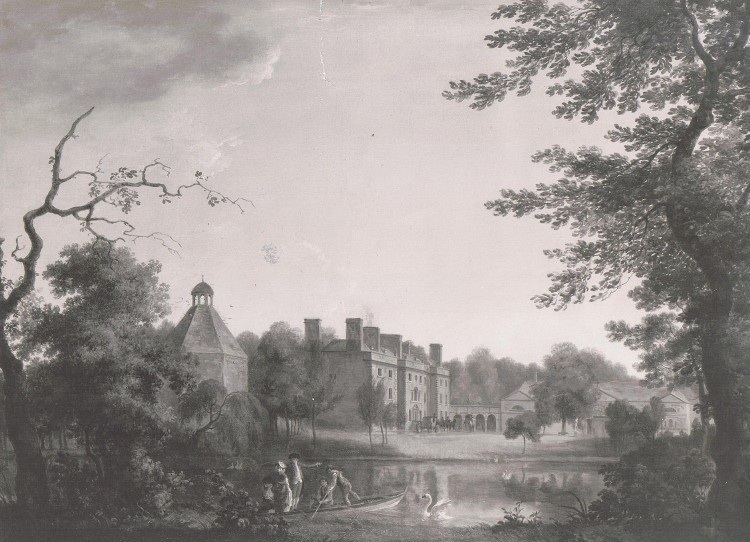
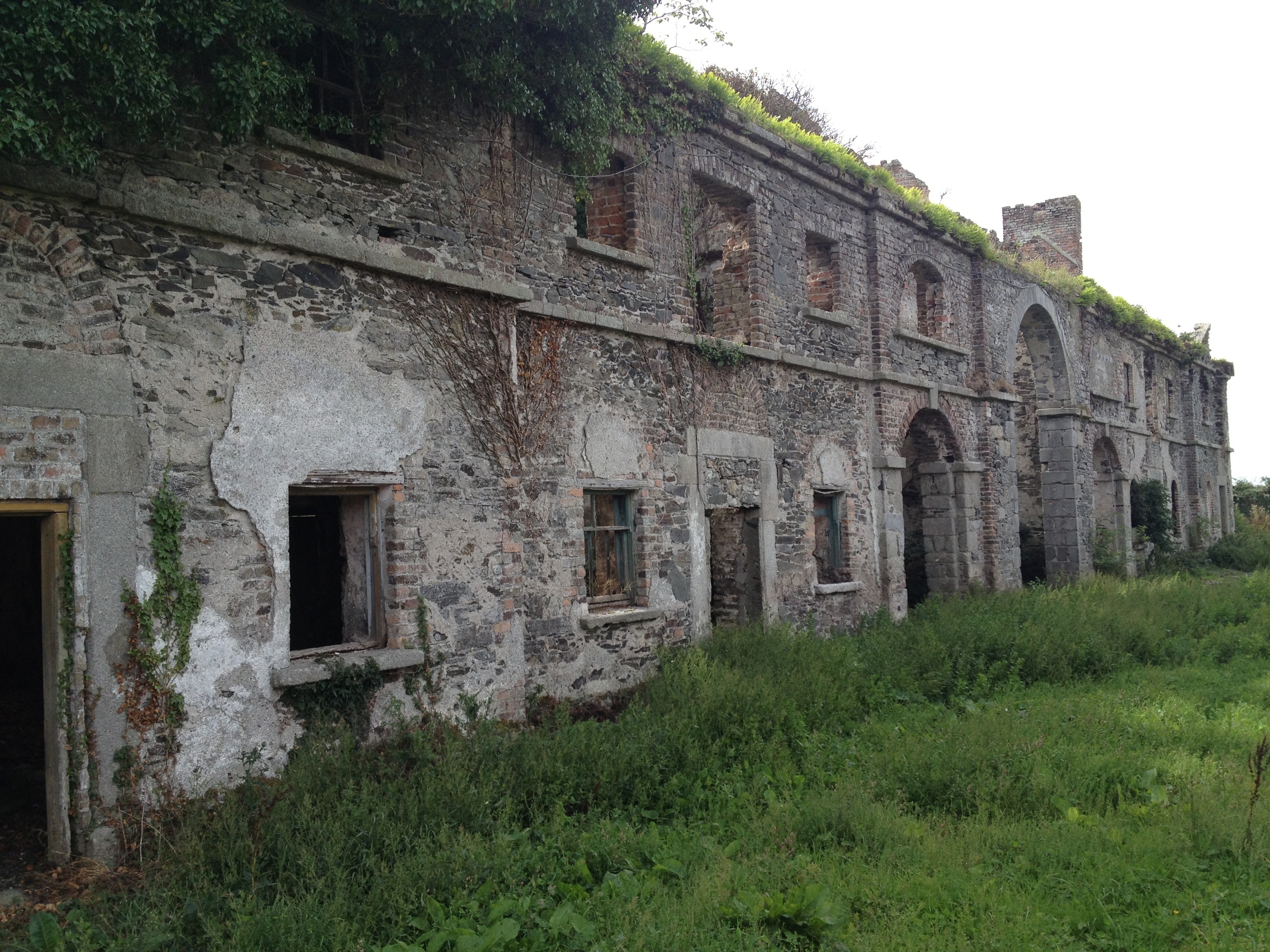
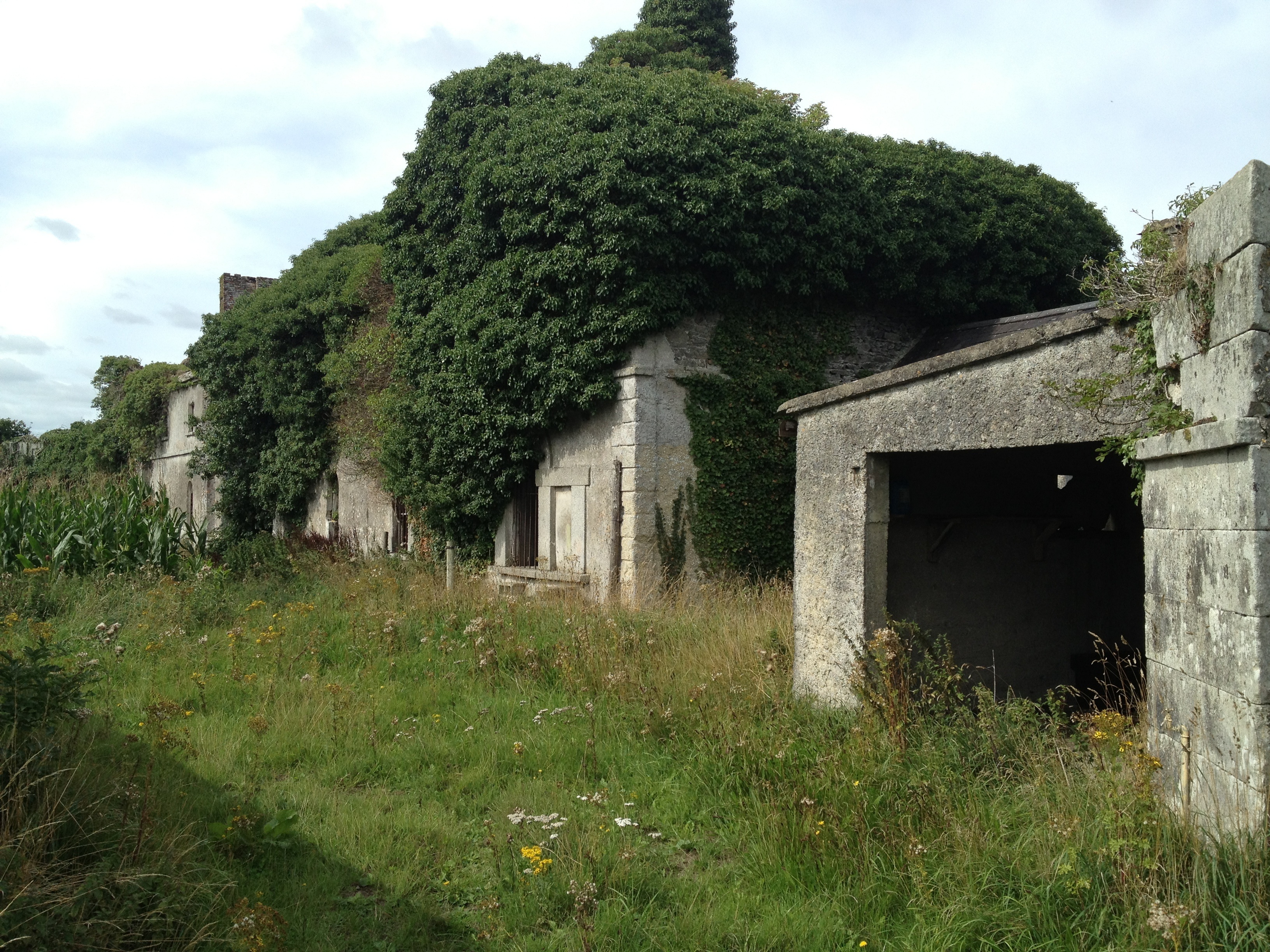
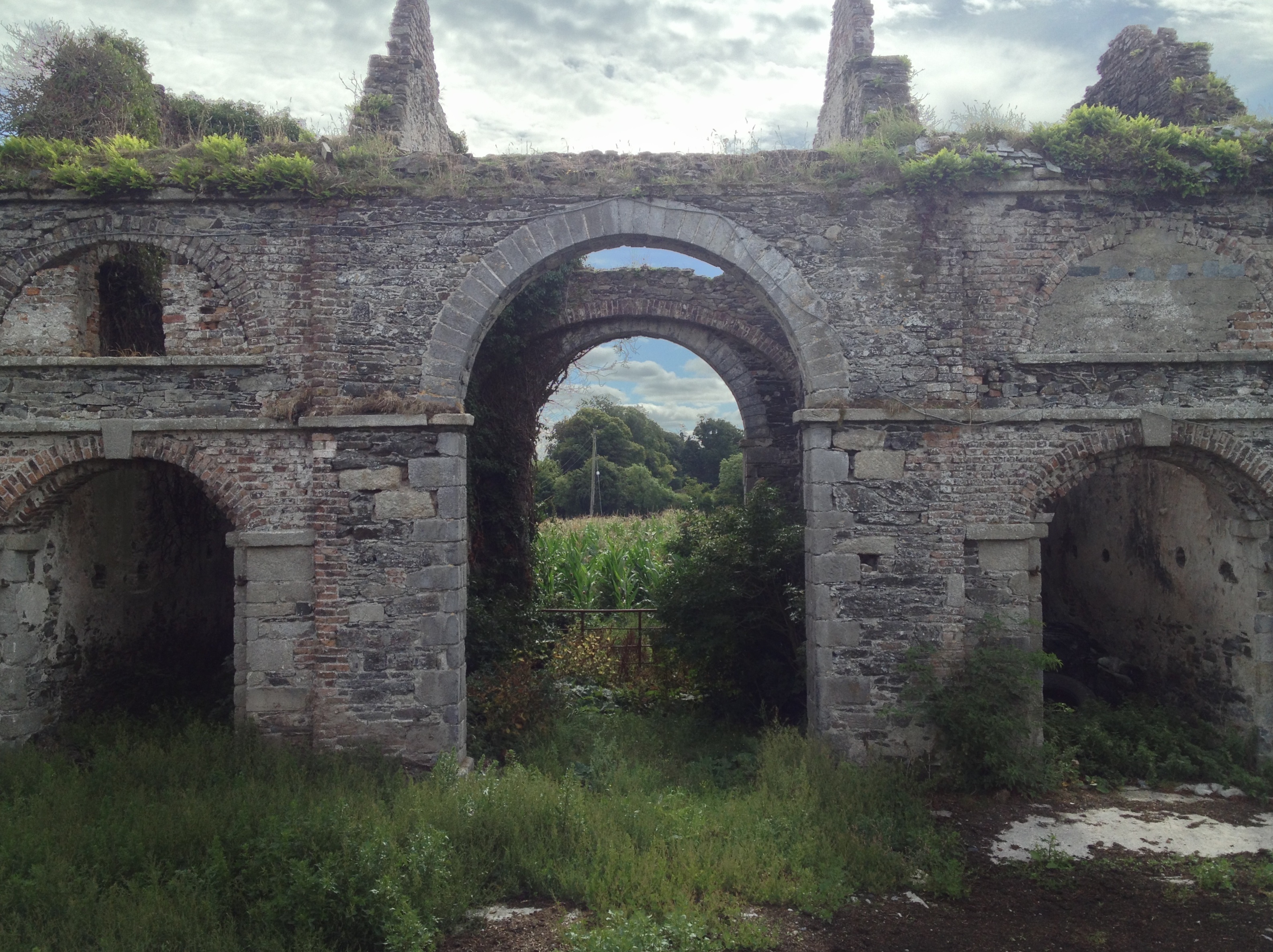
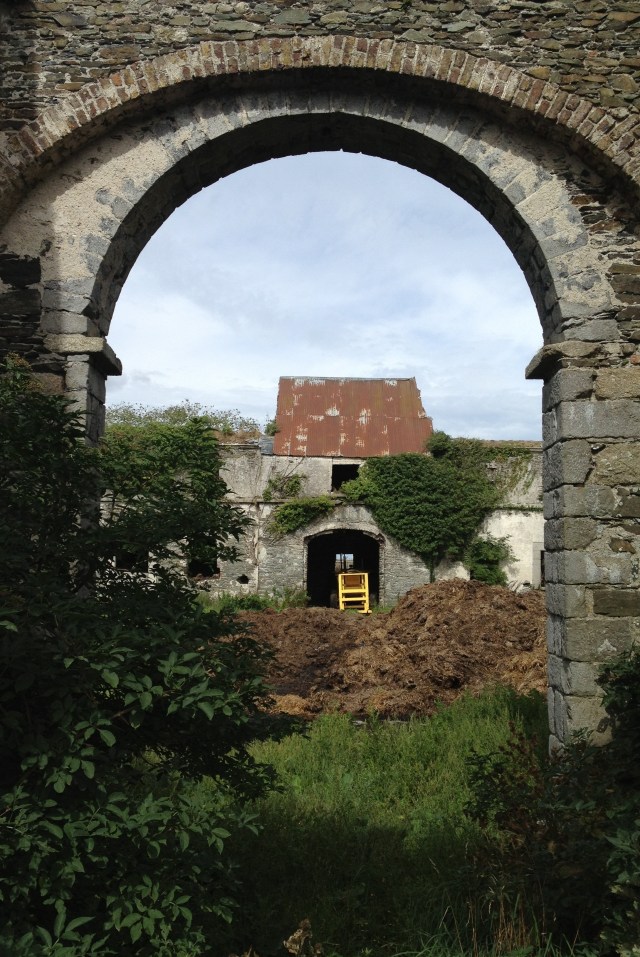
Driving along a minor road in south County Kildare, one’s eye is caught by the sight of ruins rising high above a field of maize. These roofless blocks were once the stables attached to and now all that remain of Belan, seat of the Stratford family, Earls of Aldborough. That Belan was once rather splendid cannot be doubted: in 1786 George Powell who was related to the family through marriage, wrote ‘The Mansion House of Belan is most Magnificent as is also the Demesne thereto, containing 12 porters Lodges Erected by the present Earl at the six Approaches, who hath also added thereto a Fruitery, Green, Hot and Tea Houses, a Square of Offices, a Chappel & a Theatre & Expended near £8000 on the Estate…’
Almost all of this is now gone, and the only evidence of Belan’s former resplendence are the aforementioned stables, the shell of an octagonal tea house, a few obelisks and a small domed temple. For once, however, decline and fall occurred not during the last century but earlier and while members of the Stratford family were still, if only nominally, great landowners.

image

image

Originally from Warwickshire, the Stratfords seem to have settled in Ireland about the time of Charles II’s restoration in 1660. Within a few years Robert Stratford had acquired land around Baltinglass, County Wicklow and thereafter their rise was assured, not least through the ability to return two members to the Irish House of Commons. By 1690 they already owned property at Belan, since in July of that year Edward Stratford found himself successively entertaining the two rival Kings James and William, his personal sympathies lying with the latter. As William ultimately proved the victor, the Stratfords’ political and financial status was further strengthened. Edward Stratford’s third son John (who was made first Earl of Aldborough shortly before he died in 1777) inherited Belan around 1740 and soon afterwards commenced either to build anew or to enlarge his residence there. The architects for this property are held to have been Richard Castle and Francis Bindon.
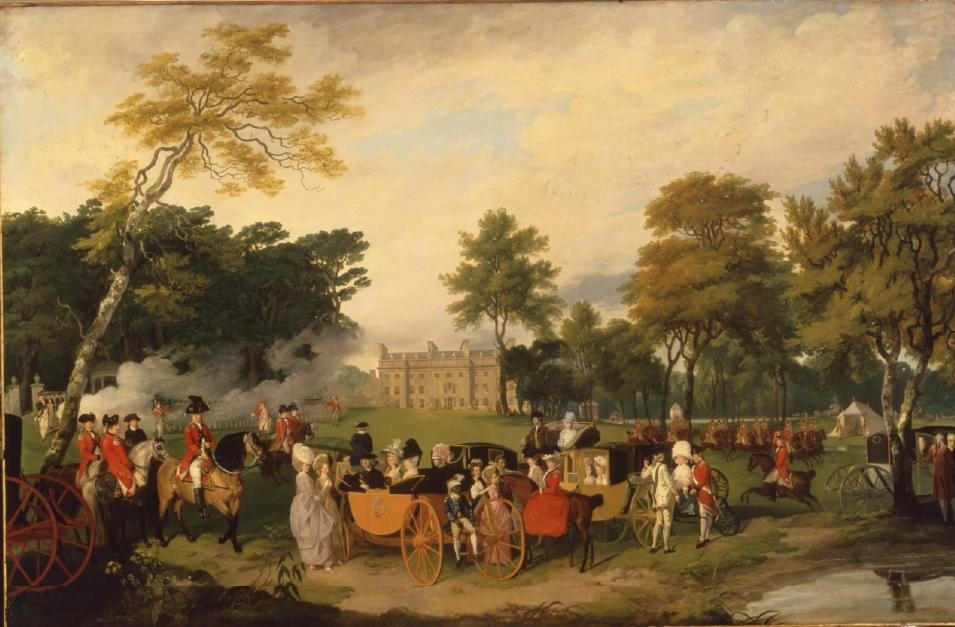
We cannot say for certain what the house looked like since paintings in which it features by William Ashford (from which the engraving at the top of this piece is taken) and Francis Wheatley (see the very last picture, showing the second Earl reviewing the Aldborough Volunteers at Belan) display differences that suggest to some extent they reflected the owner’s aspirations for the building rather than its actual appearance. Nevertheless we do know the main block, large and plain, was 120 feet long and 44 feet deep, of three storeys with a gabled attic and projecting end bays. To its right were the pair of parallel stable blocks that still survive (albeit in ruinous state), the first of them linked to the house by a curved portico.

image

image

Here are some extracts from the delightful reminiscences of Georgina Sartoris (née Lyster) published in the Journal of the Kildare Archaeological Society in January 1908 during which she recalls visiting Belan as a little girl in the 1830s:…’a fine stone mansion, a magnificent flight of granite steps, with two stone vases at the top, led to the entrance door. Though uninhabited for fully ten years, the house was in perfect repair, no trace of damp or decay and to all appearance, might have been lived in a week before. I have not a distinct recollection of all the rooms; but the dining room is fresh in my memory, also the saloon, and his late lordship’s bedroom. The dining room, not very large was panelled, family portraits being set in the panelling. I was too young to care much about them, but feel sure they were all of men. Had there been lovely ladies or pretty children amongst them, I should have remembered them. The saloon was lovely, with a polished floor of narrow oak boards…. on one occasion (why I know not) my sister and myself occupied his late lordship’s bedroom, very comfortable it was of moderate size, the fireplace like those of the other bedrooms surrounded with the prettiest tiles I have ever seen, the ground white with pink and blue landscapes, figures and flowers on it; a fine four post mahogany bedstead, Indian chintz curtains, some Chippendale chairs, and a wardrobe are all I remember of its furniture…The grounds of Belan were very beautiful, and of considerable extent. On one side though not seen from the house, were the celebrated fish ponds (not that in my time there was a fish in them), large and deep, the trees around them giving them a secluded and fascinating look. Here, on hot summers’ evenings, we used to sit and watch the dragon flies. I had never seen dragonflies before, and could not associate them with flies – I could only think of them as tiny winged spirits, whispering messages from afar to the reeds and irises which grew at the water’s edge. The gardens were at some distance from the house, and were large and walled in. I do not think I was often in them. What struck me most was the enormous quantity of lily of the valley. I have never seen anything like it elsewhere and its scent lingers with me still…’

image

image

The fall of the house of Stratford was as spectacular as its rise. The second Earl, a man of great energy, not only greatly improved the house and demesne at Belan but was also responsible for developing Stratford Place in London and for building the immense (and now sadly dilapidated) Aldborough House in Dublin in the years preceding his death in 1801. Although twice married, he had no children and so a younger brother inherited. The last member of the family to live at Belan, he was likewise childless meaning everything passed to another brother, the fourth Earl who preferred to occupy a house elsewhere on the estate, Stratford Lodge (subsequently destroyed by fire) and who abandoned Belan to an agent more interested in helping himself than in looking after his employer’s property. The next heir, Mason Gerard Stratford, fifth Earl was a hopeless spendthrift who, when short of funds, would visit London money lenders with a gun and threaten to shoot himself if they did not give him cash. He was also a bigamist, possibly even a trigamist, and on his death the eldest son from one of these marriages had trouble claiming a right to the title and what remained of the family property. Sixth and final Earl of Aldborough, he died without heirs in 1875.
By that date Belan was already in poor condition and some thirty years later Mrs Sartoris, who remembered the house intact, could write that ‘Beautiful Belan lies in ruins, the wind blowing where it listheth, sighs over the desolate grounds and gardens once so beautiful, a herd lives in the yard, sole occupant of that once lovely demesne.’ As late as the 1940s the main walls of the house still stood, but this shell was subsequently swept away. Today only the remnants of the stables survive to remind us of what once stood on this site and to serve as a warning that nothing is eternal.

image

Remembrance of Lost Time

Carton - Fire buckets

The sad tale of what befell the Dukes of Leinster in the last century, the loss of the family estates and the scattering of their inheritance, has been told so often that it does not need to be repeated here. Heads of the FitzGerald family and once princely figures in Ireland, the Leinsters no longer have any presence here, and their main seat Carton, County Kildare has metamorphosed into just another golf resort and spa.
Over recent decades various FitzGerald heirlooms have come on the market, and next week more items will be sold by English auctioneers Cheffins of Cambridge. Some of the lots are significant: a series of family portraits executed in pastel by Hugh Douglas Hamilton; a set of George II mahogany and parcel gilt dining chairs; even Lord Edward FitzGerald’s ring, bequeathed on his deathbed to a favourite sister. Yet somehow the more poignant items are the commonplace ones such as the set of eight George III leather fire buckets shown above. Each painted with the ducal monogram and coronet, they would once have been kept at Carton but now, following the rest of the house’s original contents, are set to join a general dispersal. One ought not to become too sentimental about such matters, but still it is regrettable that these functional yet handsome mementoes of quotidian life in an Irish country house should be lost.
For more information on the Cheffins sale, see: http://auctions.cheffins.co.uk/asp/searchresults.asp?pg=1&ps=50&st=D&sale_no=F180913

Ignorance is Never Better than Knowledge

Ballitore 2

Earlier this week photographer James Fennell took a number of extraordinary pictures showing an old house at the entrance to the 18th century planned Quaker village of Ballitore, County Kildare being enveloped within a new structure; once the latter is complete, the old house will be demolished. The company responsible for this undertaking is Glanbia plc which grandiloquently describes itself as ‘a global nutritional solutions and cheese group’ and which on Wednesday announced a 13 per cent rise in revenue to €1.68 billion in the first half of 2013. Glanbia already has a plant in Ballitore and last year applied for planning permission to extend the premises, which involved the demolition of the house, referred to in the application as a ‘two storey office building’ thereby conveniently ignoring its history as part of a long-standing residential settlement.
Permission for this work to proceed was duly granted by Kildare County Council, after its conservation advisors advised that the structure had been so altered and refurbished that it ‘no longer retains any features of special significance’ and could accordingly ‘be deemed to be of little significance within the architectural heritage of Kildare.’ Leaving aside the fact that the local authority permitted those alterations and refurbishments to take place, the approval also ignored the house’s importance within the overall framework of the village of Ballitore, a unique collection of houses that are each part of a greater whole; damage one element and you damage the entire site and thereby irreparably alter its distinctive character. Glanbia is not some foreign entity (its origins lie in the Irish co-operative movement and it ought therefore to have a sense of community) so neither this organisation nor Kildare County Council can claim ignorance of the history of Ballitore. No doubt the inevitable economic arguments will be trotted out in justification for this act of cultural vandalism. Tourism is also an enormously important money-generating industry in Ireland: this is not Soviet Russia and tourists do not come here to look at factories. By assisting in the demolition of a fine old house and its replacement with a characterless monolith, the two bodies responsible will have inflicted damage on both the appearance of Ballitore and on the local economy.

Ballitore 3