A Good Fry


In his Dictionary of British 18th Century Painters, Ellis Waterhouse describes Thomas Frye (1710-62) as ‘one of the most original and least standardised portrait painters of his generation.’ Frye was born in Edenderry, County Offaly, a younger son of one John Fry whose father, born in Holland of English parents, appears to have settled in Ireland in the 17th century. Little is known of Frye’s training, although in their book on Ireland’s Painters, Anne Crookshank and the Knight of Glin note that his earliest signed work, dated 1732, ‘seems to have silvery echoes of James Latham’ so perhaps he spent time in the latter’s studio. Around this time, or even earlier, Frye left Ireland and by 1736 had settled in London where he was sufficiently well-known to be commissioned to paint the portrait of Frederick, Prince of Wales for the Company of Saddlers. While Frye specialised in portraiture, from the mid-1740s onwards, he became involved in the manufacture of fine porcelain and from around 1747 onwards he managed a factory producing this ware which he had co-founded in Bow on the outskirts of London. Due to ill-health, he had to retire from the business in 1759 but then concentrated on creating mezzotints, in which medium he again displayed both imagination and  innovation. Today Frye is best-remembered for two series of mezzotints issued in the years immediately prior to his death; these show a fondness for dramatic chiaroscuro and what has been called a ‘Gothic intensity.’ As is widely known, these pictures would have a considerable influence on Joseph Wright of Derby and other later artists. Published in 1760 and 1761, the two series are all of heads, almost life-size, and although the sitters were unnamed, they are believed to have been taken from life: Strickland, in his Dictionary of Irish Artists (1913) reports that Frye had difficulty persuading ladies to sit for these pictures, as they were uncertain of the company in which their portraits would appear.  Strickland also recorded that having been very corpulent and prone to gout, Frye adopted a spare diet, in consequence of which he ‘fell into consumption’ and died in April 1762. 


For a long time, two of Thomas Frye’s portraits hung in a house called Frybrook, in Boyle, County Roscommon. This property dates from some time after 1742 when the Edenderry merchant Henry Fry (older brother of the aforementioned Thomas Frye) was invited to move to Boyle by James King, fourth Baron Kingston whose family owned the town and, when there, lived in King House. As with many other large landowners of the time, King was keen to improve the economic circumstances of his estate, and thereby increase his own income, so Fry was expected not just to settle in Boyle but also to establish a weaving business there. The Frys appear to have prospered; in  1835, Henry Fry of Frybrook and his relative, also called Henry Fry, of another house in the vicinity, Fairyhill, were founding members of the Boyle branch of the Agricultural and Commercial Bank (although this venture failed nationally after only a couple of years). Successive generations of Frys continued to live in the family home until the 1980s when, for the first time, it was offered for sale. Thereafter the house somehow survived but slowly fell into decline and appeared at risk of being lost forever until purchased by the present owners five years ago. 


Frybrook is located in the centre of Boyle, on land immediately north of the river (also called Boyle) with its gate lodge – now a cafe – standing immediately beside the town’s main bridge. Found at the end of a short drive, the house is of five bays and three storeys, the absence of a basement explained by the proximity of the river, with its threat of flooding. Frybrook is rather more grand than the usual urban residence, its facade suggesting a country house, with a pedimented limestone doorcase with sidelights below a Venetian window above which is an oculus window. Inside, the ground floor has an entrance hall with main staircase to the rear, and reception rooms to the right and left; behind these, and down a few steps are the former servants’ quarters. The stairs climb to the first floor where additional large reception rooms, with fine cornices and handsome architraves above the windows, can be found; originally the main bedrooms were on the floor above. On the way up to this level, unusually the return is semi-elliptical with a door in its centre giving access to the service areas to the rear of the house. As mentioned, Frybrook was at risk of being lost before being bought by the present owners five years ago. Since acquiring the building, they have undertaken extensive restoration and plan to open Frybrook as a guest house in 2024. 

Fit for a King

8

Boyle, County Roscommon is a provincial market town, seemingly indistinguishable from many others throughout the country. Once of importance as a centre of trade for the locality, it now appears to have slipped into irreversible decline. Somewhere, in other words, to by-pass except that rising in the middle of the town and towering over all other buildings is an immense early 18th century townhouse.
Known as King House, the name taken from the family responsible for its construction, this marvellous edifice is reminiscent of the seigneurial chateaux one finds in regional French urban centres, evidence of a powerful dynasty determined to wield and enforce authority. The family association with Boyle was due to John King (d.1637), an English adventurer who had come to Ireland with Sir Richard Bingham, the royal-appointed Governor of Connacht. In 1603 the Boyle estate running to over 4,000 acres and originally developed by the Cistercian monks whose abbey had since been dissolved, was leased to King and another soldier but in 1617 the former was granted the entire property as a reward for ‘reducing the Irish to obedience.’ One of his children Edward King, a fellow of Christ’s College, Cambridge drowned while on a boat sailing to Ireland in August 1637 and was soon eulogised by his friend John Milton in the poem Lycidas. However, Sir John had six sons and thereafter successive generations of the family increased its holdings until the Kings became the area’s most prominent land owner.

5

6

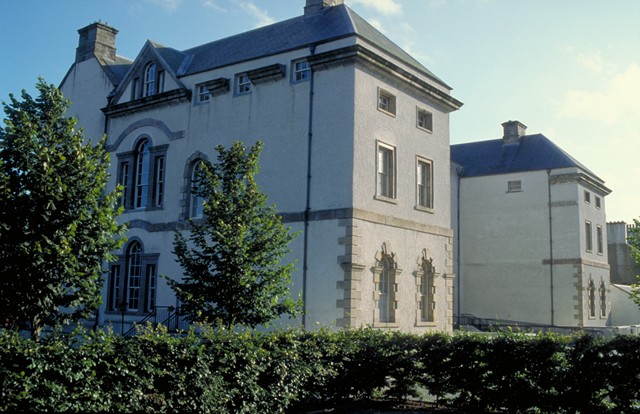
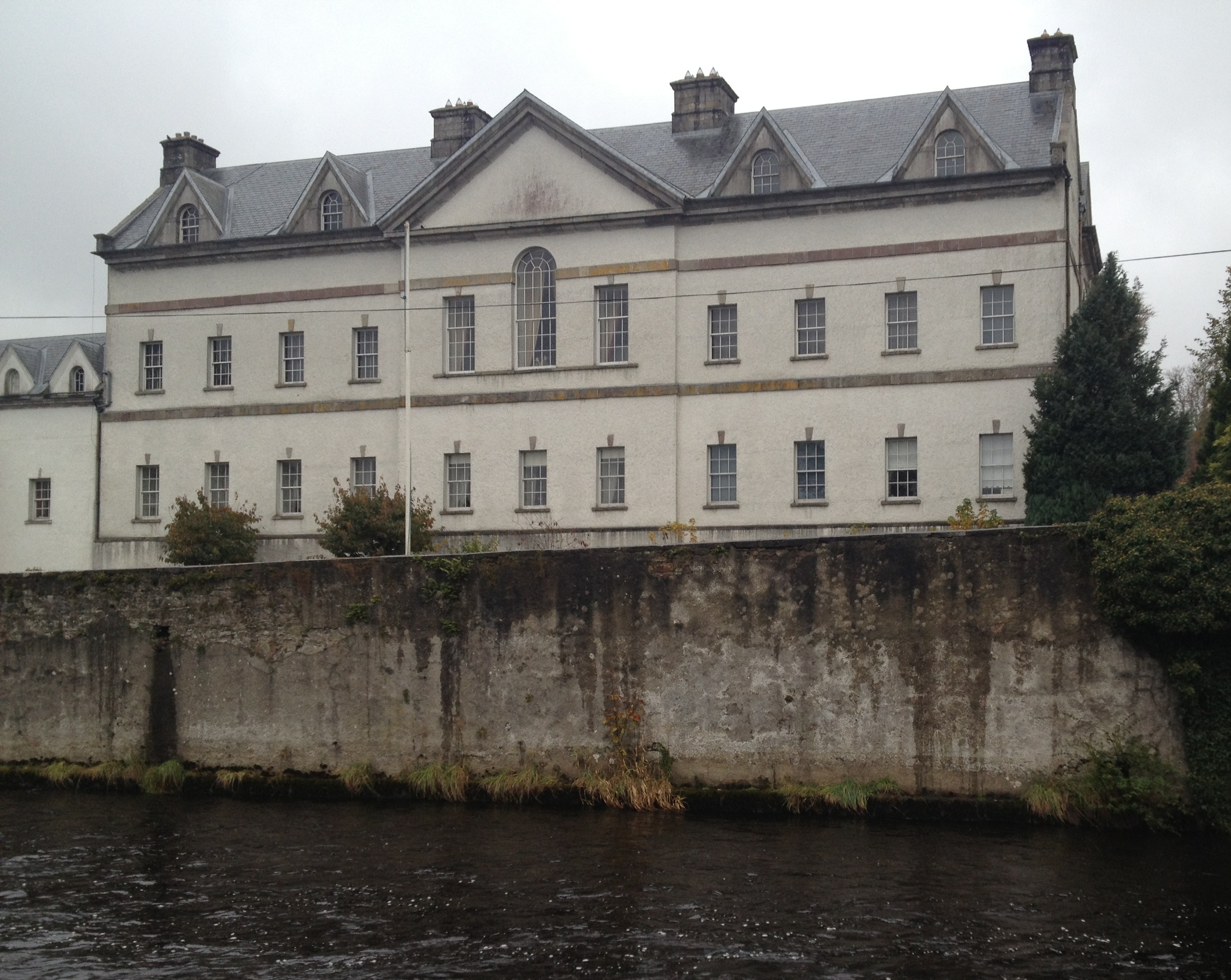
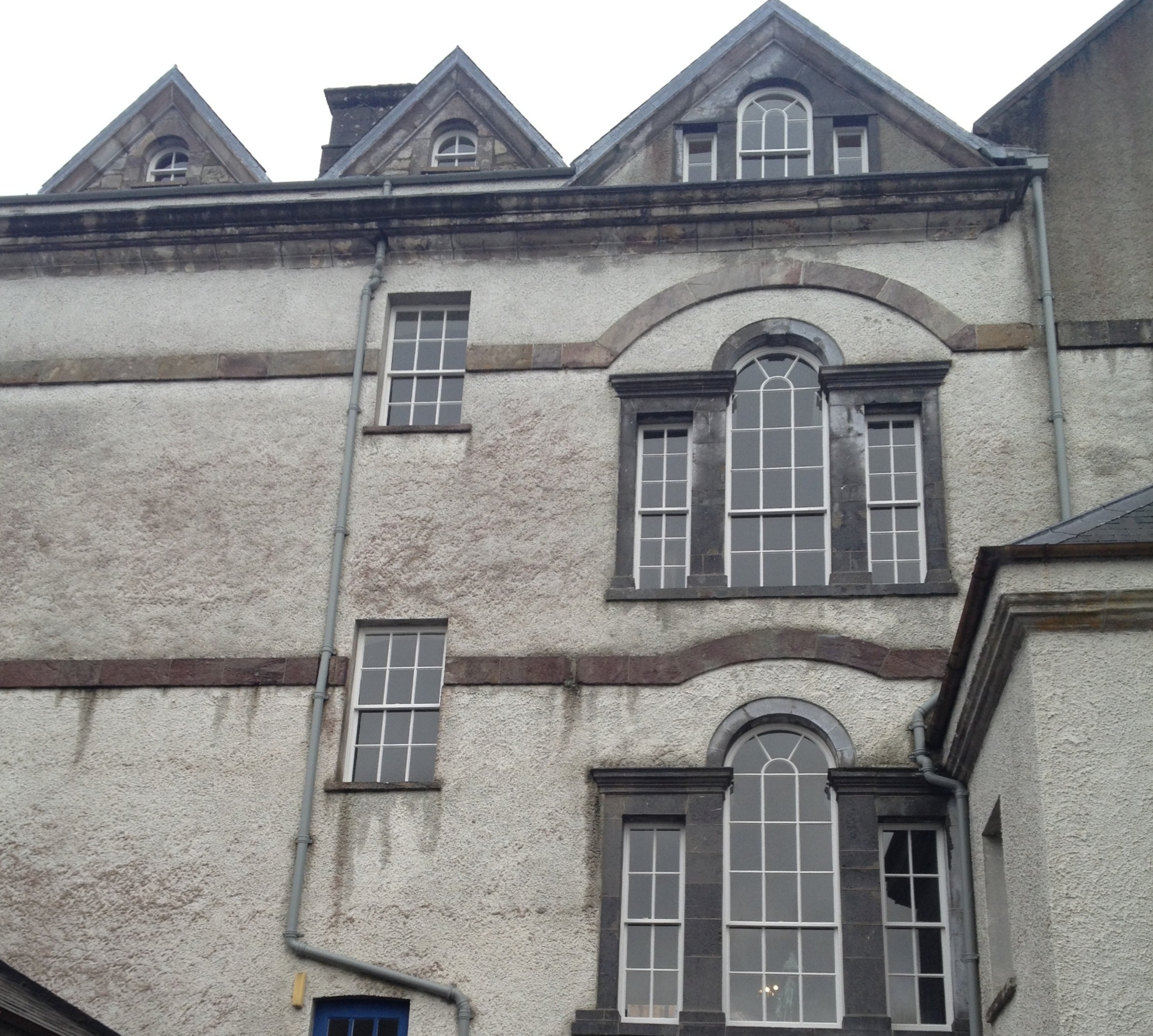
Of three storeys over basement, King House was built for Sir Henry King, dates from 1720-30 and is believed to occupy the site of an earlier structure. As ever, we do not know the architect responsible. Both Pearce and Castle have been mentioned, but so too has William Halfpenny (d.1755), an Englishman who worked in Ireland during the 1730s in Dublin, Hillsborough, County Down and Waterford City. There is also some speculation that the building as seen today is incomplete; the pedimented north front is strikingly plain, so it has been posited that the two-bay projecting wings were meant to be joined by another block so as to form an enclosed courtyard. If this was the intention, then it helps to explain the want of external decoration. The rear of the house, which looks south to the river Boyle and would once have had a pleasure garden running down to water’s edge, is more satisfactory if rather too rigorously symmetrical. In fact the best views are those of the two sides, where a pair of Venetian windows sits one above the other. Roughcast render suggests a variety of material was used for the building, although all the window and door surrounds are of fine cut limestone.
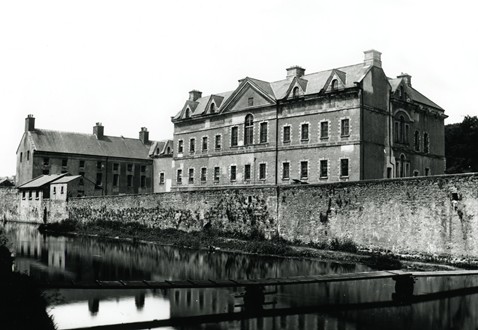
Not a lot of the original interior remains, but there is an explanation why this should be the case. The Kings used their house for little more than half a century before it was damaged by fire in 1788. By this date tastes had changed and it was considered more desirable to reside in the countryside, so the family moved to the nearby estate of Rockingham (of which more in the months ahead). King House was first leased and then in 1795 sold for £3,000 to the government. Subsequently it was converted into an army barracks and during the 19th century was occupied by the Connaught Rangers; presumably during this period was added the large extension to the south-west of the main block. As evidence of its size the house was able to accommodate 12 officers and 260 non-commissioned officers and private foot soldiers, as well as a 30-bed hospital and stabling for horses. Following Independence, the building continued to serve the same purpose for members of the Free State Army until the 1960s when King House passed into private hands and was used as a store and fuel depot. Its condition quickly deteriorated and by the 1970s tenders were invited for the building’s demolition to make way for a car park. I remember first seeing the place at that time, when the chances of its survival looked slim. Thankfully in 1987 King House was acquired by Roscommon County Council with a full programme of restoration work beginning two years later.

2

3

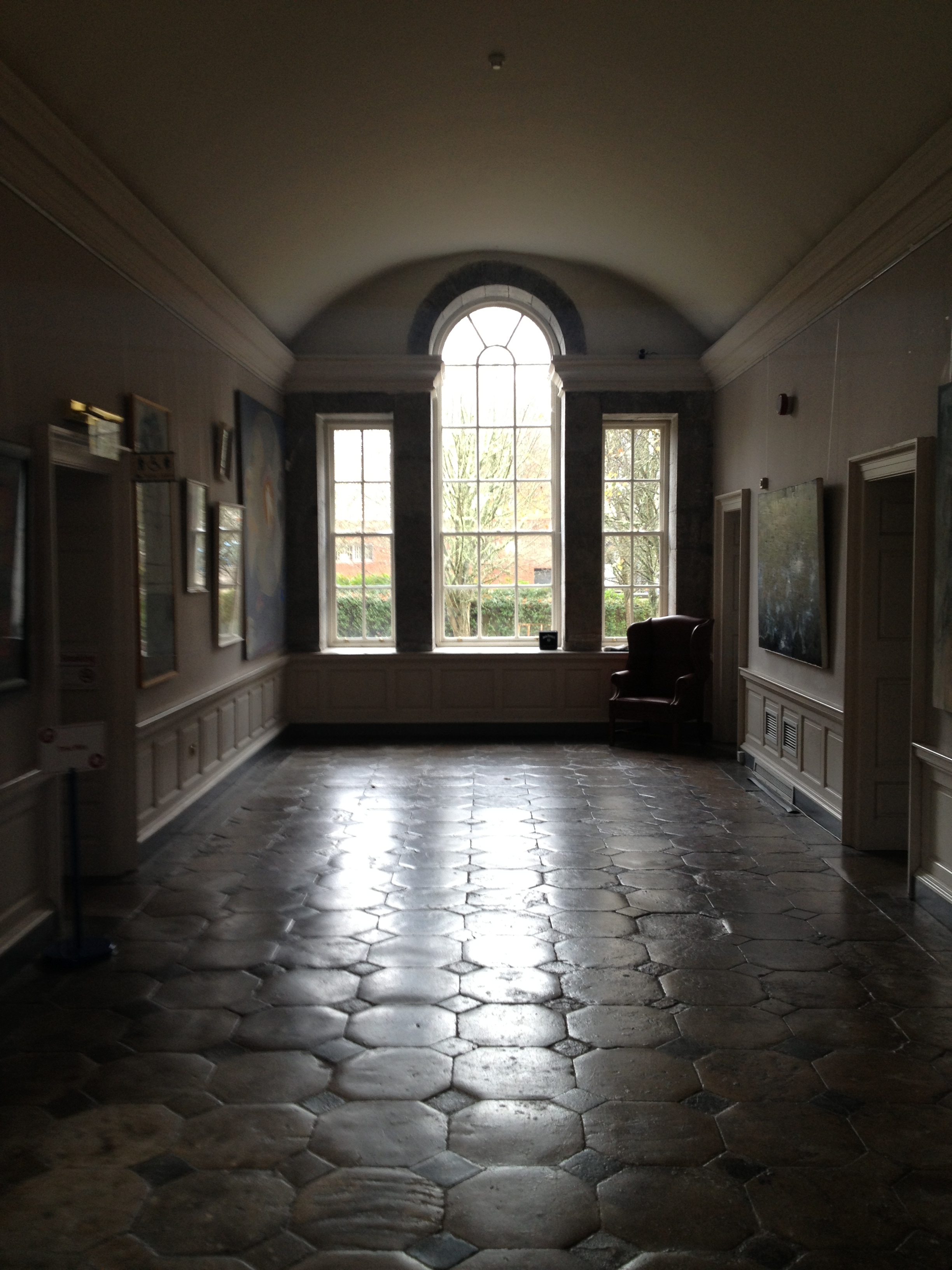
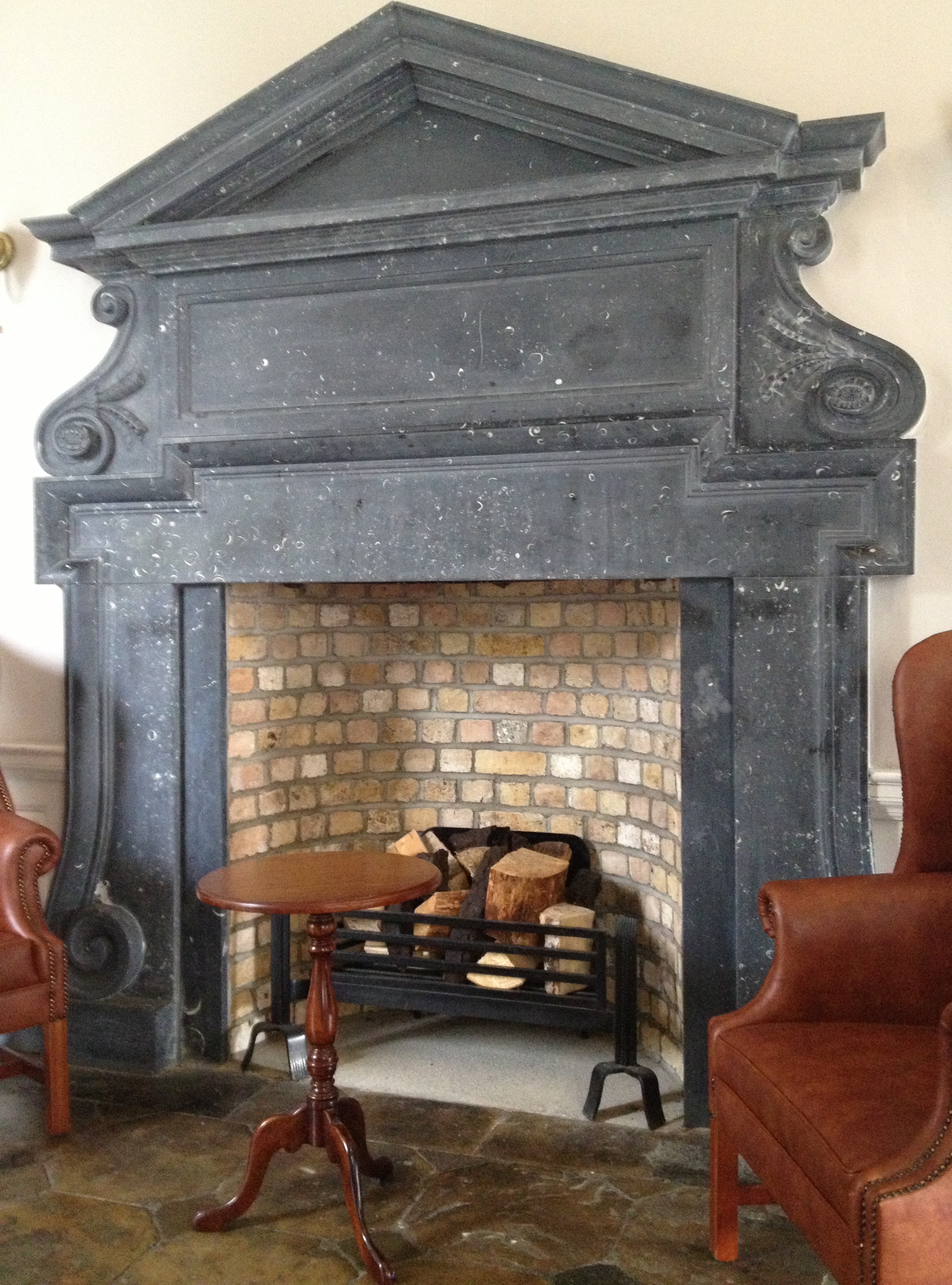
Today King House is a public amenity, a museum and a facility used for various purposes, from wedding receptions to library services. Given its chequered history, the building’s want of interior ornamentation does not come as a surprise. The 1788 fire, followed by conversion for use as a barracks helps to explain the lack of an elaborate staircase, for example, and also the absence of much plasterwork embellishment. The most striking extant feature is the gallery found running the length of the house on each floor and lit at either end by the aforementioned Venetian windows. That on the groundfloor retains a splendid stone flagging and two immense baroque chimneypieces of Kilkenny marble. The vaulted ceilings of red brick are unusual since this is customarily only found in basements. Seemingly the notion was that vaulting would prevent the spread of fire, a theory soundly disproved by the conflagration of 1788. Elsewhere some rooms have decorative cornicing but overall the impression is of refined purity.
Or at least that would be the case if those responsible for King House would allow the building to speak for itself. Loath as one is to speak ill of any organisation prepared to ensure a future for the country’s architectural heritage, what a shame that in this case the relevant authorities have shown scant confidence in the house’s inherent qualities. The restoration work has been exemplary but rather than allow the interior’s handsome proportions to make an impression, everywhere is filled with furniture, display units, information panels, mannequins and assorted bric-a-brac relating to a disparate variety of topics. The place is so busy one is constantly denied an opportunity to assess architectural merit (or, incidentally, to take a decent picture). A dissapointment as the building is of such rare merit it deserves to be cherished as and for itself, and not treated as the setting in which much less interesting material is shown. The current style of presentation is unquestionably to the building’s detriment. King House dominates not just Boyle but much of the surrounding region since nothing else can begin to approach its resplendence. Accordingly nothing else ought to be required. Here is an instance where less would achieve more.

10

This last is an old photograph of King House when still a military barracks (and, by the looks of it, already in poor shape).