A Spouse’s Souvenir

Turner

Dating from c.1816 this watercolour is deemed to be J.M.W Turner’s only Irish view and shows Clontarf Castle, County Dublin. The picture was painted for one of the artist’s closest friends, Walter Fawkes of Farnley Hall, Yorkshire who owned a large collection of Turner’s work. The watercolour is of particular interest because Turner never visited Ireland and therefore must have been working from an image of Clontarf Castle produced by someone else; the connection is that Fawkes’ second wife Maria Sophia Vernon – who he married precisely around the time this watercolour was produced – had grown up at Clontarf Castle, so presumably it was intended to act as a souvenir of her childhood home. Twenty years later the building, originally constructed in the 12th century by the Knights Templar and acquired by the Vernons in the second half of the 17th century, was very extensively remodelled by William Vitruvius Morrison at the request of Maria Sophia’s nephew, John Edward Venables Vernon. Thus the picture also serves as a guide to what the house looked like in its earlier incarnation. Today Clontarf is a suburb of Dublin and the castle, greatly enlarged, an hotel. It is possible to gain a sense of what the building and surrounding lands were like a century ago by reading ‘A Georgian Boyhood’ the third part of Cyril Connolly’s wonderful Enemies of Promise published in 1938. His mother was a Vernon and he therefore spent holidays as a child in the house. Estimated to fetch €20,000-€40,000, the watercolour is due to be auctioned next Monday by Adam’s as part of its country house sale at Slane Castle, County Meath (see: http://www.adams.ie).
Update: the Turner watercolour of Clontarf Castle sold for €65,000.

The Irish Aesthete Recommends V

????????????????????????????????????????????????????????????????????????????????????????????????????????????????

A photograph of Dromore Castle, County Limerick built in the late 1860s for William Pery, third Earl of Limerick to the designs of Edward William Godwin (also responsible for James Whistler’s ‘aesthetic’ house on Tite Street, London). On a hill overlooking a lake and with views across the Shannon to County Clare, the castle looked ravishing but suffered from chronic damp (seemingly paint never stayed long on the walls) and was not occupied by the Perys for more than a few decades. The family sold Dromore in 1939 and since the middle of the last century it has grown steadily more ruinous: the roof was removed in the 1950s in order to avoid paying tax on the building. Today it can still be seen, a striking sight some twelve miles west of Limerick city.
Dating from around 1920 this photograph was taken by Franz S. Haselbeck, the son of German emigrants who had settled in Limerick in the early 1900s. Haselbeck was a professional photographer who lived and worked in the area until his death in 1973 and now a book of his images has been published by The Collins Press. With an introduction by his granddaughter who has been responsible for preserving the material, Franz S. Haselbeck’s Ireland includes pictures spanning the entire course of his long career, and shows scenes of a world which has since disappeared, many of them taken in the years before Independence. What makes the work especially fascinating are the photographs of buildings which subsequently fell into serious disrepair, not just Dromore but also Mount Shannon House in Castleconnell, immediately east of Limerick city. Acquired and greatly enlarged in the late 18th century by John FitzGibbon, first Earl of Clare (notoriously one of the most hated men of his generation), the house and its contents were sold by the family in the 1880s when they had run through all their money. After changing hands on a couple of occasions, it was burnt out in 1920 during the Troubles, so the picture below, which shows the rear of the building with its fine conservatory intact, must have been taken before that date. There are many other such photographs in the book, not all of them featuring country houses but all meriting close study.

??????????????????????????????????????????????????????????????????????????????????????????????????????????????????????????????????????????????????????????????????????????????????????????????????

The Wall of China

IMG_7024

A view of the contents of a cabinet in the dining room at Borris House, County Carlow. Diffused light through windows to the left disposes a radiance over an assortment of bowls, plates and vases displayed on the mahogany shelves. More on Borris in a few weeks’ hence.
And in other news, The Irish Aesthete has been included amongst the finalists for Ireland’s 2013 Blog Awards in two categories: Best Arts & Culture, and Best Newcomer. The winners will be announced on October 12th next.

Splendours and Follies

image

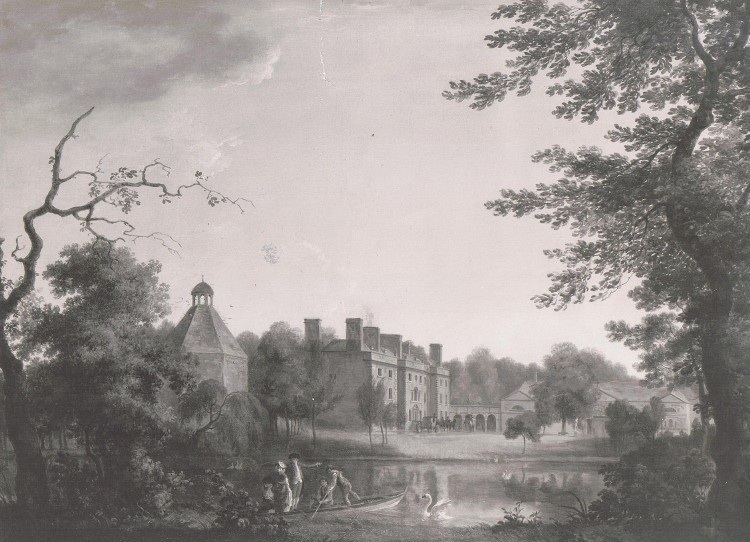
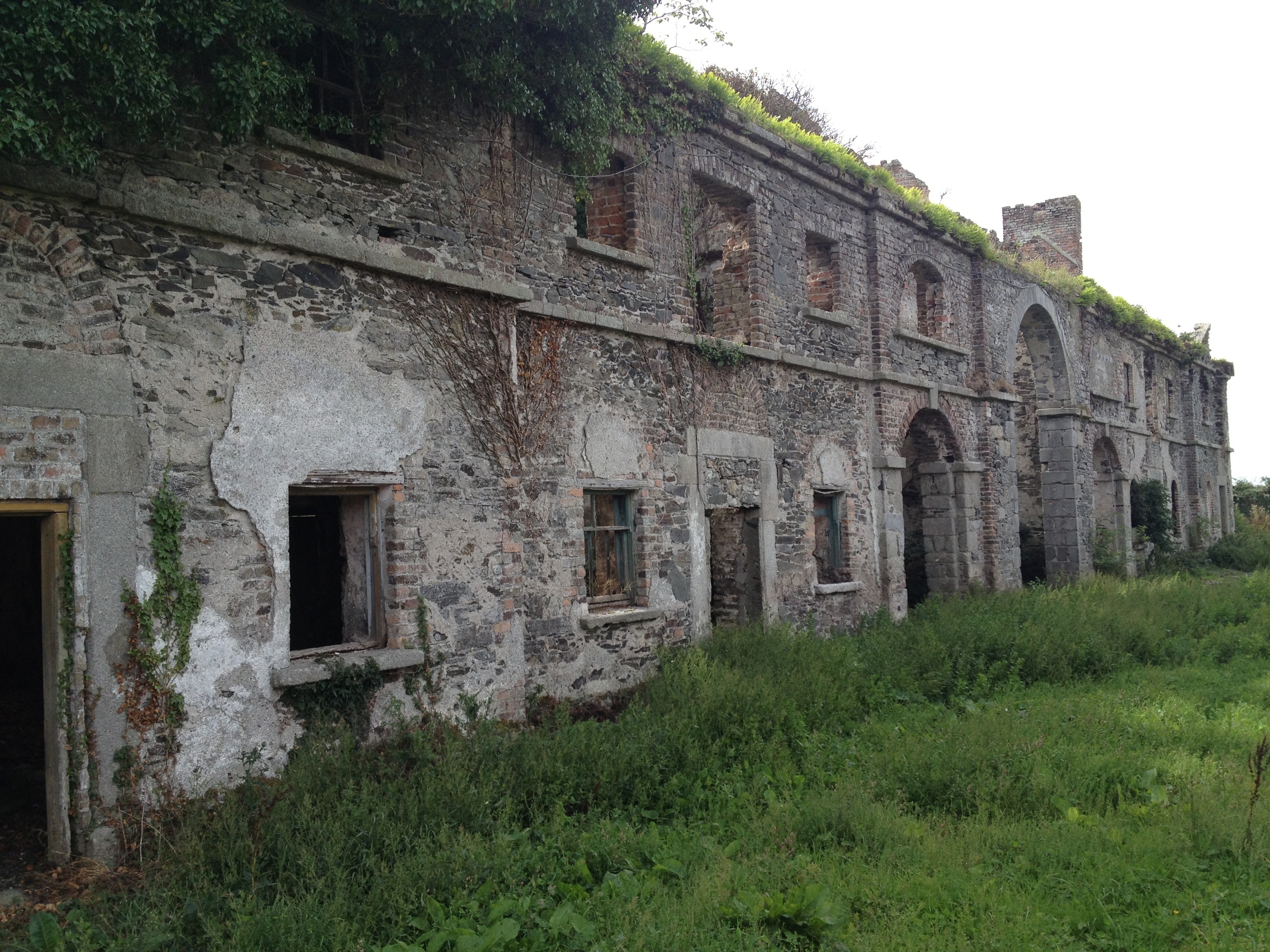
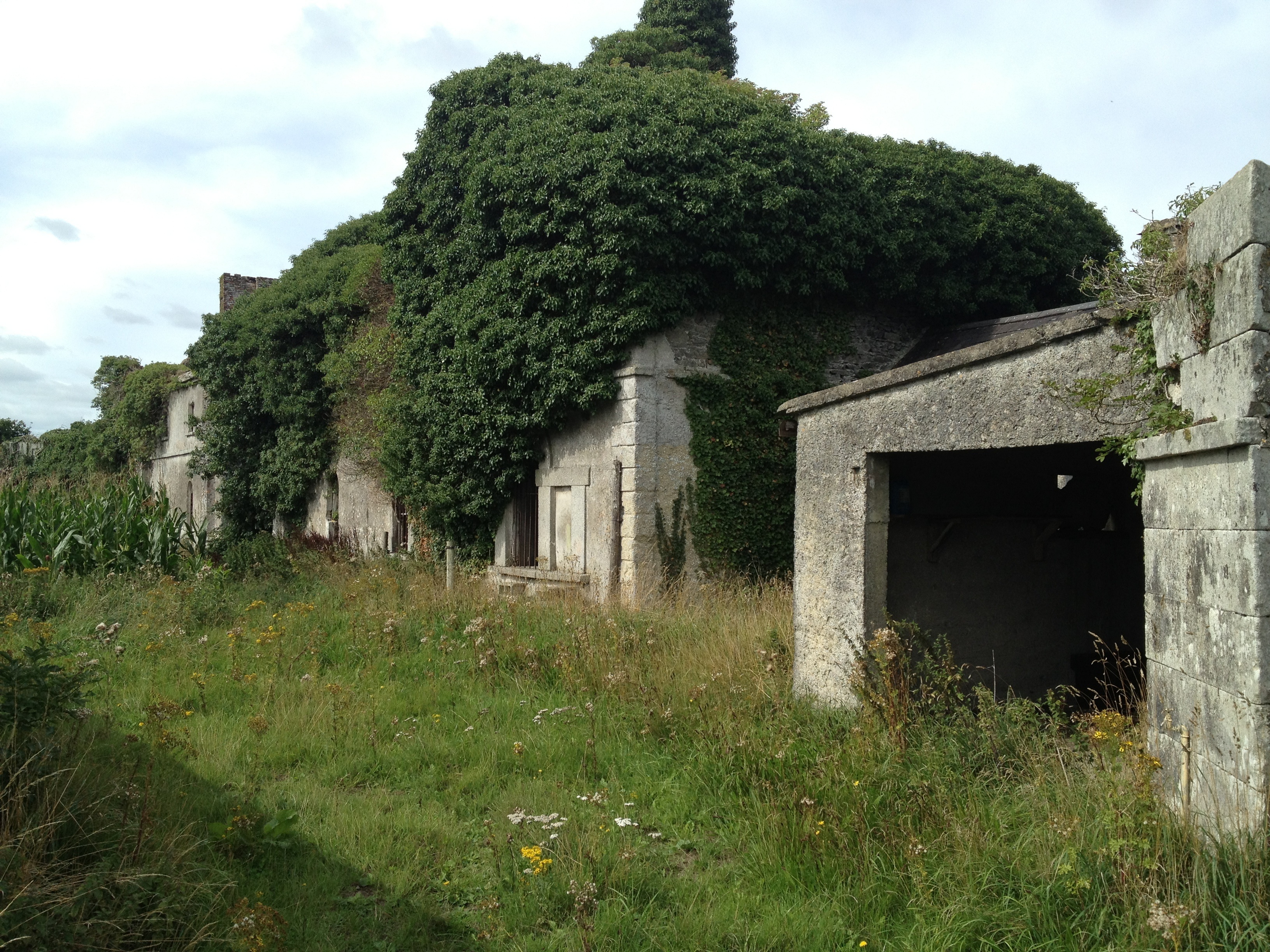
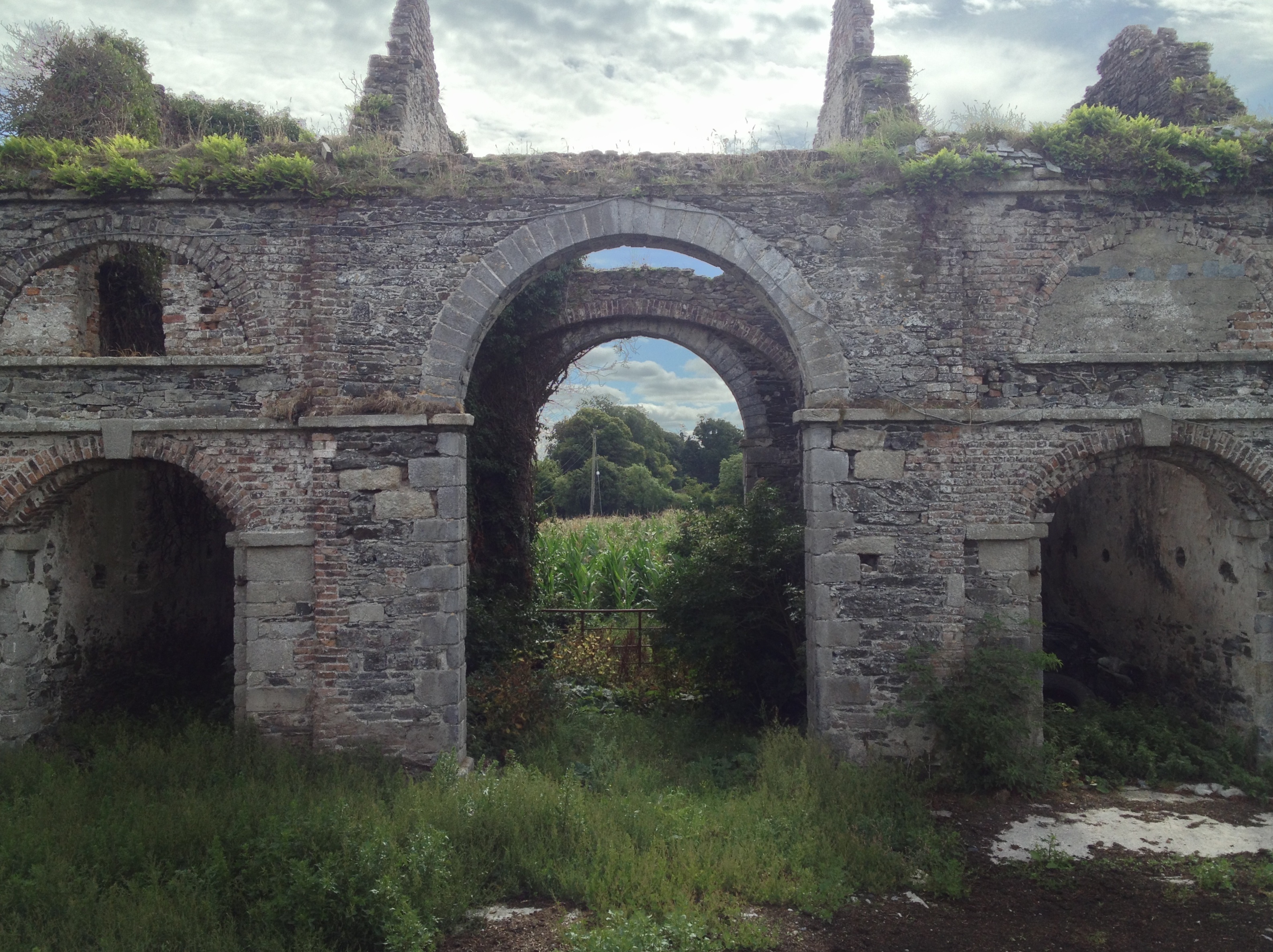
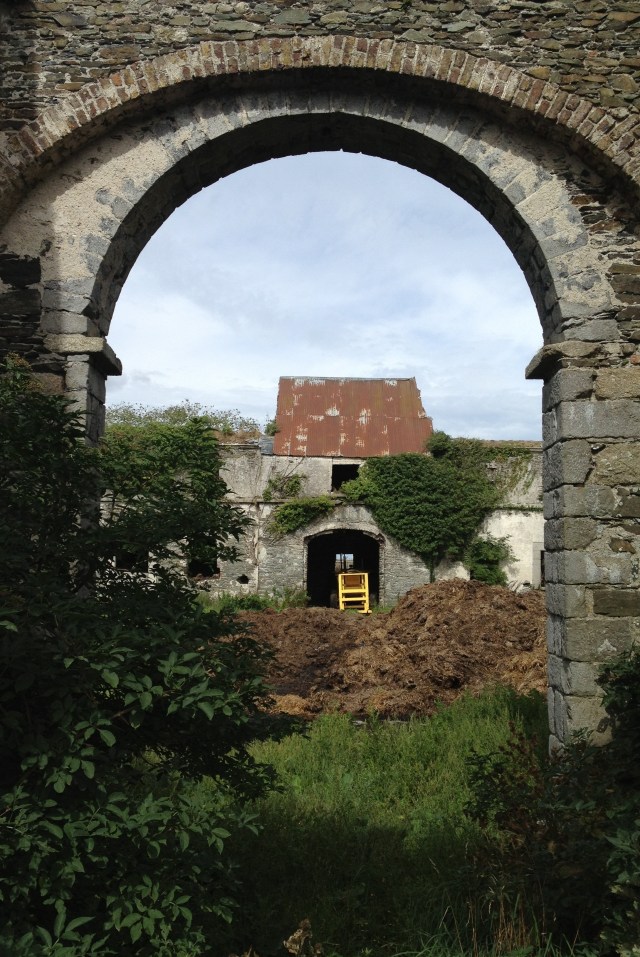
Driving along a minor road in south County Kildare, one’s eye is caught by the sight of ruins rising high above a field of maize. These roofless blocks were once the stables attached to and now all that remain of Belan, seat of the Stratford family, Earls of Aldborough. That Belan was once rather splendid cannot be doubted: in 1786 George Powell who was related to the family through marriage, wrote ‘The Mansion House of Belan is most Magnificent as is also the Demesne thereto, containing 12 porters Lodges Erected by the present Earl at the six Approaches, who hath also added thereto a Fruitery, Green, Hot and Tea Houses, a Square of Offices, a Chappel & a Theatre & Expended near £8000 on the Estate…’
Almost all of this is now gone, and the only evidence of Belan’s former resplendence are the aforementioned stables, the shell of an octagonal tea house, a few obelisks and a small domed temple. For once, however, decline and fall occurred not during the last century but earlier and while members of the Stratford family were still, if only nominally, great landowners.

image

image

Originally from Warwickshire, the Stratfords seem to have settled in Ireland about the time of Charles II’s restoration in 1660. Within a few years Robert Stratford had acquired land around Baltinglass, County Wicklow and thereafter their rise was assured, not least through the ability to return two members to the Irish House of Commons. By 1690 they already owned property at Belan, since in July of that year Edward Stratford found himself successively entertaining the two rival Kings James and William, his personal sympathies lying with the latter. As William ultimately proved the victor, the Stratfords’ political and financial status was further strengthened. Edward Stratford’s third son John (who was made first Earl of Aldborough shortly before he died in 1777) inherited Belan around 1740 and soon afterwards commenced either to build anew or to enlarge his residence there. The architects for this property are held to have been Richard Castle and Francis Bindon.
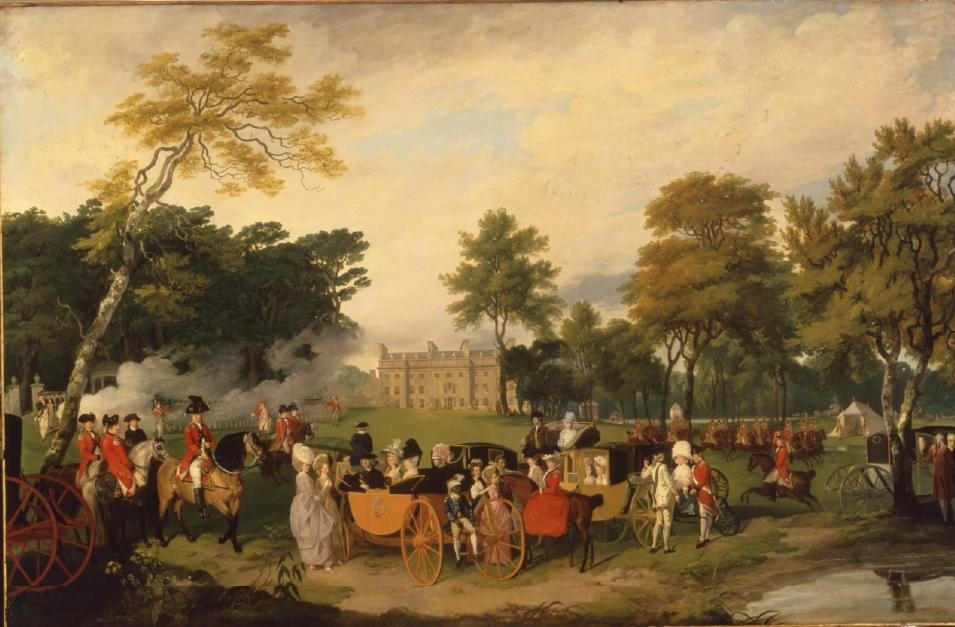
We cannot say for certain what the house looked like since paintings in which it features by William Ashford (from which the engraving at the top of this piece is taken) and Francis Wheatley (see the very last picture, showing the second Earl reviewing the Aldborough Volunteers at Belan) display differences that suggest to some extent they reflected the owner’s aspirations for the building rather than its actual appearance. Nevertheless we do know the main block, large and plain, was 120 feet long and 44 feet deep, of three storeys with a gabled attic and projecting end bays. To its right were the pair of parallel stable blocks that still survive (albeit in ruinous state), the first of them linked to the house by a curved portico.

image

image

Here are some extracts from the delightful reminiscences of Georgina Sartoris (née Lyster) published in the Journal of the Kildare Archaeological Society in January 1908 during which she recalls visiting Belan as a little girl in the 1830s:…’a fine stone mansion, a magnificent flight of granite steps, with two stone vases at the top, led to the entrance door. Though uninhabited for fully ten years, the house was in perfect repair, no trace of damp or decay and to all appearance, might have been lived in a week before. I have not a distinct recollection of all the rooms; but the dining room is fresh in my memory, also the saloon, and his late lordship’s bedroom. The dining room, not very large was panelled, family portraits being set in the panelling. I was too young to care much about them, but feel sure they were all of men. Had there been lovely ladies or pretty children amongst them, I should have remembered them. The saloon was lovely, with a polished floor of narrow oak boards…. on one occasion (why I know not) my sister and myself occupied his late lordship’s bedroom, very comfortable it was of moderate size, the fireplace like those of the other bedrooms surrounded with the prettiest tiles I have ever seen, the ground white with pink and blue landscapes, figures and flowers on it; a fine four post mahogany bedstead, Indian chintz curtains, some Chippendale chairs, and a wardrobe are all I remember of its furniture…The grounds of Belan were very beautiful, and of considerable extent. On one side though not seen from the house, were the celebrated fish ponds (not that in my time there was a fish in them), large and deep, the trees around them giving them a secluded and fascinating look. Here, on hot summers’ evenings, we used to sit and watch the dragon flies. I had never seen dragonflies before, and could not associate them with flies – I could only think of them as tiny winged spirits, whispering messages from afar to the reeds and irises which grew at the water’s edge. The gardens were at some distance from the house, and were large and walled in. I do not think I was often in them. What struck me most was the enormous quantity of lily of the valley. I have never seen anything like it elsewhere and its scent lingers with me still…’

image

image

The fall of the house of Stratford was as spectacular as its rise. The second Earl, a man of great energy, not only greatly improved the house and demesne at Belan but was also responsible for developing Stratford Place in London and for building the immense (and now sadly dilapidated) Aldborough House in Dublin in the years preceding his death in 1801. Although twice married, he had no children and so a younger brother inherited. The last member of the family to live at Belan, he was likewise childless meaning everything passed to another brother, the fourth Earl who preferred to occupy a house elsewhere on the estate, Stratford Lodge (subsequently destroyed by fire) and who abandoned Belan to an agent more interested in helping himself than in looking after his employer’s property. The next heir, Mason Gerard Stratford, fifth Earl was a hopeless spendthrift who, when short of funds, would visit London money lenders with a gun and threaten to shoot himself if they did not give him cash. He was also a bigamist, possibly even a trigamist, and on his death the eldest son from one of these marriages had trouble claiming a right to the title and what remained of the family property. Sixth and final Earl of Aldborough, he died without heirs in 1875.
By that date Belan was already in poor condition and some thirty years later Mrs Sartoris, who remembered the house intact, could write that ‘Beautiful Belan lies in ruins, the wind blowing where it listheth, sighs over the desolate grounds and gardens once so beautiful, a herd lives in the yard, sole occupant of that once lovely demesne.’ As late as the 1940s the main walls of the house still stood, but this shell was subsequently swept away. Today only the remnants of the stables survive to remind us of what once stood on this site and to serve as a warning that nothing is eternal.

image

Castles in the Air

image

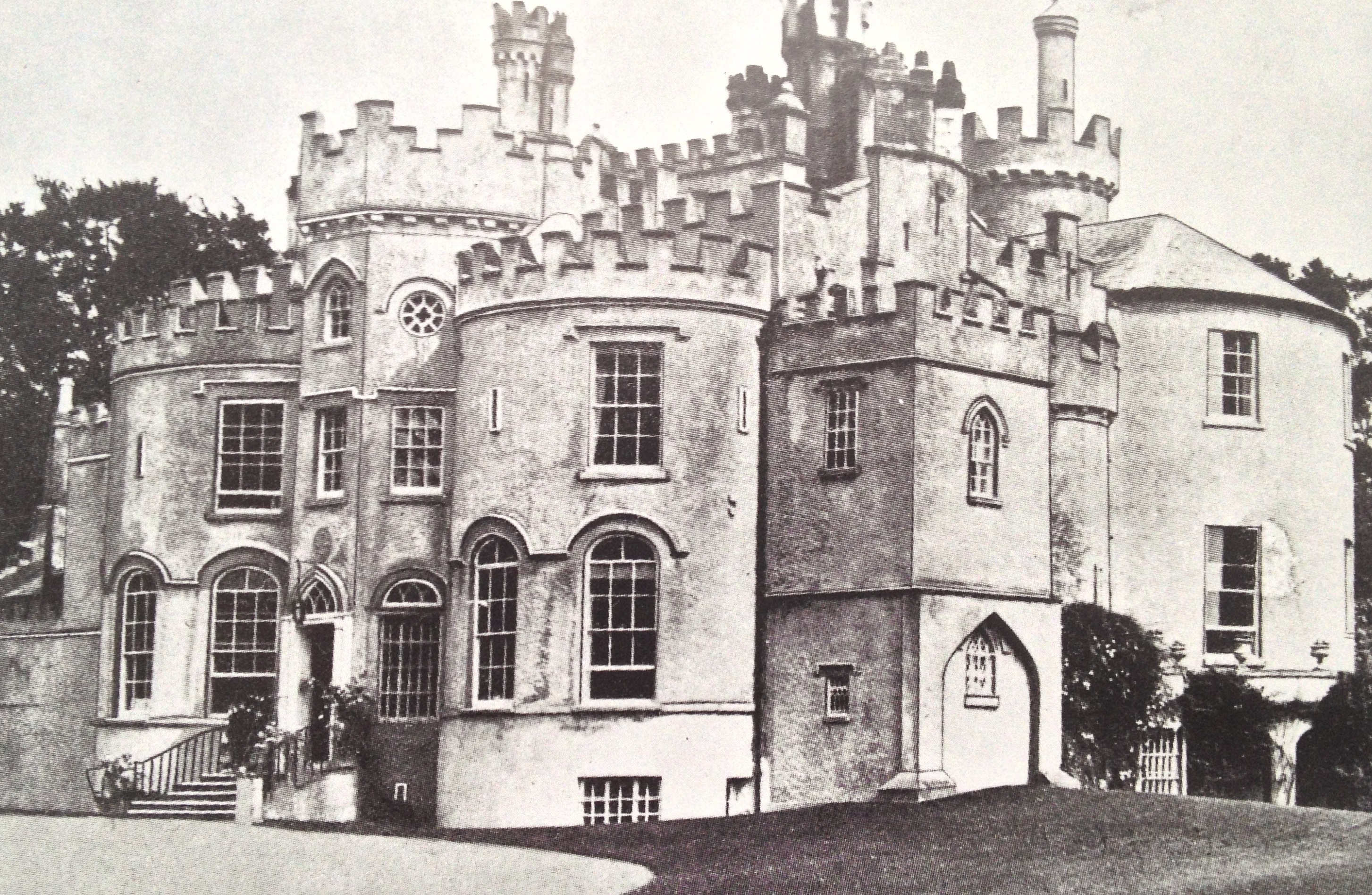
An old photograph of Shanganagh Castle, County Dublin showing the house when all its external decoration was still intact (some has since been removed/lost). Although there have been buildings of that name on the site since the early 15th century, the core of the present structure dates from c.1760 when a plain classical residence was constructed. At the start of the 19th century the property was bought by Major-General Sir George Cockburn who in 1805 commissioned Sir Richard Morrison to remodel the house: the addition of what has been accurately described as ‘a profusion of battlements and turrets’ transformed the place into a fantastical toy fort. The interiors were more restrained not least because Cockburn, who was something of an aesthetically-minded career soldier and had acquired a collection of antiquities, sculptures and paintings during his military career, required a top-lit gallery in which these could be displayed.
As with so many Irish houses, the history of Shanganagh in the last century was not a happy one: after serving for some time as a Church of Ireland college of education it was converted into an open prison and remained such until closed ten years ago. Since then the building has suffered from being left vacant, but earlier this month Dún Laoghaire-Rathdown County Council announced it had acquired Shanganagh and immediately surrounding acreage as part of a complex land-exchange programme. Inevitably the property is now in poor condition and so remedial work must be undertaken to make it secure. One awaits further developments, not least whether Shanganagh will be returned to the appearance it presents in this photograph.

The Luck of the Barrys

image

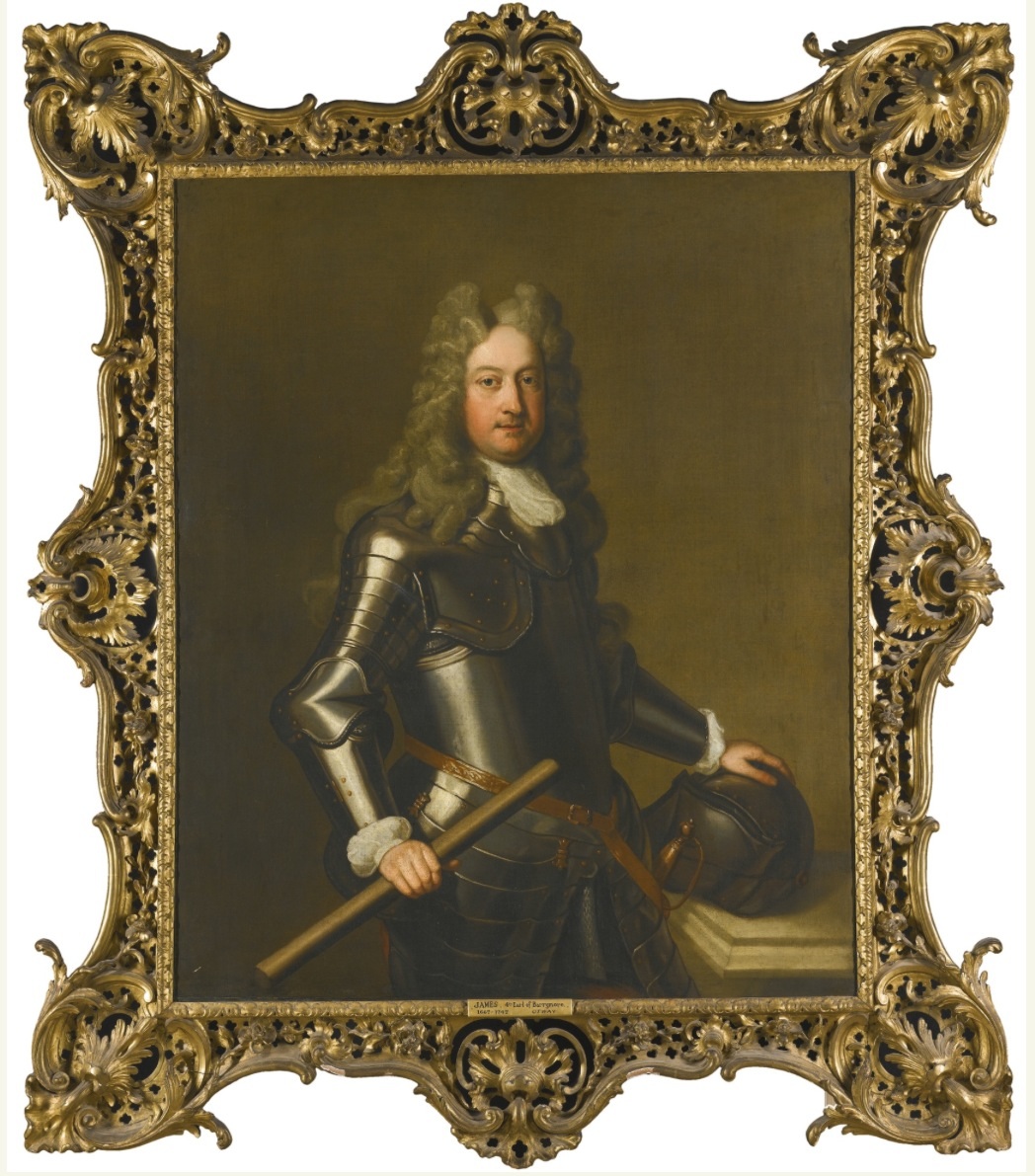
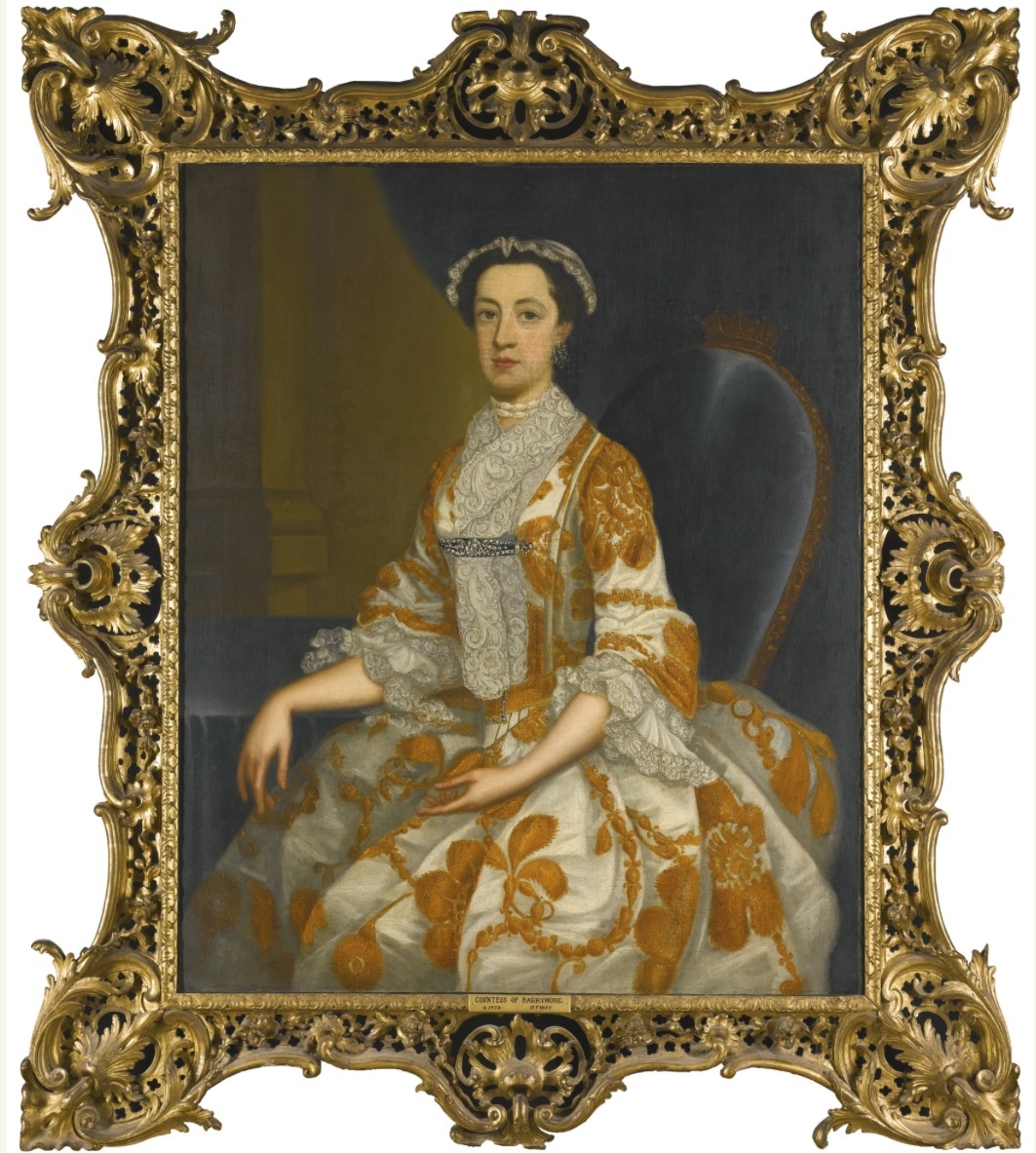
These two portraits of James Barry, fourth Earl of Barrymore and his third wife Lady Anne Chichester are being offered for sale today at Sotheby’s in London. The Barrys were an old, but relatively impoverished Irish family although their finances were greatly improved by the fourth Earl making a succession of advantageous marriages. In the later 18th century they also became noted for their eccentricity: the seventh (and penultimate) Earl who died at the age of 23 in 1793 was one of the period’s most infamous rakes, commonly known as ‘Hellgate.’ (His sister was nicknamed ‘Billingsgate’ owing to her dreadful language, while his younger brothers were respectively called ‘Cripplegate’ due to a club foot and ‘Newgate’ since, as it was a women’s prison, he had never spent time there; in 1791 James Gillray produced a splendid caricature of the three men mocking their various distinctive characteristics). Their rackety lives were not dissimilar from that of another man with the same surname, Redmond Barry, eponymous hero of Thackeray’s 1844 picaresque novel The Luck of Barry Lyndon, and like him they all ended badly.
Meanwhile descendants of the fourth Earl’s fourth son became Smith Barrys and inherited a large estate on Fota Island, County Cork at the centre of which stood what was originally a hunting lodge. This building was enlarged and embellished c.1820 to the designs of Sir Richard Morrison and his son William Vitruvius Morrison. In their charming George II rococo fames, the two portraits (that above judged to be from the studio of Sir Godfrey Kneller, that below attributed to Philip Hussey) formerly hung in Fota House which today is managed by the Irish Heritage Trust and open to the public. How wonderful it would be if this tale concluded better than did that of the Barrys, and after today the portraits once more returned to the house…

image

Update: on Tuesday, 24th September the two portraits sold for ₤60,000 and ₤43,750 respectively.

Around the Ring

IMG_6805

Spotted recently on a minor road in County Kilkenny, this handsome pedimented arch which is flanked on either side by gates. These in turn lead to quadrants terminating in large cut-stone posts. The whole is most arresting despite being in a sad state of disrepair, and appears once to have been the entrance to an estate called Ringwood. In the 18th century, Ringwood was owned by members of the Agar family and the core of a still-extant house nearby was most likely built in the late 1730s by James Agar whose political ambitions were blighted by a long-standing dispute with one of the leading orators of the period, Henry Flood. The two men fought a duel in 1765 and then a second one four years later using pistols. Agar fired first and missed, he shouted ‘Fire, you scoundrel,’ and was promptly shot dead: although the deceased’s family brought a case against Flood for murder, he was found guilty of manslaughter in his own defence and freed. James Agar’s son George had a happier political career than his father, and was eventually ennobled as first (and last) Lord Callan. His prelate nephew Charles Agar became Archbishop first of Cashel and later of Dublin before likewise receiving a peerage as first Earl of Normanton. The Normanton seat today is Somerley, Hampshire which lies just a couple of miles away from a market town called Ringwood.

IMG_6807

London Calling

image

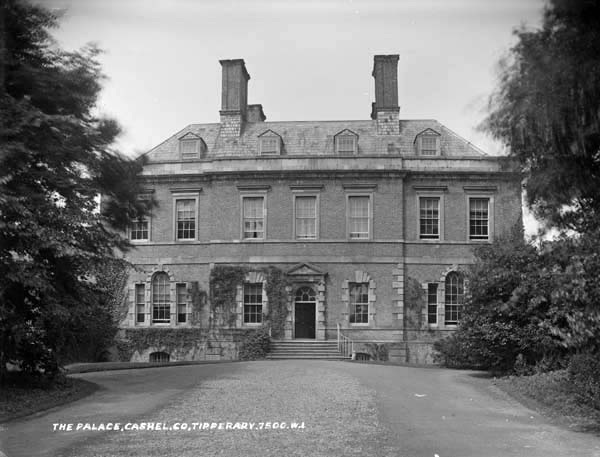
A view of the former Archbishop’s Palace in Cashel, County Tipperary. Now an hotel, the palace was built c.1732 for Theophilus Bolton, its design usually credited to Sir Edward Lovett Pearce. For those in London next Monday evening 23rd September, I will be offering the Irish viewpoint at an event organised by the National Trust and Apollo magazine to consider contemporary perspectives on the English country house. For further information, see: http://events.spectator.co.uk/nationaltrust.html

Miss Austen Requests the Pleasure…

????????????

2013 being the bicentenary of the publication of Pride and Prejudice, inevitably particular attention is being paid to the novel’s author. Earlier this year, for example, a Jane Austen Society of Ireland was formed; one hopes its members will grant at least some notice to the writer’s Irish near-contemporary Maria Edgeworth who was much the better-known author during their respective lifetimes and whose books ought to be more widely appreciated in this country. A cheer too for Sydney Owenson, Lady Morgan whose 1806 novel The Wild Irish Girl is a remarkable piece of work.
Be that as it may, various events have been taking place in Ireland in recent months to celebrate Jane Austen and her links here, not least through the three daughters of her brother Edward whose lives are recalled in Sophia Hillan’s 2011 book May, Lou and Cass: Jane Austen’s Nieces in Ireland. On Sunday October 6th Dr Hillan will be speaking about the three sisters at Salterbridge, County Waterford (seen above). Sitting high above the Blackwater, this is a most interesting house, originally built c.1750 but enlarged by the addition of a new front almost a century later.
Salterbridge is the location for a day of Jane-ite festivities, since after Dr Hillan’s talk there is to be a splendid Regency lunch (guests are promised jelly shapes galore) followed by an afternoon performance by Vanessa Hyde of Empire Line Productions of ‘Ladies of Jane: Scenes and Musings from the Pen of Jane Austen.’ Those attending are encouraged to wear appropriate costume and rather charmingly, as in Miss Austen’s day, changing rooms will be available for those who wish to complete their toilette on arrival. All proceeds from the occasion go to a restoration fund for Lismore Hall not far away.
Anyone interested in attending the day should telephone +353-058-54952/087-2030763 or email susiewingfield@hotmail.com

Remembrance of Lost Time

Carton - Fire buckets

The sad tale of what befell the Dukes of Leinster in the last century, the loss of the family estates and the scattering of their inheritance, has been told so often that it does not need to be repeated here. Heads of the FitzGerald family and once princely figures in Ireland, the Leinsters no longer have any presence here, and their main seat Carton, County Kildare has metamorphosed into just another golf resort and spa.
Over recent decades various FitzGerald heirlooms have come on the market, and next week more items will be sold by English auctioneers Cheffins of Cambridge. Some of the lots are significant: a series of family portraits executed in pastel by Hugh Douglas Hamilton; a set of George II mahogany and parcel gilt dining chairs; even Lord Edward FitzGerald’s ring, bequeathed on his deathbed to a favourite sister. Yet somehow the more poignant items are the commonplace ones such as the set of eight George III leather fire buckets shown above. Each painted with the ducal monogram and coronet, they would once have been kept at Carton but now, following the rest of the house’s original contents, are set to join a general dispersal. One ought not to become too sentimental about such matters, but still it is regrettable that these functional yet handsome mementoes of quotidian life in an Irish country house should be lost.
For more information on the Cheffins sale, see: http://auctions.cheffins.co.uk/asp/searchresults.asp?pg=1&ps=50&st=D&sale_no=F180913