Good Golly Miss Molly

image

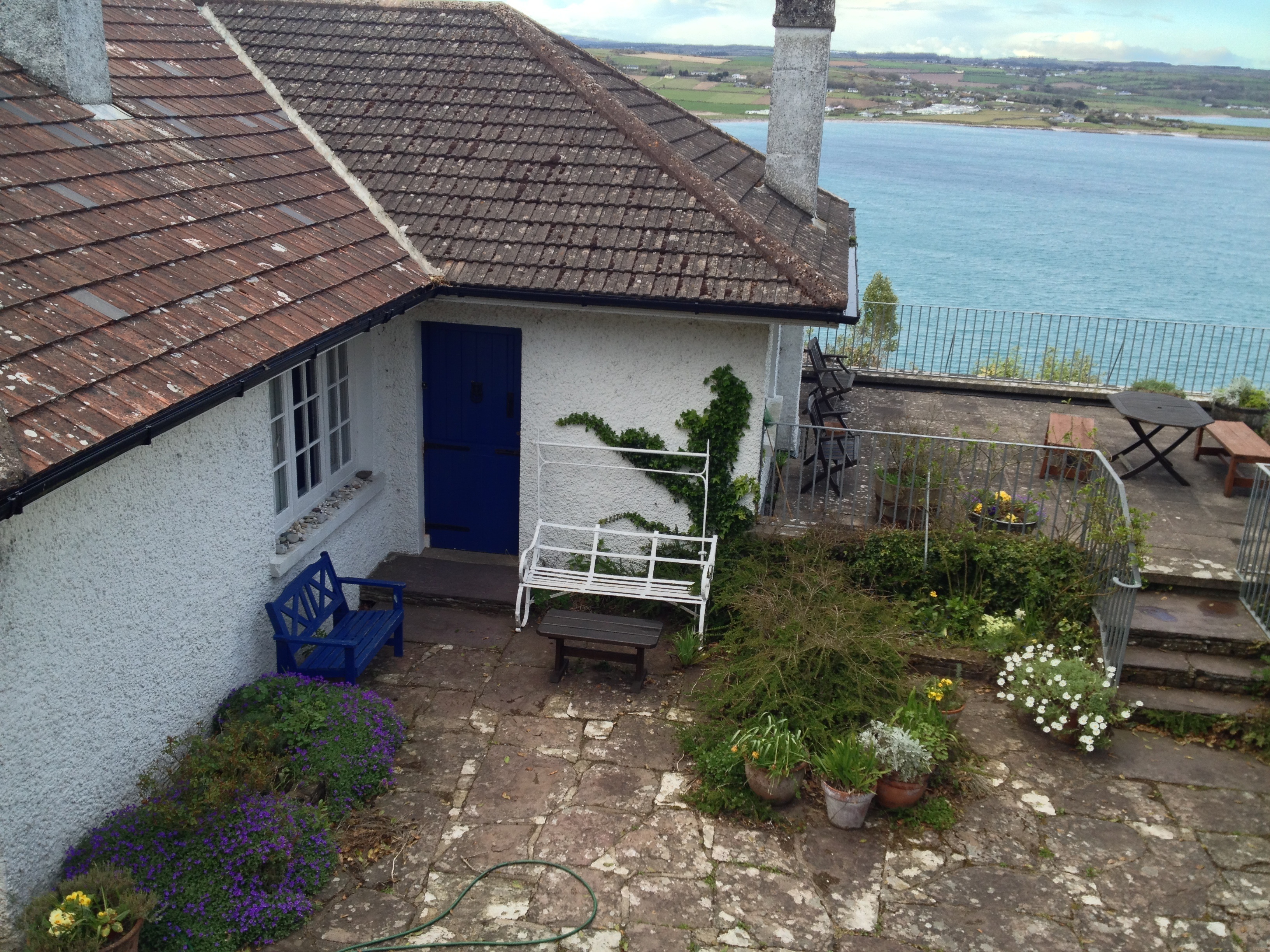
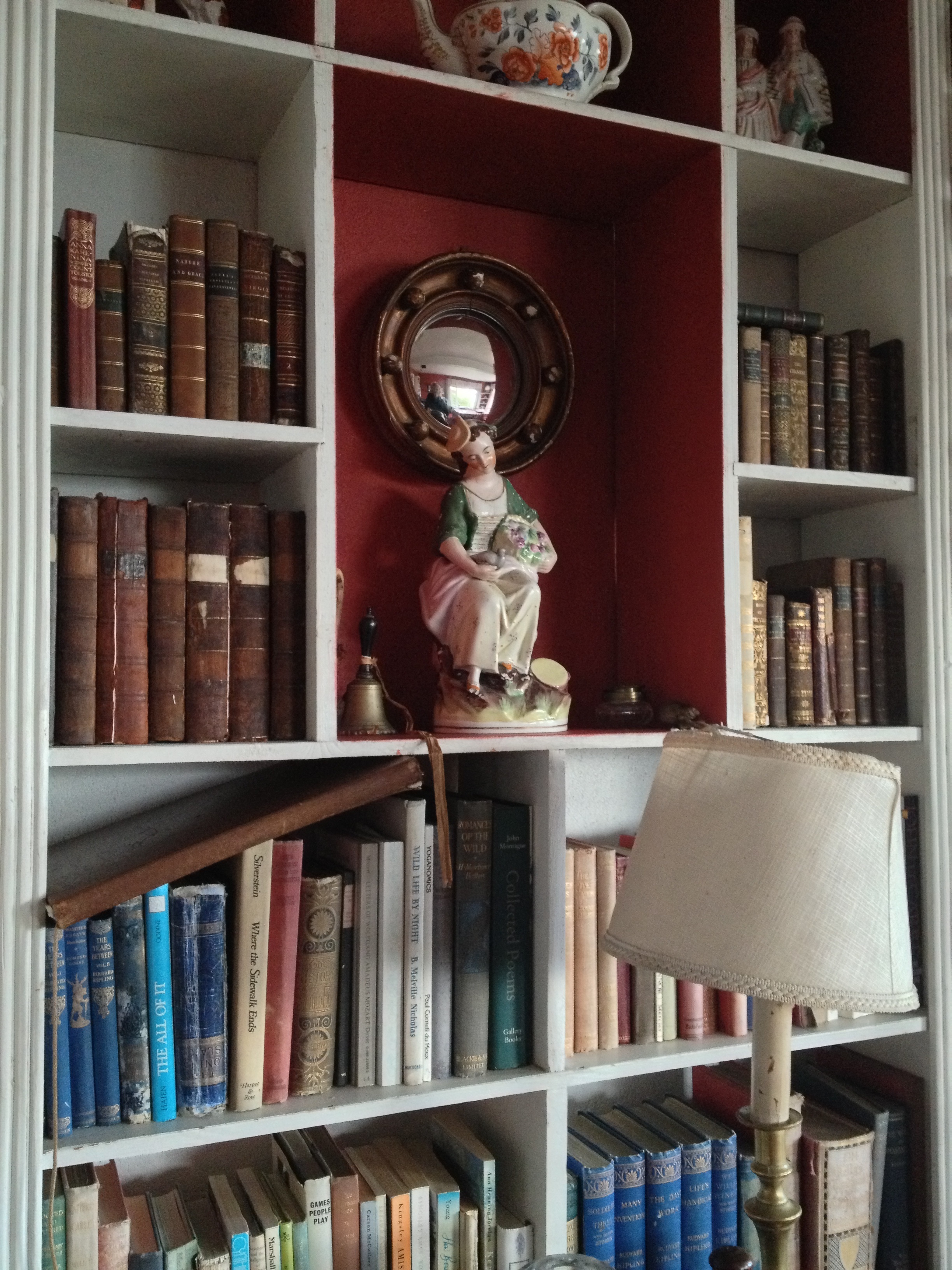
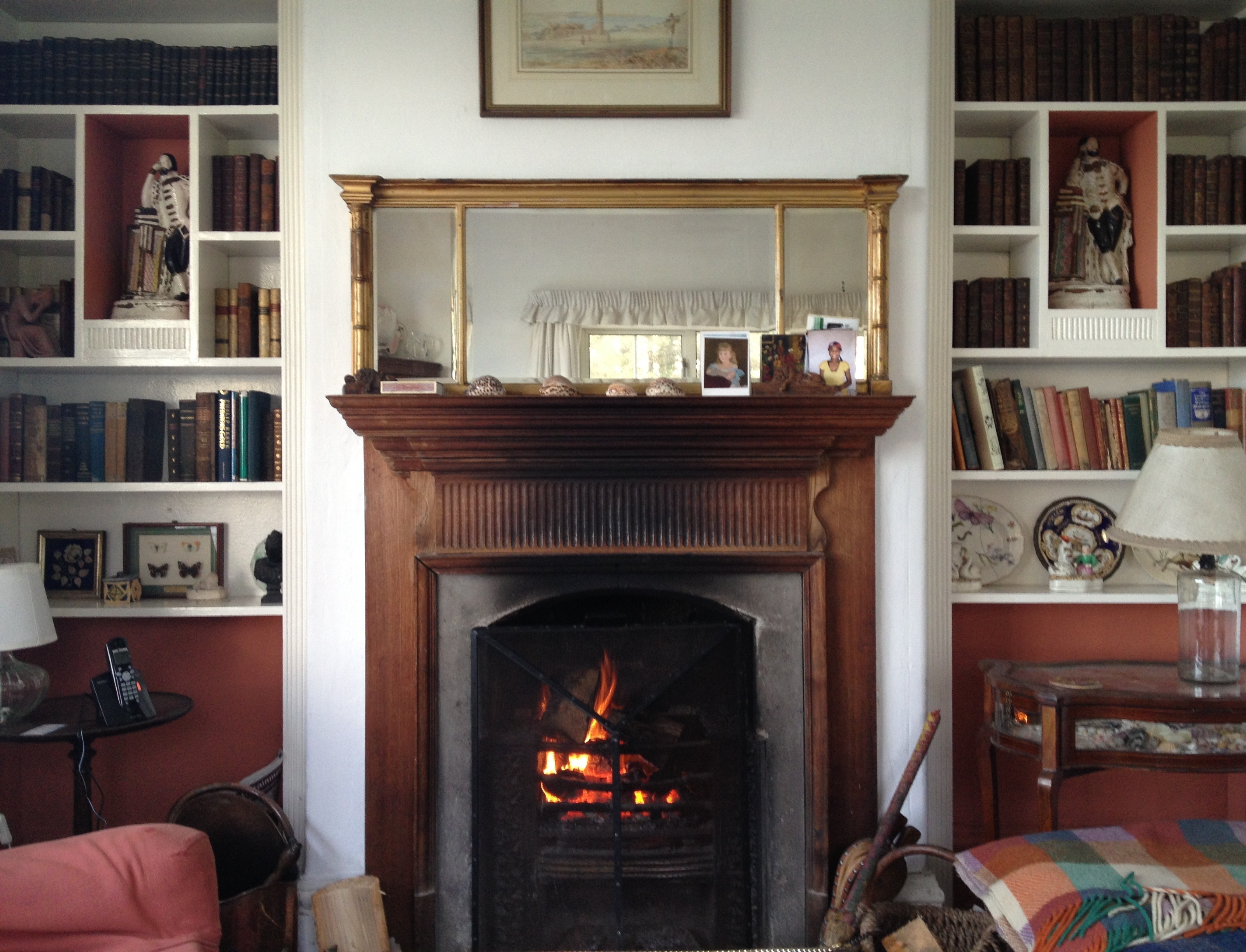
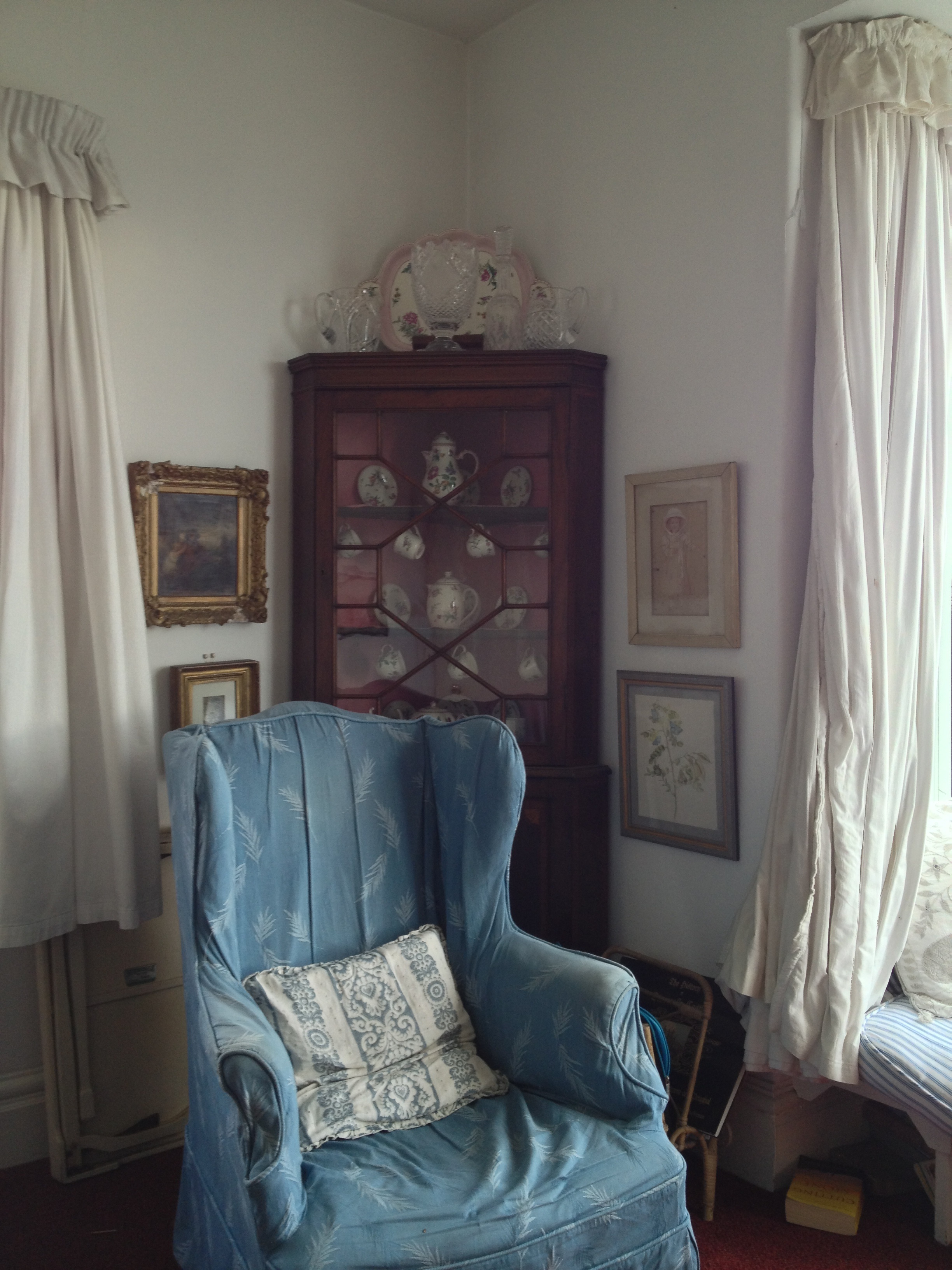
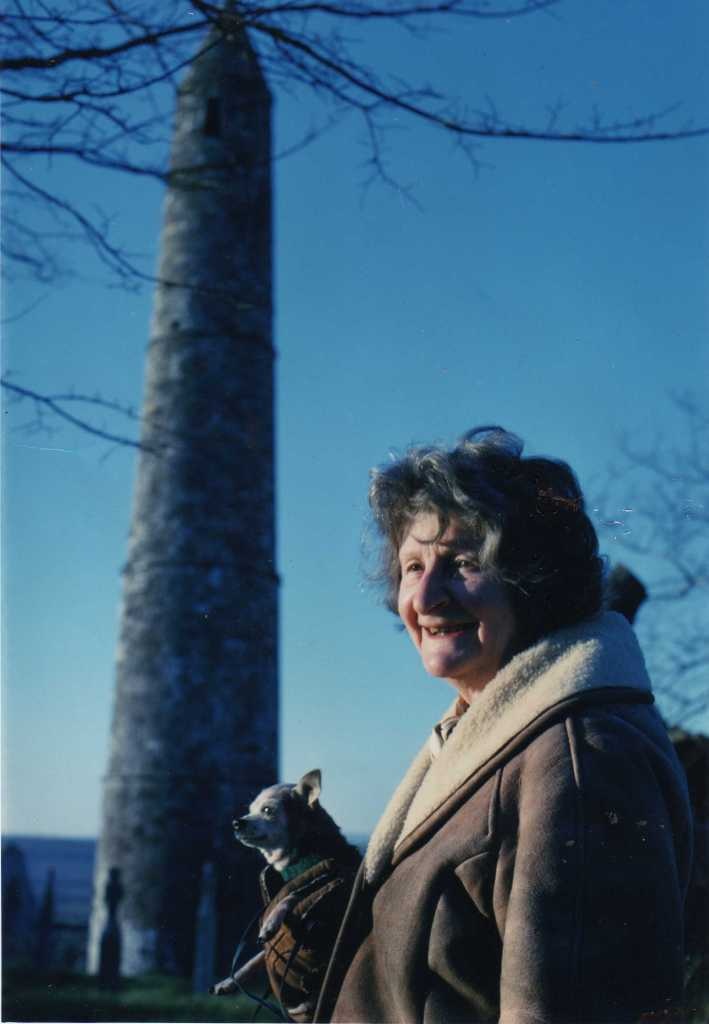
‘For the last fifty years of my life I have lived in a cottage – a cottage hanging above Ardmore bay, above the village and the Catholic church, its east window lighted over the sea on winter evenings. Beyond my cottage one of the finest round towers in Ireland reaches up to the sky above the ruined and beautiful church and monastery at its foot.’ Part of novelist Molly Keane’s charm is her ability to exaggerate to just the right extent. In this instance, the length of time she lived at Dysart in Ardmore, County Waterford has been amplified to half a century. In fact, she remained in the house for forty-four years, from 1952 until her death at the age of 91 in 1996, and as a result Dysart is replete with memories of its former chatelaine.
image

image

Anyone interested in Ireland’s historic houses and their near-universal decay during the course of the last century will be familiar with the work of Molly Keane. In the words of my clever friend Polly Devlin, she ‘observed and preserved…the sounding of the tocsins and the minutiae of the last days of the Irish Raj,’ a surveillance which had begun back in 1800 with the publication of Maria Edgeworth’s Castle Rackrent. Molly Keane was successor to Edgeworth, just as she was to Somerville and Ross, and like these earlier writers she combined keen scrutiny with black humour, fully aware she was chronicling the decline and fall of her own people but refusing to be cast down by the prospect. As her older daughter Sally has commented, ‘Her long life almost spanned the century. She has to be the last of the Anglo-Irish writers, because she bore witness to the dying away of her world.’
image

image

I never had the good fortune to meet Molly Keane but know well both Sally and her younger sister Virginia who now has charge of their mother’s house in Ardmore. This is a charming coastal town which has been a favourite holiday resort in the area since the 19th century. As already mentioned, it became the last stop in the peregrinations of Molly Keane, born Mary Nesta Skrine in County Kildare in 1904. When she was aged six her family moved to Ballyrankin House, County Wexford; in July 1921 the building and its contents were burnt out by members of the IRA and its owners forced to walk to the nearest town in their nightwear. Despite this Molly’s father Walter declared, ‘I would rather be shot in Ireland than exiled to England’ and remained in the country until his death nine years later. By that time, his daughter was well established as a writer.
image

image

Molly’s first novel, The Knight of Cheerful Countenance, came out in 1926; she was later rather disparaging about it but I find the book admirable and already full of the themes that recur in her later work, not least love of the Irish countryside and of hunting. It was because of her involvement with the latter that she published the majority of her books under the pseudonym of M.J. Farrell, the name borrowed from a pub she regularly passed on her horse. ‘For a woman to read a book, let alone write one was viewed with alarm,’ she later explained. As for her own books, ‘no-one connected them with me. I didn’t want to be recognised as a writer. I only wanted to be good in the hunting field and to be popular at hunt balls. I was so starved of fun when I was young, and I loved fun so much.’ Her books – and the plays she wrote with John Perry – provided her with that fun, and with much-needed income both before her marriage and during her long widowhood. In 1938 she married Bobby Keane but he died only eight years later after what was supposed to be a routine operation in London.

image

image

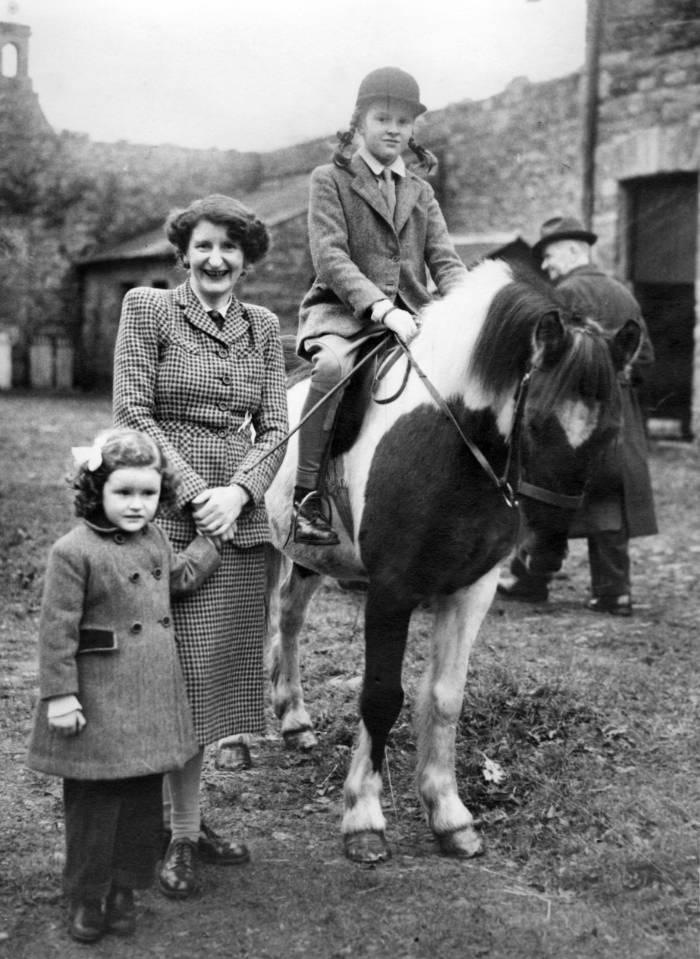
During her marriage and for the first years of widowhood, Molly Keane lived at Belleville outside Cappoquin, a house dating from around 1830. The drawing room, Sally remembers, ‘had a 1930s flavour. It was sort of glamorous, with plumped cushions and a cocktail shaker in the corner. It was decorated in peaceful shades of pale grey, dark blue and rust colours. It had tall windows, crossed with thin glazing bars, facing to the south.’ Above are a couple of photographs from that period, the first showing her working in the garden with Belleville behind, the second of Molly with her daughters Sally and Virginia as small children. However for various reasons, not least monetary, by 1952 she was obliged to move and hence settled into a much smaller property at Ardmore. This was the same year Treasure Hunt her last novel under the name M.J. Farrell appeared; it would be almost three decades before a new book written by her was published. In 1961 Dazzling Prospect, her final play co-authored with John Perry, received such poor reviews from London critics that she gave up writing altogether.
Instead she concentrated on her children, and on her house in Ardmore. Sally has written that gardening grounded her mother, ‘It was very important to her. She loved plants and digging. It assuaged the depressive moods of her artist’s temperament. Its imagery pervades her work and is part of a wider, intense response to the natural world of the Irish landscape…’ The garden Molly Keane created at Ardmore is still there, now tended by Virginia, and so too is the kitchen where, Sally believes, she spent some of her happiest times. ‘She delighted in domesticity and was brilliant at it. For a long period, she stopped writing, and I think she replaced it by cooking. She cooked with the precision and care she spent on words, balancing sweet and sour, and creating subtle unique flavours.’
image

image

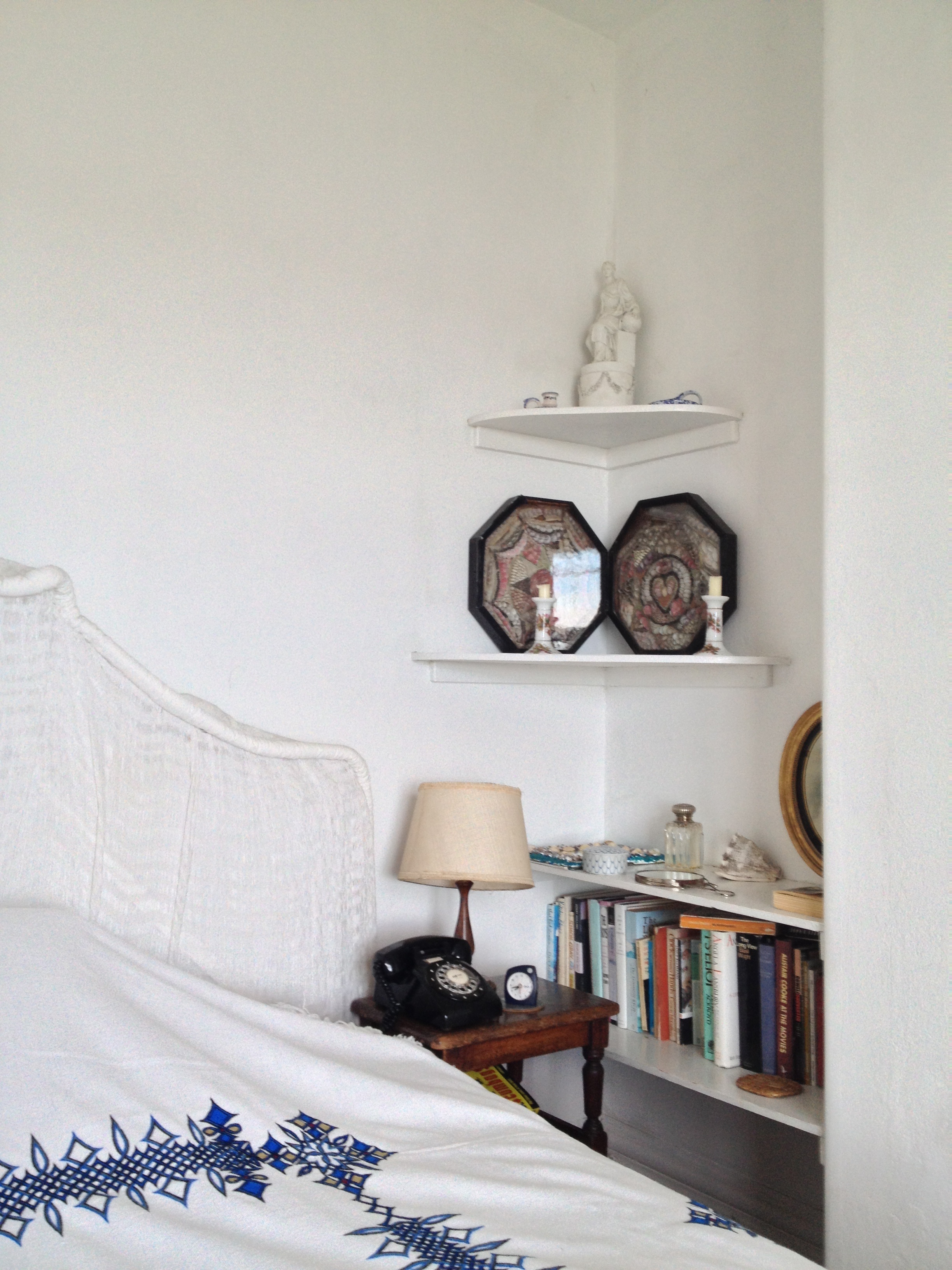
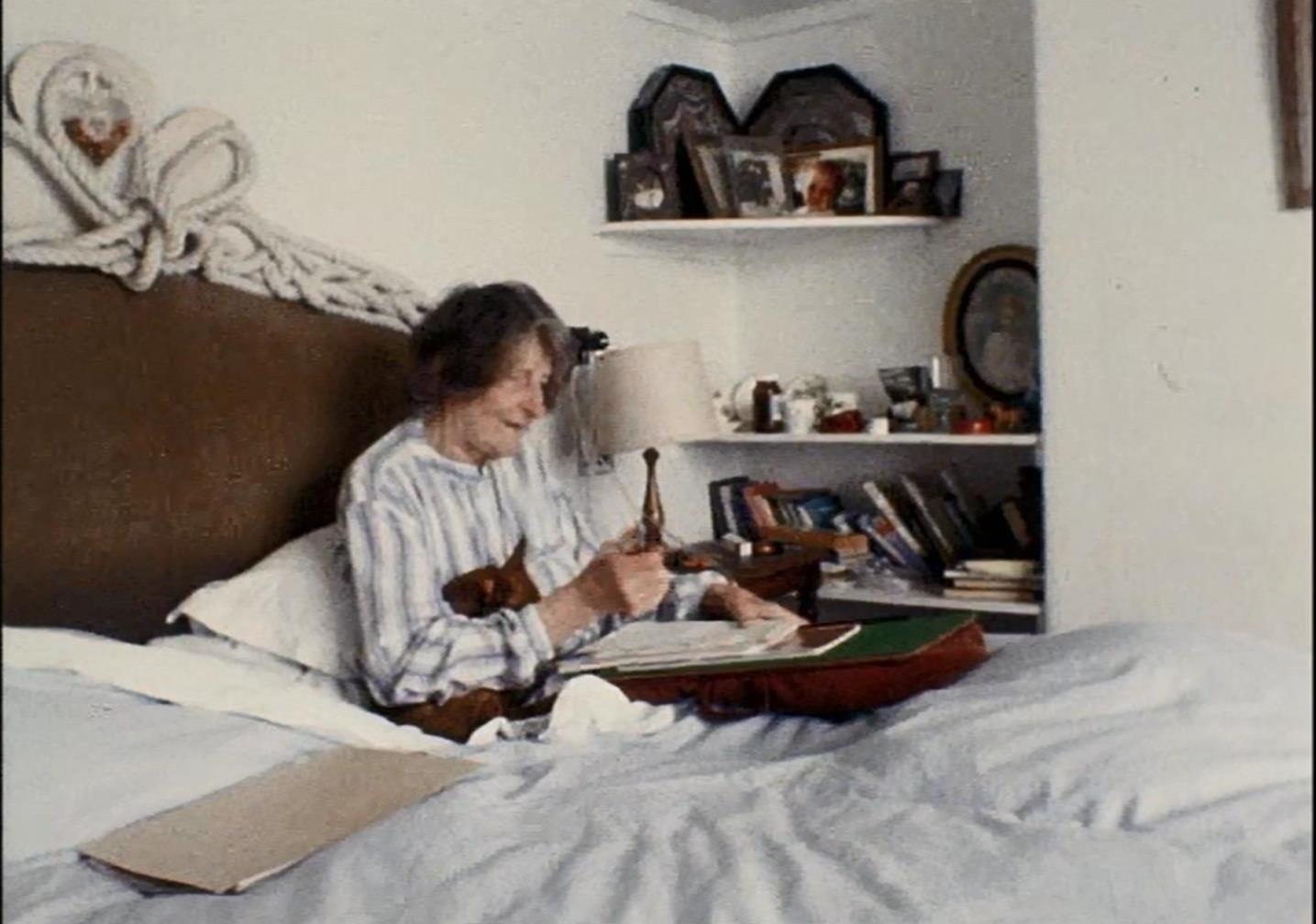
The story of Molly Keane’s rediscovery is well-known. In 1981 at the age of 77 and under her own name she published Good Behaviour which was short-listed for the Booker Prize and led to all her earlier books being reprinted and their author receiving the credit she was due. Molly Keane went on to write two further, equally acclaimed novels, Time after Time and Loving and Giving. She always liked to write in her own bed, seen above; the lower of the two photographs (a film still courtesy of RoseAnn and Catherine Foley) shows her working away in self-same bed with her dog Hero (she called him ‘My Hero) tucked under an arm.
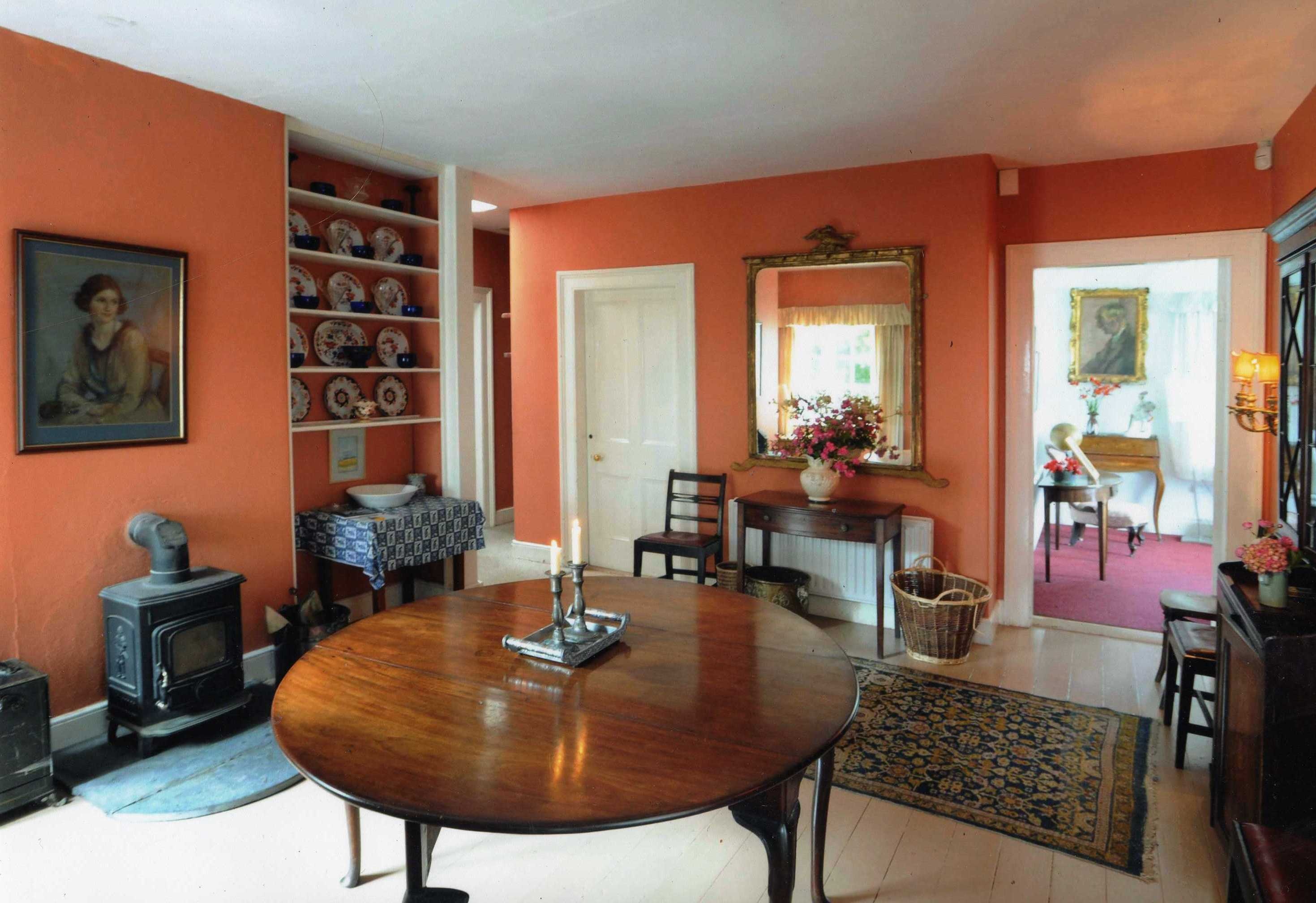
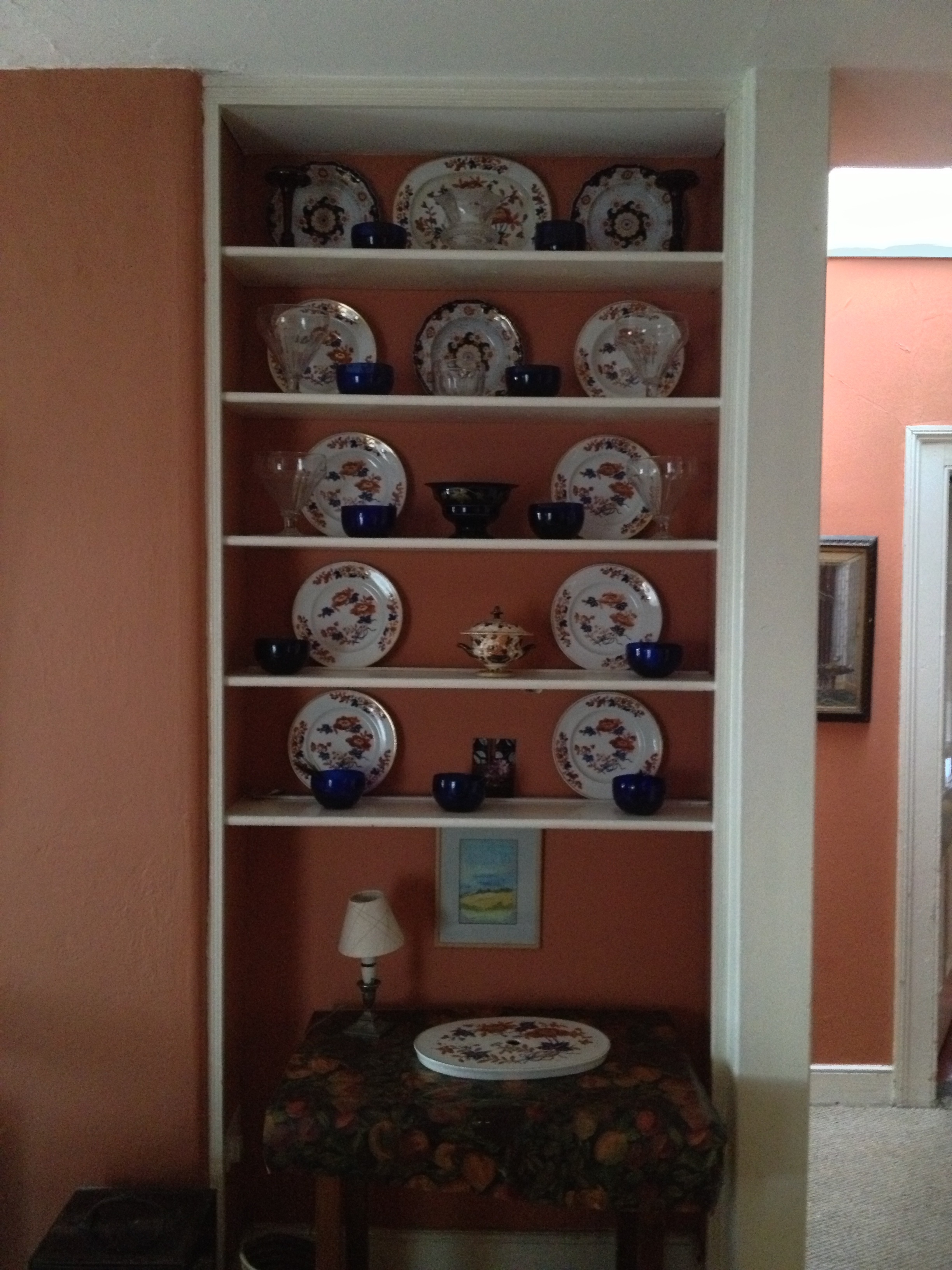
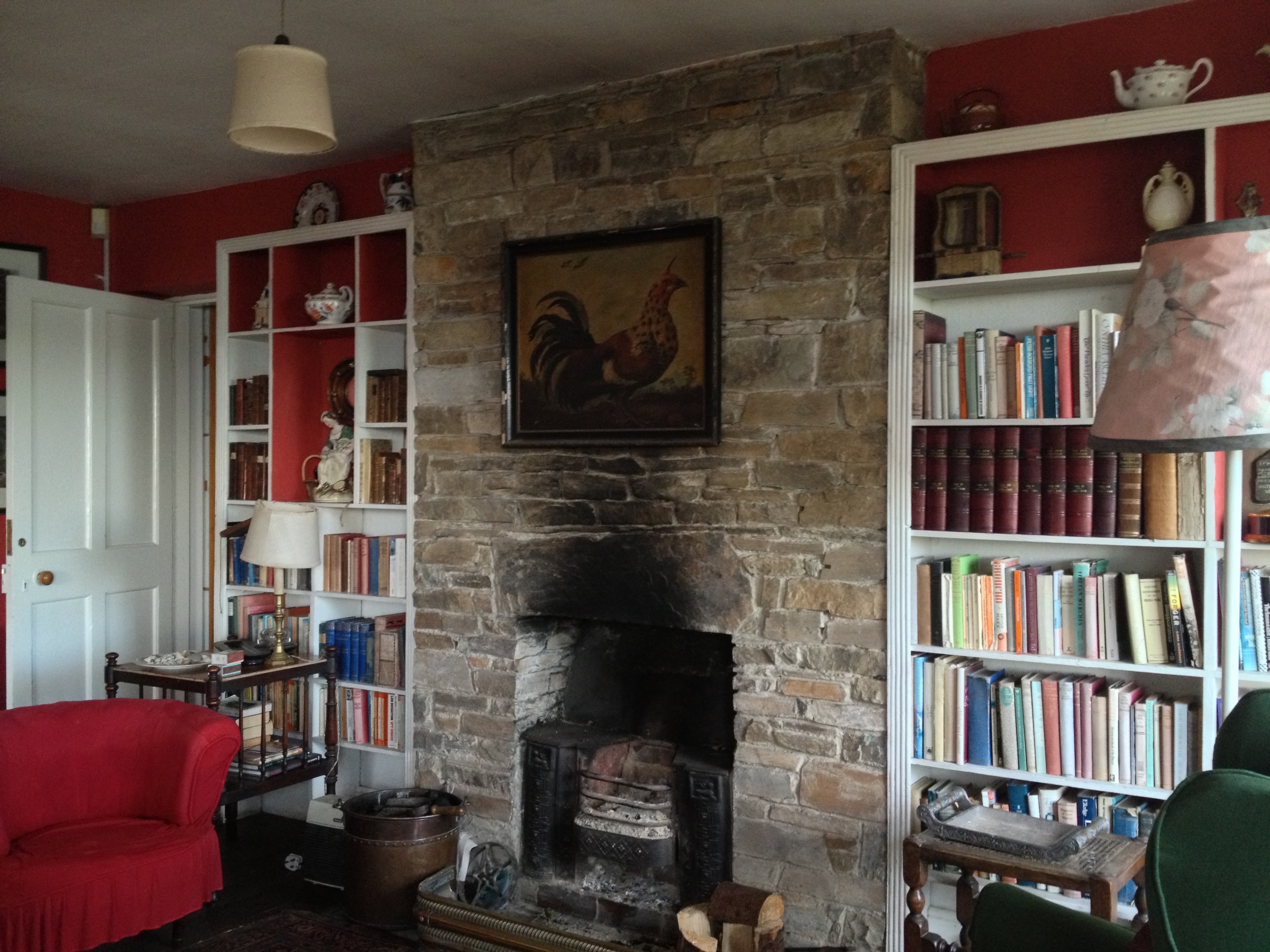
The special charm of Dysart is that it remains imbued with Molly Keane’s spirit; aside from her novels nowhere else will you be better able to experience the character of this clever, witty, plucky woman. Virginia is very much her mother’s daughter and forever finding ways to encourage greater use of the house, as a writers’ retreat, a centre for creative writing and a venue for one-off events, such as those presented by her own husband, film historian Kevin Brownlow. You can find out more about all these occasions on http://www.mollykeanewritersretreats.com. I will close with some lines written by the Cappoquin-born poet Thomas McCarthy who knew Molly Keane well and is a terrific supporter of Virginia’s endeavours: ‘When you lift the gate and walk down the steps into Molly Keane’s house in Ardmore you know you are coming down into a creative lair, into an eagle’s nest, into a writer’s heaven. I descend into a pillow of voices, an atmosphere that is thick with the scent of white roses, with the memories of some of the loveliest days of my youth. There is old Brigadier FitzGerald before me, happy to have another lost novel of Molly’s in his hand, impatient for Molly’s signature, impatient to get down to a right good gossip about the residents of the Blackwater valley; there is Hurd Hatfield, always hovering, ready to be charming or morose (depending upon whether a visitor remembers who he is), there is Hero, yapping, sniffling in Molly’s arms. But when you enter this house it is not just the place of personal memory: it is the house as a writer’s working space, the house as workshop where the work gets done. Here is a place to come to in County Waterford if you want to attend to the writer’s task.’
image

Of Wonderous Beauty Did the Vision Seem*

IMG_2688

Writing to a friend in September 1795, the English Romantic poet Anna Seward, known during her lifetime as the Swan of Lichfield, reported ‘I must not conclude my letter without observing, that, on my second visit to the fairy palace [Llangollen Vale], a lovely Being cast around its apartments the soft lunar rays of her congenial beauty. — Mrs. Tighe, the wife of one of my friend’s nephews, an elegant and intelligent young woman, whom I should have observed more had his wife’s beauty been less. I used the word “lunar” as characteristic of that beauty, for it is not resplendent and sunny, like Mrs. Plummer’s, but, as it were, shaded, though exquisite. She is scarce two-and-twenty. Is it not too much that Aonian inspiration should be added to the cestus of Venus? She left an elegant and accurate sonnet, addressed to Lady E. Butler and her friend, on leaving their enchanting bowers.’
The ‘Mrs Tighe’ to whom Seward here refers was another poet, Mary Tighe, while ‘Lady E. Butler and her friend’ were the famous Ladies of Llangollen, and a house in Ireland, today a ruin, links them all together: Woodstock, County Kilkenny. Lady Elinor, who grew up in Kilkenny Castle, knew the place well since it was here in 1768 that she met her lifelong companion, Sarah Ponsonby. Lady Elinor was then aged 28, Miss Butler some fifteen years younger but they formed so close a bond that more than a decade later, braving the opprobrium of their respective families, and of society at large, they ran away together and set up home at Plas Newydd, near the Welsh town of Llangollen. Although living quietly and on a relatively modest income, they soon became famous and attracted visitors from throughout Britain and Ireland: Queen Charlotte wanted to see their house and persuaded George III to grant them a pension. Writers in particular were especially fascinated by the Ladies of Llangollen and among those who travelled to see them were Lord Byron, Wordsworth, Shelley, and Sir Walter Scott. Plus, of course, both Anna Seward and Mary Tighe.

IMG_2670

IMG_2704

Mary Tighe (née Blachford) was born in 1772, the daughter of a Church of Ireland clergyman who died when she was very young. Her mother Theodosia Tighe was an early supporter of John Wesley and Mary had a severely religious upbringing. At the age of twenty-one she married her first cousin Henry Tighe but it appears the union was not happy. In addition Mary soon began to manifest signs of the tuberculosis that would eventually kill her.
From an early age she had written both poetry and prose but only in 1805 was her long poem Psyche, or the Legend of Love privately printed in an edition of just fifty copies. Nevertheless, it brought her considerable fame: in the same year Thomas Moore wrote his own poem To Mrs Henry Tighe on Reading her Psyche which opens with the lines, ‘Tell me the witching tale again/For never has my heart or ear/Hung on so sweet, so pure a strain/So pure to feel, so sweet to hear.’
Psyche is a six-canto allegorical poem in Spenserian stanzas recounting the classical myth of the love between Cupid and Psyche, and the travails the couple must endure before they can achieve happiness. In sentiment it is of its own era and not of ours, but stylistically the work is highly accomplished and one can understand why it achieved such renown in the early 19th century. A year after the death of the poem’s lovely young author in 1810 a new edition of Psyche, along with some of her other verses, was published and this helped to cement Mary Tighe’s fame across Europe.

main-house-woodstock-inistioge

IMG_2759

Mary Tighe spent the final months of her short life at Woodstock which belonged to her brother-in-law William Tighe. Wonderfully located on high ground above the village of Inistioge and the river Nore, the house dates from around 1745 and is believed to have been designed by the architect Francis Bindon for Sir William Fownes. Its north-east front of six bays and three storeys over part-raised basement is notable for having an elaborate central doorway comprising the door itself and two flanking windows immediately above which is a niche which originally contained a life-size statue, and an oculus over that again. So deep is the building that it has a small inner courtyard to light the central rooms.
Woodstock was inherited by Sir William Fownes’ grandson William Tighe and c. 1804 he was responsible for adding the flanking single-storey wings with pedimented breakfronts, the designer of these being local architect William Robertson. The interior was especially noted for its fine library and a couple of old photographs show ceilings with elaborate rococo plasterwork. The main hall contained a white marble figure representing Mary Tighe carved by the Tuscan Lorenzo Bartolini some five years after her death. This has gone but her mausoleum survives in the graveyard attached to the former Augustinian priory of St Columbkill is Inistioge. Inside the severe neo-classical limestone structure is another life size figure carved by the English sculptor John Flaxman and showing the recumbent poet with a small winged figure – Inspiration perhaps? – crouching beside her head.

L_ROY_04458

IMG_2716

Set on sloping ground, the gardens of Woodstock were originally laid out in the ‘natural’ style popularized by Capability Brown. However they were transformed in the middle of the 19th century by Lady Louisa Tighe, wife of another William Tighe; Lady Louisa was the daughter of the fourth Duke of Richmond and therefore the great-niece of the Lennox sisters who made such an impact on Ireland during the previous century (as anyone familiar with Stella Tillyard’s 1995 book Aristocrats will remember). Late in life, Lady Louisa who was born in 1803 recalled attending her mother the Duchess of Richmond’s legendary ball in Brussels, held three days before the Battle of Waterloo: ‘I well remember the Gordon Highlanders dancing reels at the ball. My mother thought it would interest foreigners to see them…some of the poor men who danced in our house died at Waterloo.’ (A piece of trivial information: four years after Waterloo, the Duke, by then Governor General of Canada, was bitten by a pet fox and subsequently died of rabies.)
Working with her then-head gardener Pierce Butler, Lady Louisa’s interventions at Woodstock were extensive, beginning with a series of three terraces to the immediate west of the walled garden. The middle of these three was aligned to the south with a large circular conservatory designed by the Dublin iron master Richard Turner. This work completed and Pierce Butler having died, Lady Louisa then embarked on another major project with her new head gardener Scotsman Charles McDonald: the creation of a winter garden to the immediate rear of the house. Consisting of four sunken panels each filled with elaborately planted parterres, its creation involved the removal of more than 200,000 cubic yards of soil and the building of massive granite embankments. Extant photographs indicate the style of these gardens to be of the kind now found only in municipal parks, with lines of bright bedding plants and even at Woodstock pathways of different coloured gravel. Less lurid elements elsewhere in the demesne included an arboretum, yew walk and rose garden, Monkey Puzzle and Noble Fir avenues, a grotto, rustic summer house and various other features.

L_ROY_07210

IMG_2733

Lady Louisa and William Tighe had no living children and although she remained in residence at Woodstock until her death in 1900 the estate passed to her husband’s nephew Frederick Tighe who in turn left it to his son Edward. Perhaps because Lady Louisa continued to live in the house, this branch of the family spent less time at Woodstock and once the War of Independence broke out the Tighes brought the house’s more valuable furniture and pictures to England. It proved a judicious move since the building was occupied first by members of the hated Black and Tans and then by the Free State Army. The latter left Woodstock on July 1st 1922 and the following day it was set alight, most probably by anti-Treaty forces. All the remaining contents, including the library and Bartolini’s statue of Mary Tighe, were destroyed in the blaze. It was, like so many similar occurrences of the period, an entirely gratuitous act of vandalism that did nothing other than rob Ireland of another part of her cultural heritage.
Woodstock has stood a ruin ever since, its external walls now needing support if they are not to fall down. In recent years Kilkenny County Council has undertaken extensive restoration of the gardens which are open to the public and much prized. The pity is that the once splendid house which was their centerpiece and source of meaning provided should remain a hollow shell. If only in memory of the poet Mary Tighe, Woodstock deserves better than its present condition.

Mary Tighe

*From the first Canto of Psyche.
A new biography of Mary Tighe by Miranda O’Connell has just been published by the Somerville Press.

A Lamentable Loss

image

Sir Hugh Lane, the original Irish Aesthete and the subject of my first book (published by Lilliput Press in 2000) drowned ninety eight years ago today after the RMS Lusitania on which he was returning from New York, was torpedoed by a German U-Boat off the coast of Cork. This portrait, now in the collection of the municipal art gallery in Dublin founded by Lane in 1908 was commissioned by his friends from John Singer Sargent two years earlier. One always wonders what Lane, still not yet forty at the time of his death, might have achieved had he lived longer.

Spring is Here

IMG_2640

As is evidenced by these new-born lambs in a field beside the Cathedral of St Laserian in Old Leighlin, County Carlow. The building occupies the site of a monastery founded here by St Gobban in the early 7th century and takes its name from one of the first abbots, Saint Molaise of Leighlin whose feast day fell last week. The core of the present cathedral was begun by Donatus, Bishop of Leighlin around 1152-1181 and completed by the end of the 13th century but there have been various changes made since. Today St Laserian’s is one of the country’s smallest cathedrals.

Putting on a Good Front

2001_016_3_053

Broad Street, Limerick, November 1949

Thirty years ago I was involved in the production of a little book about the traditional shopfronts of Roscrea, County Tipperary. A typical midlands market town, Roscrea had many old stores the appearance of which both inside and out dated back to the late 19th century. Largely due to insufficient funds the majority of these properties had since remained unaltered. However from the late 1960s onwards retailers here as elsewhere embarked on a determined programme of modernisation for their premises. Anything old was regarded as outmoded and a bar to progress, and so the old shopfronts with their painted fascias were swept away. Up in their place went expanses of plastic and fluorescent lighting, the same as could be found in innumerable other towns around the world. It may be that on strictly economic grounds the decision to discard the old made sense, but at what cost to the town’s character?
Awareness of this rapidly vanishing element of Roscrea’s heritage led to the project to record its still-extant shopfronts. The book contained pen and ink drawings of each premises included, together with as much information as could be ascertained about the shop and its history. It was a timely exercise: last time I passed through the town very few of the old shopfronts were still to be seen. Had the book not been published, today there would most likely be no record of what had gone.

2001_016_4_1396

Cigar Divan, Carlow, October 1958

2001_016_3_450

Shopfronts, Askeaton, County Limerick, February 1978

I remembered the little book of Roscrea shopfronts when looking through a recently published collection of photographs taken by the late Maurice Craig. For the best part of a half century wherever he travelled about Ireland Maurice brought his camera, and the result was a wondrous record of a country which within living memory has all but disappeared. ‘I do not think of myself as a photographer,’ he writes in his Introduction, ‘merely somebody who has taken a great many photographs, usually with a purpose in mind…Unconsciously I was collecting the materials for a history of buildings, which I came to realise were at risk of destruction or mutilation.’
A brief biography of Maurice will be helpful for those to whom his name is unfamiliar. Born of Presbyterian stock in Belfast in 1919 he was educated at Shrewsbury before winning a scholarship to Magdalene College, Cambridge where he occupied the same rooms as had the nationalist leader Charles Stewart Parnell some eighty years earlier. Maurice then went on to write a doctorate on the poet Walter Savage Landor at Trinity College, Dublin. His first book, a biography of the Earl of Charlemont (see Casino Royale, March 25th) appeared in 1948 but four years later he wrote the work with which he has ever after been associated: Dublin 1660-1860. It took 13 years for the 2,000 copies of the book’s first edition to sell but since being republished in 1969 Dublin 166-1860 has rightly been regarded as a peerless piece of architectural history. Impeccably written, packed with information and anecdote, more than sixty years after first appearing this remains the best work to read about the city’s evolution during the Georgian period. If I were to choose only one of his other books to recommend it would have to be Classic Irish Houses of the Middle Size (1976), a volume as distinctive – and memorable – as its title indicates.

2001_016_3_538
Shopfront, Rathcormick, County Cork, March 1979

2001_016_4_116
Hacketts Shop, Killkenny, June 1948

At the close of his preface to Dublin 1660-1860, Maurice comments, ‘I have done my best to get out of the way of the buildings and let them be seen for themselves, relying on a possibly fallacious belief that architecture cannot lie.’ He adopted the same approach to his photography, allowing buildings to make their own eloquent case. Amateur though he was Maurice proved an instinctively gifted photographer. Other people, of course, were taking pictures of Irish architecture before he started doing so in the 1940s, but usually the focus was on friends or family standing in front of or inside a building, or the place was being photographed for commercial purposes, most often to be reproduced as a postcard. Maurice was interested in a structure’s inherent qualities and in capturing these for posterity (somehow he knew of the wave of demolition that lay ahead). But he brought a romantic’s eye to his self-imposed task. Look at the way he frames the house in Limerick in the first picture by enclosing it with the sides of a lane on the other side of the street. And one must be either brave or perhaps foolhardy to devote so much of an image to empty roadway as in the photograph immediately above. Yet that expanse enhances appreciation of the building, not least because the outlines of this are lightly echoed on the surface of wet tarmac.
At the age of 91 Maurice died some eighteen months before the publication of the book from which these pictures are taken, having spent his last years in a little house in Monkstown, County Dublin. Anyone who visited him there will recall walls densely packed with books, Maurice contented in the midst of them with his pipe and a cat called Minna, seemingly surrounded by chaos but actually anchored by a wealth of index cards on which all necessary information on countless subjects was inscribed in impeccable script. Like the old shopfronts of Roscrea he has now gone, but there remains ample testimony to his presence on this earth in words and pictures alike. The photographs shown here are just a handful of those featured in his last book, which includes buildings great and small, many of them long since lost, all of them worthy of being immortalised by Maurice’s camera.

2001_016_4_1362
O’Carroll Street, Tullamore, County Offaly, July 1957

Maurice Craig: Photographs is published by Lilliput Press (www.lilliputpress.ie)

Queen Maeve

IMG_2228

“From the time I was almost five until I was almost eighteen, we lived in a small house in a part of Dublin called Ranelagh. On our street, all of the houses were of red brick and had small back gardens, part cement and part grass, separated from one another by low stone walls over which, when we first moved in, I was unable to peer, although in later years I seem to remember looking over them quite easily, so I suppose they were about five feet high. All of the gardens had a common end wall, which was, of course, very long, since it stretched the whole length of our street. Our street was called an avenue, because it was blind at one end, the farthest end from us.” (The Morning after the Big Fire, 1953)

Last Thursday’s property pages in the Irish Times carried a rather overwrought piece about a house for sale in Ranelagh, a suburb of Dublin to the immediate south of the Grand Canal. The origins of the name Ranelagh are rather curious. It derives from the Irish “Gabhal Raghnaill”, an area of what became County Wicklow centered around Ballinacor. Until the early 17th century, this region was under the control of an especially truculent branch of the O’Byrne family; Fiach MacHugh O’Byrne who was mentioned here a few weeks ago (The Cosby Show, March 11th) and who the altogether more unassertive Irish Aesthete likes to claim as an ancestor, was known in the 16th century as Lord of Ranelagh.
However, following the defeat of the O’Byrnes and the seizure of their lands, that title went to an interloper. In 1628 Sir Roger Jones, whose English-born father had been both Archbishop of Dublin and Lord Chancellor of Ireland, was ennobled as Viscount Ranelagh. In turn his son Richard was created Earl of Ranelagh in 1677. The latter’s London residence, immediately adjacent to Chelsea Hospital, was called Ranelagh House and some time after his death without a male heir the property was bought by a syndicate who converted the site into a fashionable spot called Ranelagh Gardens (the same ground now hosts the annual Chelsea Flower Show).
So when in 1766 a Dublin entrepreneur called William Hollister decided to open a similar open-air place of entertainment on the outskirts of his native city, he chose to emulate London by naming it Ranelagh Gardens. Thus a name which had crossed the Irish Sea returned to its own country. Well-travelled readers will know there is also an area in Paris close to the Bois de Boulogne called Ranelagh. It too is named after the Earl of Ranelagh (the French were then more anglophile than later became the case) and was the site of the Château de la Muette where Louis XVI and Marie-Antoinette spent their first years of married life. It was from here that the Montgolfier brothers made their debut ascent in a hot air balloon in November 1783. Coincidentally the first Irishman to take off in a balloon, Richard Crosbie, did so from Dublin’s Ranelagh Gardens just fourteen months later in January 1785.

IMG_2210

“Beyond the wall Mrs Bagot and Mrs Finn shared, a row of identical walls stretched off into the distance. All the gardens were attached, like all the houses. A grove of trees, forty diminishing walls away, completed the view to the sky. It was a narrow side street, a dead end, in the suburbs of Dublin. There were shops around the corner, on the main road, but none on the street itself. Schoolteachers, shopkeepers and minor civil servants lived on the street, and a policeman had recently moved into one of the houses with his family.” (The Twelfth Wedding Anniversary, 1966)

Dublin’s Ranelagh Gardens, like their London equivalent, eventually fell from public favour and the site came to be occupied by a convent of Carmelite nuns. They turned part of the grounds into a large kitchen garden that allowed them to be almost self-sufficient since they also kept poultry and even cattle. After the nuns departed in 1975 some of the site was retained as a public park and named Ranelagh Gardens, so retaining the link with the 18th century. Meanwhile the surrounding area had been gradually developed for housing as the city expanded and the prosperous classes moved out to what they judged the more salubrious suburbs. Ranelagh had the advantage of being outside and yet close to the commercial centre, allowing easy access especially after the advent of trams from 1872 onwards: many of Ranelagh’s red-brick terraces date from the decades immediately following the arrival of public transport.
In the 18th century there were a few fine houses in the area surrounded by large gardens but inevitably these were lost as demand for development land rose. Despite the best efforts of the Irish Times writer, the resultant streets cannot claim much aesthetic merit. The houses are formulaic in style, all with the same narrow entrance halls opening onto two reception rooms before a short flight of steps descends to the kitchen with a door to the garden. A flight of stairs leads up to a couple of bedrooms, passing a bathroom en route. Built for the petite bourgeoisie, the Mr Pooters of Dublin, their design consciously avoided originality lest it frighten prospective buyers. Conformity was critical to their success.

IMG_2219

“Thinking about all that walking had given him a sense of energy and well-being. He felt in good health and good humor, and contented to be coming home after his day’s work, and he was smiling as he stepped into the hall. There were red glass panels in the side frames of the front door, and he was always aware of the glass and always closed the door carefully. At the same instant that he was hanging his raincoat on the rack, he looked down the hall and saw the kitchen door close quicly and quietly, but not quickly enough to prevent him from seeing that Rose was down there.” (Family Walls, 1973)

Maeve Brennan was born in Dublin in 1917 and at the age of five she and her family moved to Cherryfield Avenue, Ranelagh, a street immediately identifiable in the many short stories she would later write. Her parents were both republicans and at the time of her birth Robert Brennan had been in jail for leading the 1916 Rising in Wexford. In post-independence Ireland he became part of the new establishment and in 1934 was sent to the Washington as the Irish Free State’s first minister to the United States. Ten years later he returned to Dublin but his daughter Maeve remained, moving to New York where initially she worked for Harper’s Bazaar; it’s worth pointing out that at the time this was unquestionably the most influential women’s magazine in the world and had another Irishwoman as editor, the Dublin-born Carmel Snow.
In 1949 Maeve Brennan was offered a staff job at The New Yorker where she remained for the rest of her writing career. Although she mostly produced social pieces under the title of The Long-Winded Lady, from 1950 onwards The New Yorker also carried her short stories, the best of which are set in Ranelagh. These tales, mostly featuring the same handful of characters although written decades apart, are as redolent of the world she had known in her youth as are James Joyce’s stories in Dubliners. In particular she possesses a remarkable ability to evoke sense of place; read her Irish stories (many of them collected together and published as The Springs of Affection in 1999) and you are immediately transported to Ranelagh.
Maeve Brennan’s Ranelagh is not today’s self-consciously chichi “village” but an altogether more modest suburb of Dublin whose residents, as she makes plain, possess few ambitions other than to ensure their immediate neighbours remain unaware of the tempests brewing behind those glass-paned frontdoors. This is, of course, scarcely new territory but what sets her work apart is its ability to turn the mundane into the exceptional. Thanks to her adroit yet simple use of language, the regular red-brick terraces are filled with drama even while nothing remarkable takes place. Nobody is killed, or engages in adultery, or behaves violently or even shouts, but still those streets pulsate with passion.

IMG_2249

“They were Mr and Mrs Derdon, and they had been married to each other for twenty-seven years. He was the senior by five years. They slept in the back bedroom upstairs, and their window looked over their little walled garden, not much different from the other gardens in the terrace, and beyond that over a strip, grey and corrugated, of garage roofs.” (The Poor Men and Women, 1952)

Maeve Brennan’s later years were not happy. The pall of melancholy that hangs over her stories spilled over into her life. In 1954 she married The New Yorker‘s managing editor St. Clair McKelway, an alcoholic womaniser with three divorces behind him. A few years later she became his fourth ex-wife. By the 1970s she had developed her own drink problem and by then also suffered from declining mental health which required hospitalisation on a number of occasions. Having lived in a series of rented apartments and hotel rooms over the previous decades, she now became homeless and took to sleeping in the women’s lavatory at The New Yorker‘s office. Destitute and unwell, eventually she was admitted to a nursing home and died in Brooklyn in November 1993 at the age of seventy-six.
A few years after her death, Maeve Brennan’s stories were republished, leading to her discovery by a new readership; she has since been the subject of a biography and a play. While neither of these especially caught my fancy, I can recommend her Dublin short stories without reserve. No writer better conveys the spirit of the city in the aftermath of independence and in particular the character of Dublin’s then-burgeoning suburbs. Thanks to Maeve Brennan attributes hitherto hidden become apparent and the seemingly ordinary streets of Ranelagh appear beautiful. This is the transformative power of great prose.

IMG_2234

“Still, he could not believe that even a human being as ineffectual as she had been could vanish from life without leaving any trace of herself at all. Any trace would be a sign that might guide him to the grief he wanted to suffer for her. But there was no sign.” (The Drowned Man, 1963)

Risen from the Ashes

IMG_0750

In 1913, Sir John Keane, who had succeeded his father as fifth baronet twenty-one years earlier, decided to carry out some embellishments of the family seat, Belmont, more commonly known as Cappoquin House, County Waterford. Sir John was a descendant of the O’Cahans of Ulster who had lost their lands during the province’s plantation in the early 1600s and, like so many others, been forced to resettle west of the Shannon. Towards the end of the 17th century, one of them changed his name to Keane, converted to Anglicanism and entered government service as a lawyer. In 1738 his son John Keane acquired three 999-year leases on the town of Cappoquin and surrounding estate from Richard Boyle, fourth Earl of Cork and Burlington. John Keane’s grandson, also called John (1757-1829) and created a baronet in 1801, was responsible for building Cappoquin House on the site of an old Fitzgerald castle around 1779.

IMG_0733

We will probably never know the architect responsible, although the name of John Roberts (1712-96), responsible for many other notable buildings in Waterford City and County, has often been proposed. Located on a prominent site above the point where the river Blackwater turns 90 degrees en route to the Irish Sea, the house’s south-facing seven-bay ashlar facade with three-bay breakfront rises two storeys over basement, its parapet finished with a line of urns. There are scarcely any images of the house before 1930 other than an 1843 watercolour signed R Armstrong. This shows the old conservatory to the immediate east side of the house and also a servants’ wing unattached to the main house, which explains the former’s survival after the latter went up in flames in 1923.
Seemingly much of the interior of Cappoquin had charming Adamesque plasterwork but this did not extend to the drawing room. So in 1913 Sir John Keane engaged the services of Page L Dickinson to embellish that part of the house. Dickinson is a curious character, the author of a memoir The Dublin of Yesterday published in 1929 after he had moved to England in voluntary exile from post-independence Ireland and filled with laments for a since-lost ancien regime. But he also wrote, in conjunction with Thomas Sadleir, the excellent Georgian Mansions in Ireland (1915) which contains detailed accounts of, among many other houses, Dowth Hall (see Netterville! Netterville! Where Have You Been?* of December 24th).

235

238

Fifth son of the Dean of the Chapel Royal in Dublin, Page L Dickinson was first apprenticed to the architect Richard Caulfield Orpen (brother of artist William Orpen), and then became his partner in the practice. In 1913 he was asked to improve the appearance of Cappoquin House’s drawing room primarily through the addition of plasterwork decoration. Lack of photographs, which the building’s owner would lament after it had been gutted by fire, means we do not know how the finished room looked. But an idea of its appearance can be gleaned from surviving correspondence between the two men because in some of his letters Dickinson not only described what he proposed to do but included sketches of same. The latter show oval wall panels and swags in the Adam-revival style then fashionable. The work was carried out by a Dublin craftsman, Michael Creedon of Clare Lane and again extant documentation shows that he expected to complete the job at a cost of £130 ‘as the ornament would be rather close to the eye & would consequently have to be modelled with special care.’
In addition to the drawing room decoration, Dickinson also designed a new loggia immediately outside on the west front of the house. This was to replace a flimsier 19th century timber and slate structure, and was sufficiently robust to survive the 1923 fire. Once more, Dickinson’s letters show the evolution of the design to its final form, an excellent example of architect and client working together to produce a satisfactory result. All the work was completed in late spring 1914, just months before the outbreak of the First World War.

IMG_0732

IMG_0759

So how was it that Cappoquin House came to be gutted by fire in February 1923? The explanation lies in Ireland’s complicated history during this period. In December 1921 representatives of the British government and those of the fledgling Irish state had signed a treaty concluding hostilities and providing for Ireland’s independence – except for six counties in Ulster which remained part of the United Kingdom. Not everyone in this country welcomed the treaty’s outcome and an extremely violent civil war ensued. Among those targeted by anti-Treaty supporters were members of the new state’s upper parliamentary house, the Senate: no less than 37 houses belonging to Senators were deliberately burnt out. In December 1922 Sir John Keane had accepted an invitation from the Free State government to become a Senator. The consequences were inevitable.
In fact, he had already realised that Cappoquin House, like many other similar properties in Ireland, was vulnerable to attack. His wife and children had moved to England and he had arranged to have the best furniture, pictures and silver taken away and put into storage. Much was lost when the house was set on fire, not least an historic library, but a great many of the contents were spared destruction. Immediately Sir John set about applying to the Irish government for compensation for his losses and investigating how best to go about restoring the hollow structure. Although he received less financial support than had been requested, he still went ahead with the project, initially intending to work with the same architect as ten years before. But by this time Dickinson had already moved to England, so he recommended his former partner Richard Orpen who did take on the job.

IMG_0753

Cappoquin House is a very rare example of an historic Irish property rebuilt following its deliberate destruction, and it stands as a tribute to the tenacity of the redoubtable Sir John Keane who, incidentally, also remained as an active Senator until 1944, by which time he was aged over seventy. A lot of trouble was taken to ensure the house’s interiors were as splendid as they had been before the fire, and the extensive papers dealing with its gradual reconstruction make for fascinating reading. This time the exquisite plasterwork decoration in most of the main reception rooms had to come from the London firm of G Jackson & Sons – one can only assume Mr Creedon was no longer in business in Dublin – and all their invoices remain. For example plasterwork of the octagon above the main stairs (seen at the start of this piece) cost £166. Ironically due to insufficient funds the only area not redecorated was the old drawing room which had been given its splendid new appearance just a decade before the fire. Today Cappoquin House and its equally delightful gardens remain in the ownership of the same family, admirably cared for by Sir John’s grandson, Sir Charles Keane and his wife Corinne. They welcome visitors so here is an opportunity to see for yourself an Irish house that rose like a phoenix from the ashes of destruction (see http://www.cappoquinhouseandgardens.com/).

L1010913

For more about the restoration of Cappoquin House after the 1923 fire, see my article on the subject in the current spring issue of the Irish Arts Review.

A Man of Some Importance

????????????????????????????????????????????????????????????????????????????????????????????????????

So here is Castletown, County Kildare, famed as Ireland’s first, largest and grandest Palladian house. Astonishingly in the mid-1960s it was threatened with destruction and only saved through the ceaseless endeavours of the Irish Georgian Society. Among those most closely associated with securing Castletown’s future, both then and now, was Professor Kevin B Nowlan who died earlier this week at the age of 91.
Small of stature, stout of heart Kevin was an indefatigable campaigner on behalf of Ireland’s architectural heritage, member of countless boards and committees – on a number of which I have also sat – and always both passionate and articulate in the cause of conservation. Aside from being intelligent and well-informed and determined, one of his chief merits was a complete lack of self-interest: nobody could ever accuse Kevin of deriving personal benefit from his involvement in any enterprise.
The other great quality he possessed was tirelessness; for over half a century Kevin never grew bored or despondent, even when a campaign met with setback. Interviewed by the Irish Times on the occasion of his 90th birthday, he remarked, ‘As long as you’re in good health and keep your mind active you can’t ask for much more.’ Kevin certainly did remain active. Until just a couple of weeks ago, one was most liable to see him either going to or coming from a meeting. His funeral takes place this morning but I suspect he is not at rest: no doubt right now he is chairing a new group established to ensure a proposal for the reconfiguration of the Pearly Gates will be defeated.

IMG_0982

Building on a Prelate’s Ambition

IMG_0407

In 1751 an impoverished but well-connected Anglican clergyman came to Ireland and within a year had been consecrated as Bishop of Killala. Over the next decade he advanced through two further sees before being appointed Archbishop of Armagh in 1765. Richard Robinson (1709-94) was the sixth son of a Yorkshire landowner and as such it was inevitable that after graduating from Christ Church, Oxford he should have considered the Church as a lucrative career. Few of his clerical contemporaries, however, acquired so much or spent so lavishly.
He arrived in Dublin as chaplain to the then-Lord Lieutenant, Lionel Sackville, Duke of Dorset, whose support helped secure that first episcopacy. But it is clear that Robinson was always destined to make a mark. After his death it was said that during his time there Armagh had been converted ‘from an unsightly crowd of mud cabins into a handsome city of stone dwellings.’ Among the buildings for which he was responsible are the public library, the Royal School, the barracks, a county gaol, the public infirmary and, most famously, in 1793 the Armagh Observatory for which he created an endowment. Long before that date, finding the Archbishop’s residence unsatisfactory, he had a new one built for him on a 300 acre demesne, together with stables, farmyard and a chapel. No wonder Methodism’s founder John Wesley accused him of being more interested in building that in the care of souls.

IMG_0408

Robinson behaved like a continental prince-bishop. In his memoirs the playwright Richard Cumberland, whose father was Bishop of Clonfert, recalled accompanying the Archbishop to Armagh Cathedral one Sunday: ‘He went in his chariot with six horses, attended by three footmen behind… On our approach the great western door was thrown open, and my friend (in person one of the finest men that could be seen) entered, like another Archbishop Laud, in high prelatical state, preceded by his officers and ministers of the church conducting him in files to the robing-chamber and back again to the throne.’
Robinson’s lofty aspirations – the reliably-waspish Horace Walpole judged him ‘a proud but superficial man’ – led him to seek secular as well as religious preferment and in 1777 he was created Baron Rokeby in the Irish peerage. Some years later he acquired an estate in Marlay, County Louth and here built a house which was given the name Rokeby Hall (http://www.rokeby.ie). By so doing he evoked the Robinson family’s Yorkshire seat which his older brother Sir Thomas, an amateur architect but professional spendthrift, had been obliged to sell in 1769. So the new Rokeby in Ireland was intended not just to serve as a country retreat but also to replace a lost estate and provide an alternative dynastic base: although the Archbishop never married, there were several potential heirs among his siblings’ offspring.

IMG_0391

IMG_0394

IMG_0400

As his architect for the house, Robinson chose Thomas Cooley who had already been responsible for many of the new buildings in Armagh, including the Archbishop’s Palace. Unfortunately Cooley died in 1784 and so his plans were handed over to the youthful Francis Johnston. Born in Armagh, Johnston’s abilities had been noticed by Robinson who sent him as an apprentice to Cooley in 1778. Nevertheless, although the younger architect oversaw Rokeby’s construction surviving plans show just how much its layout is as originally devised by Cooley.
Rokeby’s limestone exterior looks somewhat severe, the facade relieved only by the slightly advanced three centre bays with first-floor Ionic pilasters beneath a pediment. To the immediate right and reticently recessed is a long extension which might appear to be a later addition but is in fact contemporaneous with the main house and originally contained many of the necessary services such as a large kitchen. The main house is often described as being two-storey over basement. However there is a splendid attic storey tucked behind the parapet and centred on a striking circular room lit by glazed dome; as a result of an acoustic trick when you stand directly beneath this your sense of hearing is affected.

IMG_0431

IMG_0428

While obviously not a small house, Rokeby is by no means palatial and the appeal of its interiors lies in their neo-classical refinement devoid of superfluous ornamentation. This is evident in the entrance hall where the space is simply but effectively divided by the intervention of two Doric columns. There is relatively little plasterwork decoration, except on the main staircase and the upper landing. The latter is one of the finest features of the house: a circular lobby off which open various bedrooms and dressing rooms, every second door topped by an oculus providing light for this space.
These rooms look to have retained their original chimneypieces, sadly not the case on the groundfloor. On his death Archbishop Robinson left Rokeby to a nephew, John Robinson, Archdeacon of Armagh (created a baronet in 1819) but he fled Ireland after his father-in-law, Captain James Spencer of Rathangan House, County Kildare, was killed by rebels during the 1798 Rising. Rokeby was then rented to a sequence of tenants; James Brewer’s The Beauties of Ireland published in 1826 noted that the house ‘is now, we believe, in the hands of a farmer, and the chief apartments are let furnished to casual inmates.’ Only some time after Archdeacon Robinson’s death in England in 1832 did his son Sir Richard return to Rokeby and presumably embark on a programme of refurbishment necessary after almost half a century of neglect. Hence the chimneypieces in the main rooms are of a later date as are some doors, evident in the different disposition of their panelling.

Rokeby 1

IMG_0384

Descendants of the Robinsons remained in possession, although not necessarily in occupation of Rokeby until the middle of the last century, after which the house passed through a variety of hands often with unfortunate consequences. When the present owners bought the place in 1995, for example, the library had been stripped of its bookcases and divided in two with one half used as a kitchen.
Over the past eighteen years, a process of gradual restoration has taken place at Rokeby, driven by just the right balance of enthusiasm, commitment and ongoing research into the house’s history. At the moment, the owners are undertaking the restoration of Rokeby’s most notable 19th century addition: a substantial conservatory designed c.1870 by Richard Turner. This is due to be reinstated later in the spring. One feels confident that even if members of his family are no longer in residence, Archbishop Robinson would be delighted to see the country house he commissioned so well maintained and loved.

Robinson-Reynolds

A mezzotint produced in 1764 by Richard Houston and based on a portrait of Richard Robinson painted by Joshua Reynolds the previous year and now in Christ Church, Oxford. Reynolds painted Robinson three times and a version of the last of these hung in Rokeby until the last century. Today it is in the collection of the Barber Institute of Fine Arts, Birmingham.

The Beauty of Birr

IMG_0896

Anne, Countess of Rosse (1902-1992) was one of the best looking and most stylish women of her generation. Birr Castle, County Offaly is full of mementoes of her tenure as chatelelaine including this chalk portrait which hangs above a mahogany chest on the return of the main staircase. Proposing her as an 18th century beauty, the artist was Anne Rosse’s brother, Oliver Messel (1904-1978). Originally renowned as a stage designer, in later years he achieved fame for the houses he created in the Caribbean.