Ave Maria

Maria Edgeworth

On this day in 1849 the wondrous Maria Edgeworth died at the age of 81. She is rightly best remembered for her 1800 novel Castle Rackrent, a remarkable work that had no precedent but many successors, both in Ireland and elsewhere. While nothing else in her output matched its originality, at the same time Edgeworth’s other Irish novels in particular The Absentee (1812) are worth reading for insights into the state of the country in the aftermath of the Act of Union. Her family home, and the place where she produced many of her books, was Edgeworthstown House, County Longford. From around 1770 onwards it was much enlarged and altered by her father Richard Lovell Edgeworth, the result notable for the distinctive interiors which he designed in an idiosyncratic fashion. The house still stands and has long been a nursing home run by a religious order: the last time I visited the nuns in charge seemed to have little knowledge of or interest in its most famous resident. Sadly the building today bears little resemblance to its appearance during Maria Edgeworth’s lifetime having been ruthlessly stripped of decoration and character. Below is an engraving showing the house’s library as it looked a few years after her death.

Library in Edgeworthstown House

Good Golly Miss Molly

image

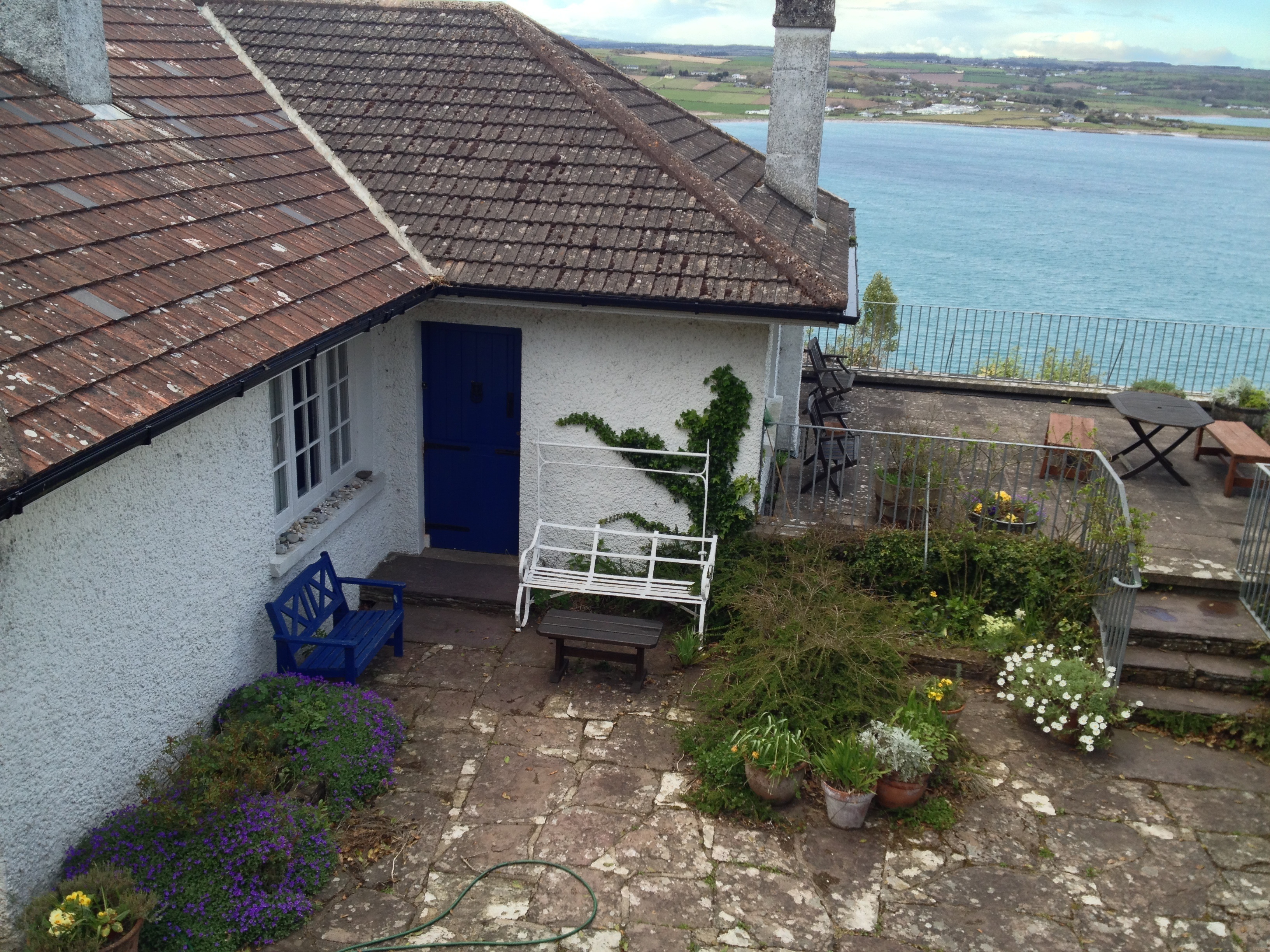
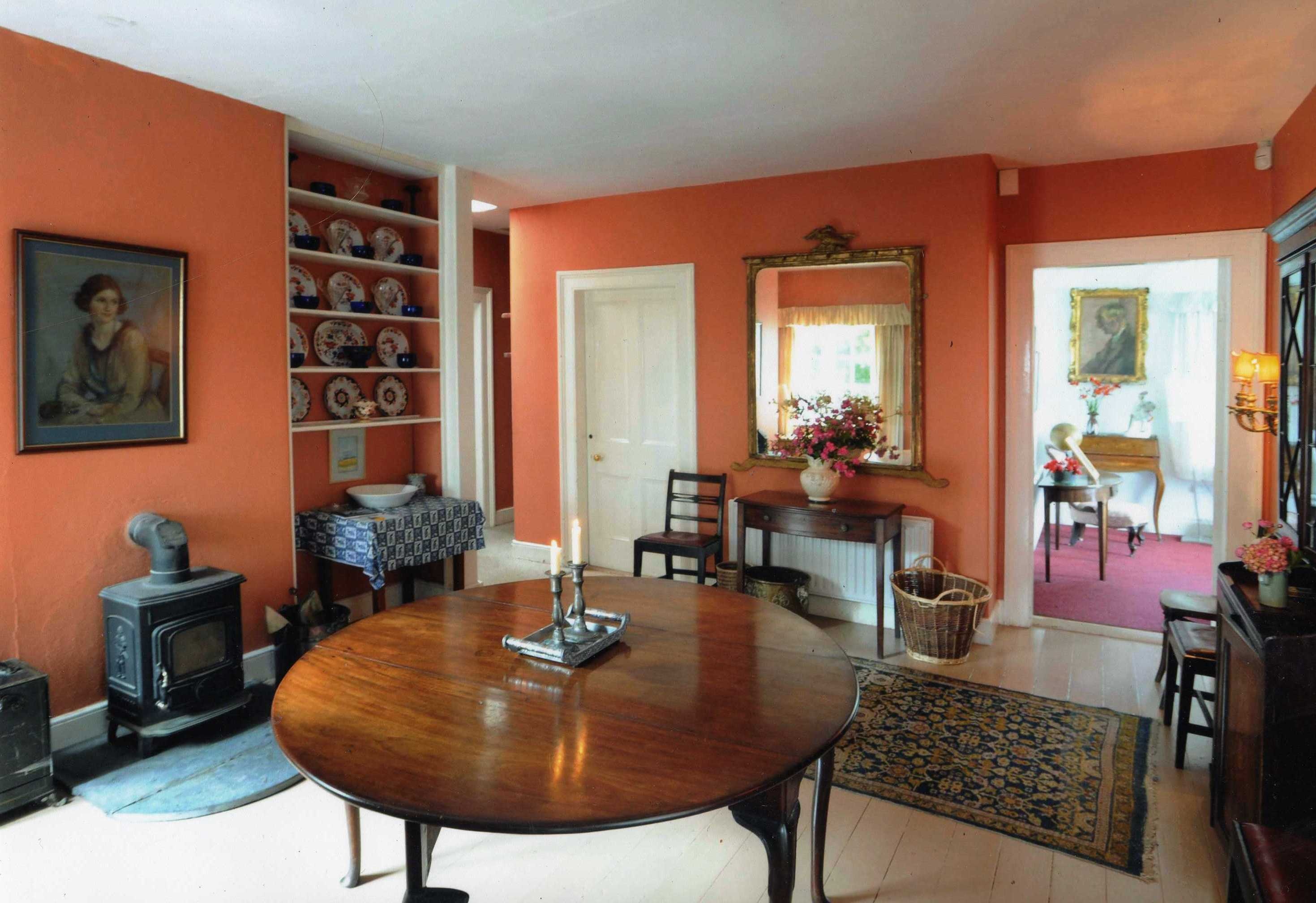
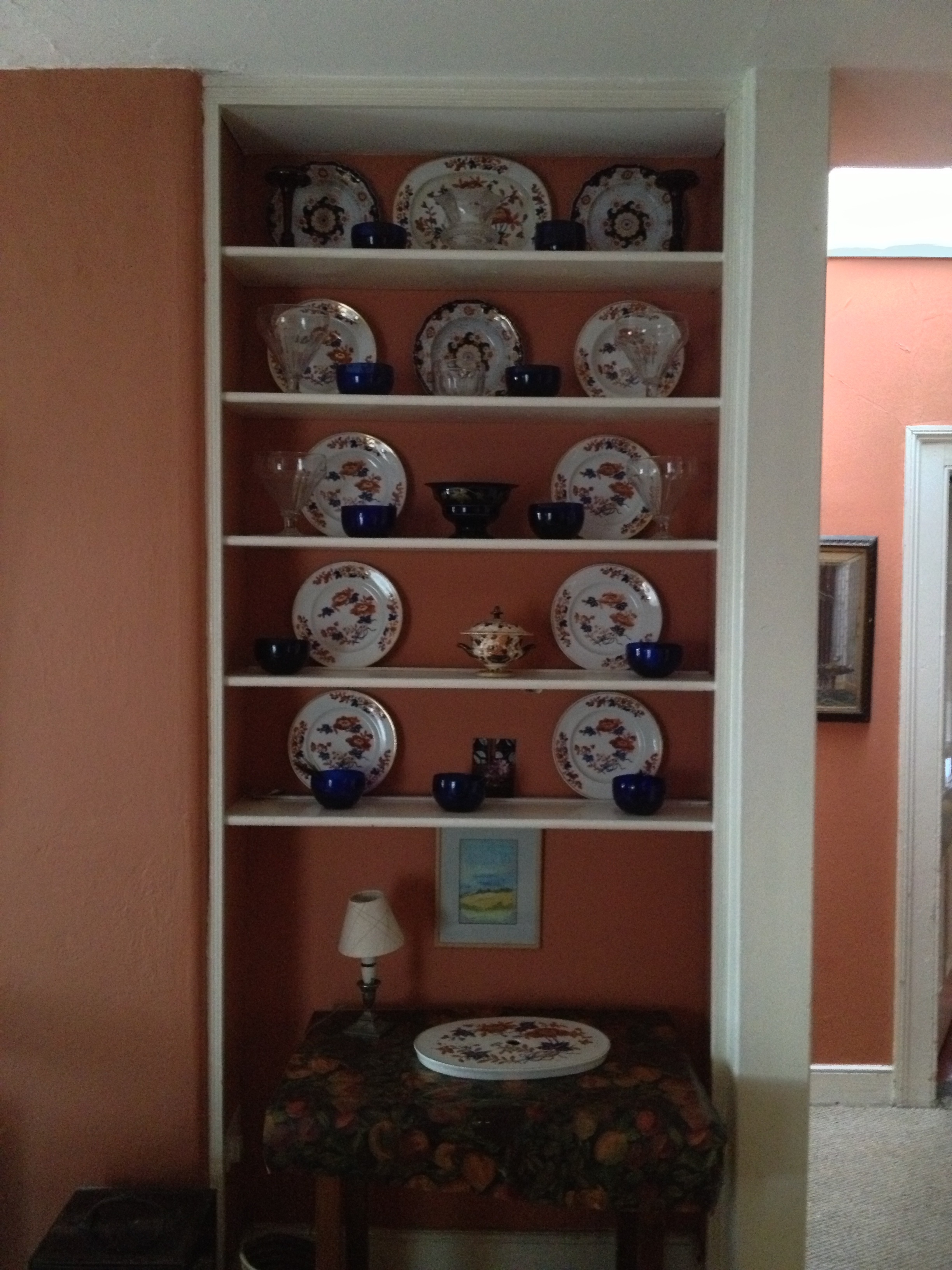
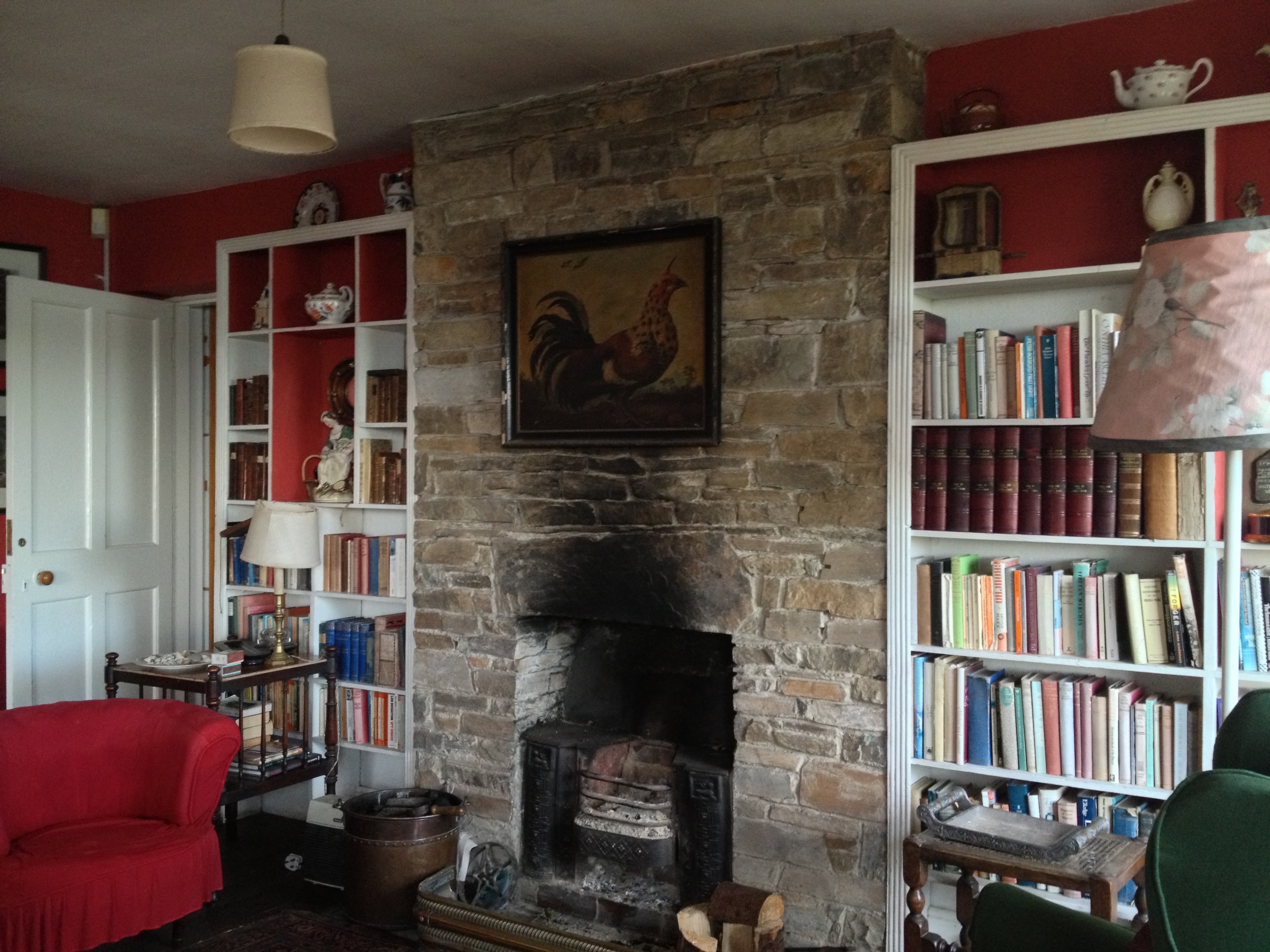
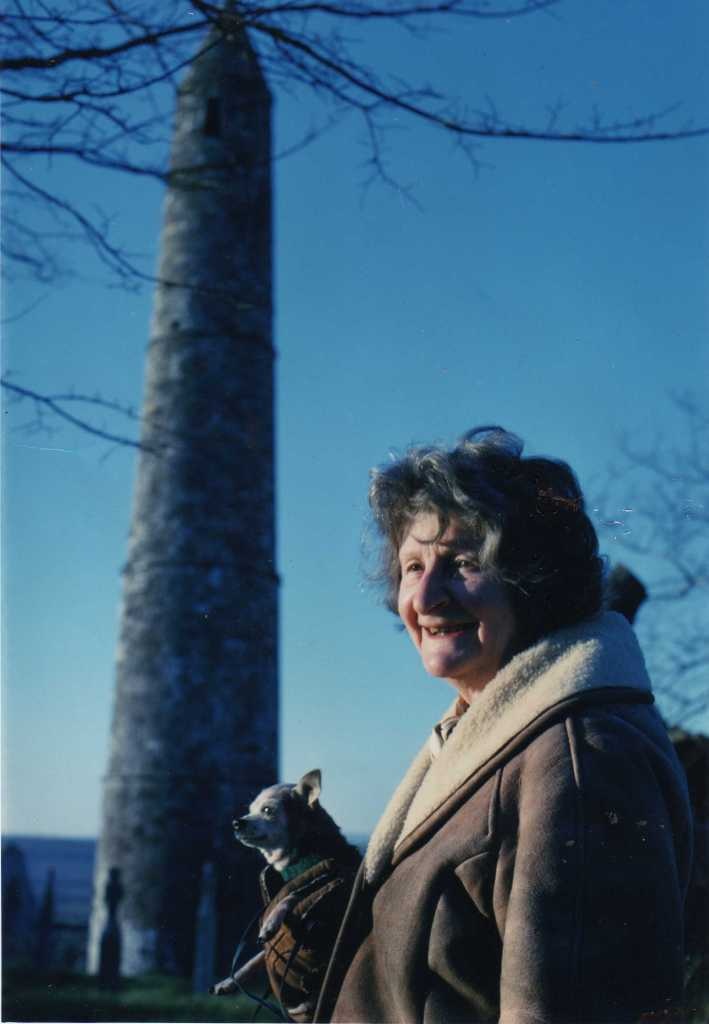
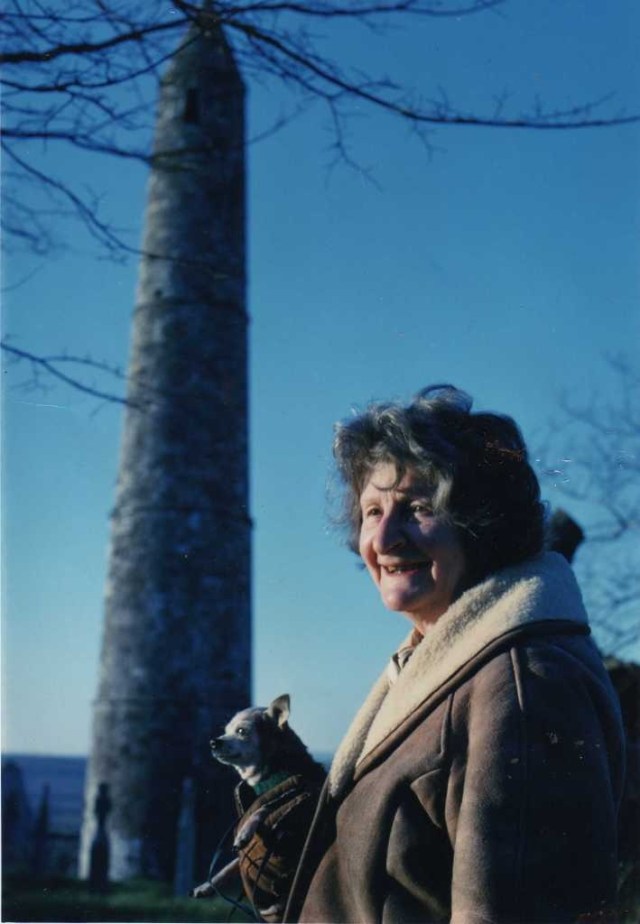
‘For the last fifty years of my life I have lived in a cottage – a cottage hanging above Ardmore bay, above the village and the Catholic church, its east window lighted over the sea on winter evenings. Beyond my cottage one of the finest round towers in Ireland reaches up to the sky above the ruined and beautiful church and monastery at its foot.’ Part of novelist Molly Keane’s charm is her ability to exaggerate to just the right extent. In this instance, the length of time she lived at Dysart in Ardmore, County Waterford has been amplified to half a century. In fact, she remained in the house for forty-four years, from 1952 until her death at the age of 91 in 1996, and as a result Dysart is replete with memories of its former chatelaine.

image

image

Anyone interested in Ireland’s historic houses and their near-universal decay during the course of the last century will be familiar with the work of Molly Keane. In the words of my clever friend Polly Devlin, she ‘observed and preserved…the sounding of the tocsins and the minutiae of the last days of the Irish Raj,’ a surveillance which had begun back in 1800 with the publication of Maria Edgeworth’s Castle Rackrent. Molly Keane was successor to Edgeworth, just as she was to Somerville and Ross, and like these earlier writers she combined keen scrutiny with black humour, fully aware she was chronicling the decline and fall of her own people but refusing to be cast down by the prospect. As her older daughter Sally has commented, ‘Her long life almost spanned the century. She has to be the last of the Anglo-Irish writers, because she bore witness to the dying away of her world.’

image

image

I never had the good fortune to meet Molly Keane but know well both Sally and her younger sister Virginia who now has charge of their mother’s house in Ardmore. This is a charming coastal town which has been a favourite holiday resort in the area since the 19th century. As already mentioned, it became the last stop in the peregrinations of Molly Keane, born Mary Nesta Skrine in County Kildare in 1904. When she was aged six her family moved to Ballyrankin House, County Wexford; in July 1921 the building and its contents were burnt out by members of the IRA and its owners forced to walk to the nearest town in their nightwear. Despite this Molly’s father Walter declared, ‘I would rather be shot in Ireland than exiled to England’ and remained in the country until his death nine years later. By that time, his daughter was well established as a writer.

image

image

Molly’s first novel, The Knight of Cheerful Countenance, came out in 1926; she was later rather disparaging about it but I find the book admirable and already full of the themes that recur in her later work, not least love of the Irish countryside and of hunting. It was because of her involvement with the latter that she published the majority of her books under the pseudonym of M.J. Farrell, the name borrowed from a pub she regularly passed on her horse. ‘For a woman to read a book, let alone write one was viewed with alarm,’ she later explained. As for her own books, ‘no-one connected them with me. I didn’t want to be recognised as a writer. I only wanted to be good in the hunting field and to be popular at hunt balls. I was so starved of fun when I was young, and I loved fun so much.’ Her books – and the plays she wrote with John Perry – provided her with that fun, and with much-needed income both before her marriage and during her long widowhood. In 1938 she married Bobby Keane but he died only eight years later after what was supposed to be a routine operation in London.

image

image

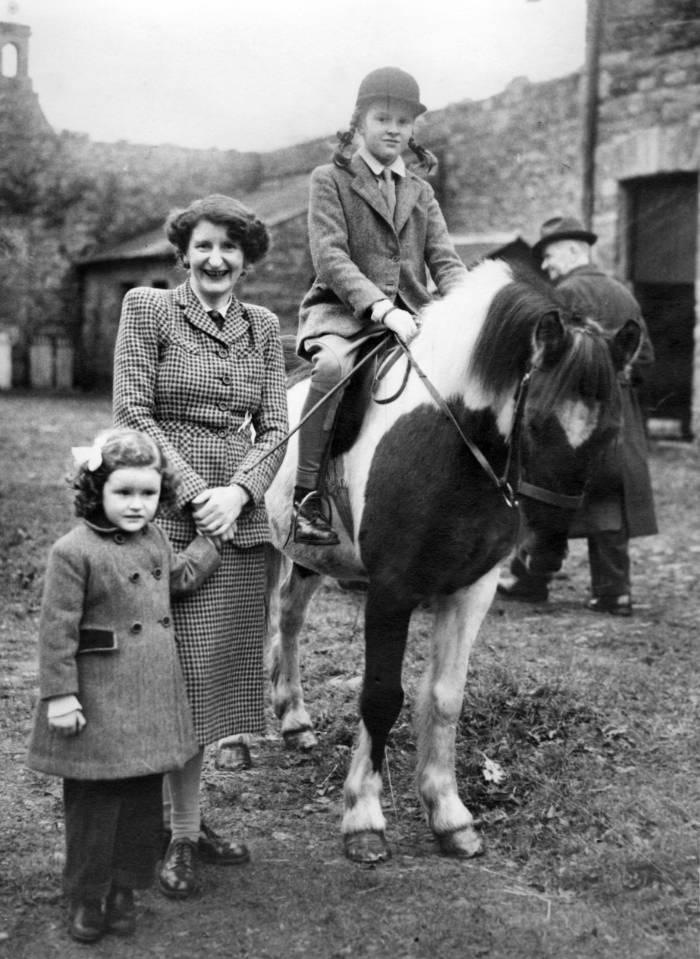
During her marriage and for the first years of widowhood, Molly Keane lived at Belleville outside Cappoquin, a house dating from around 1830. The drawing room, Sally remembers, ‘had a 1930s flavour. It was sort of glamorous, with plumped cushions and a cocktail shaker in the corner. It was decorated in peaceful shades of pale grey, dark blue and rust colours. It had tall windows, crossed with thin glazing bars, facing to the south.’ Above are a couple of photographs from that period, the first showing her working in the garden with Belleville behind, the second of Molly with her daughters Sally and Virginia as small children. However for various reasons, not least monetary, by 1952 she was obliged to move and hence settled into a much smaller property at Ardmore. This was the same year Treasure Hunt her last novel under the name M.J. Farrell appeared; it would be almost three decades before a new book written by her was published. In 1961 Dazzling Prospect, her final play co-authored with John Perry, received such poor reviews from London critics that she gave up writing altogether.
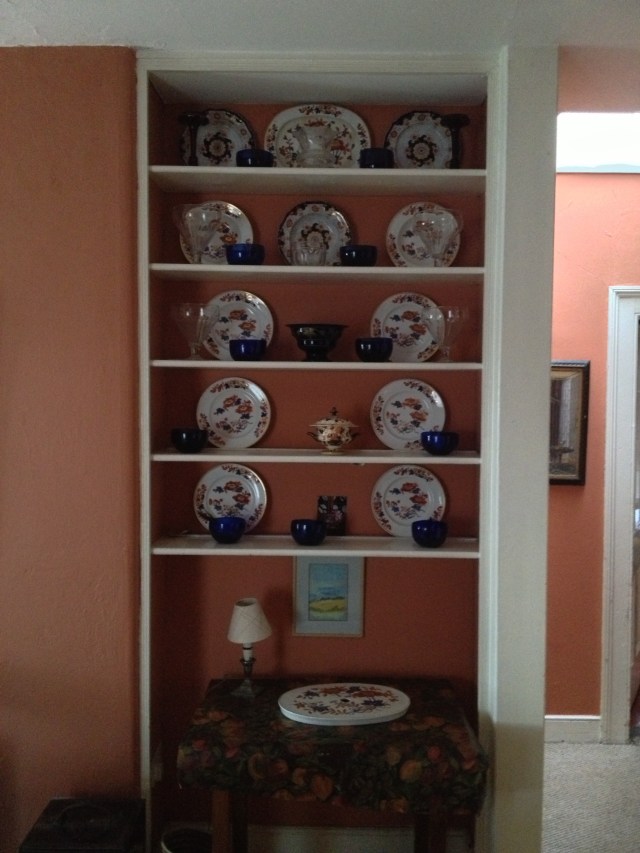
Instead she concentrated on her children, and on her house in Ardmore. Sally has written that gardening grounded her mother, ‘It was very important to her. She loved plants and digging. It assuaged the depressive moods of her artist’s temperament. Its imagery pervades her work and is part of a wider, intense response to the natural world of the Irish landscape…’ The garden Molly Keane created at Ardmore is still there, now tended by Virginia, and so too is the kitchen where, Sally believes, she spent some of her happiest times. ‘She delighted in domesticity and was brilliant at it. For a long period, she stopped writing, and I think she replaced it by cooking. She cooked with the precision and care she spent on words, balancing sweet and sour, and creating subtle unique flavours.’

image

image

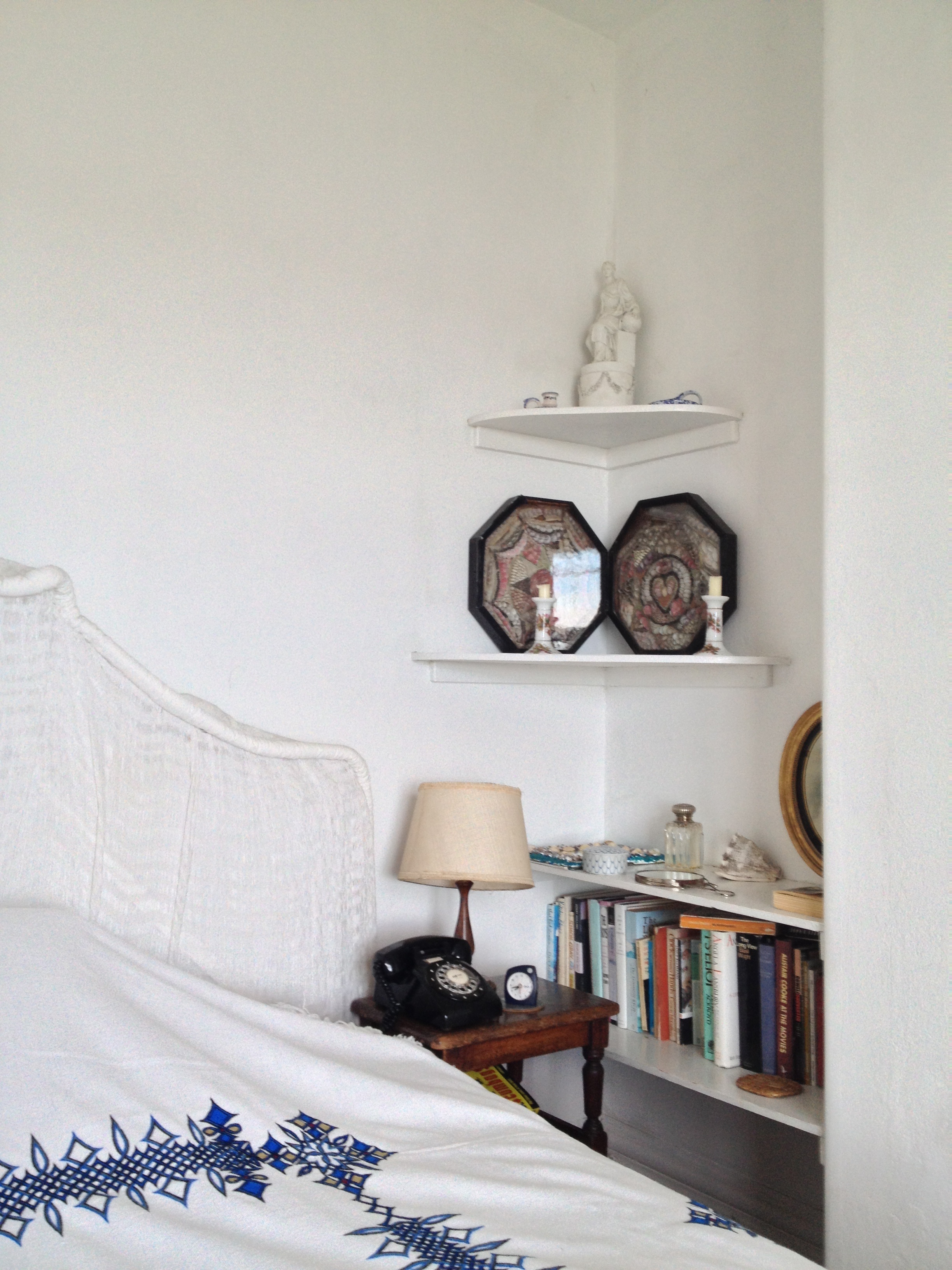
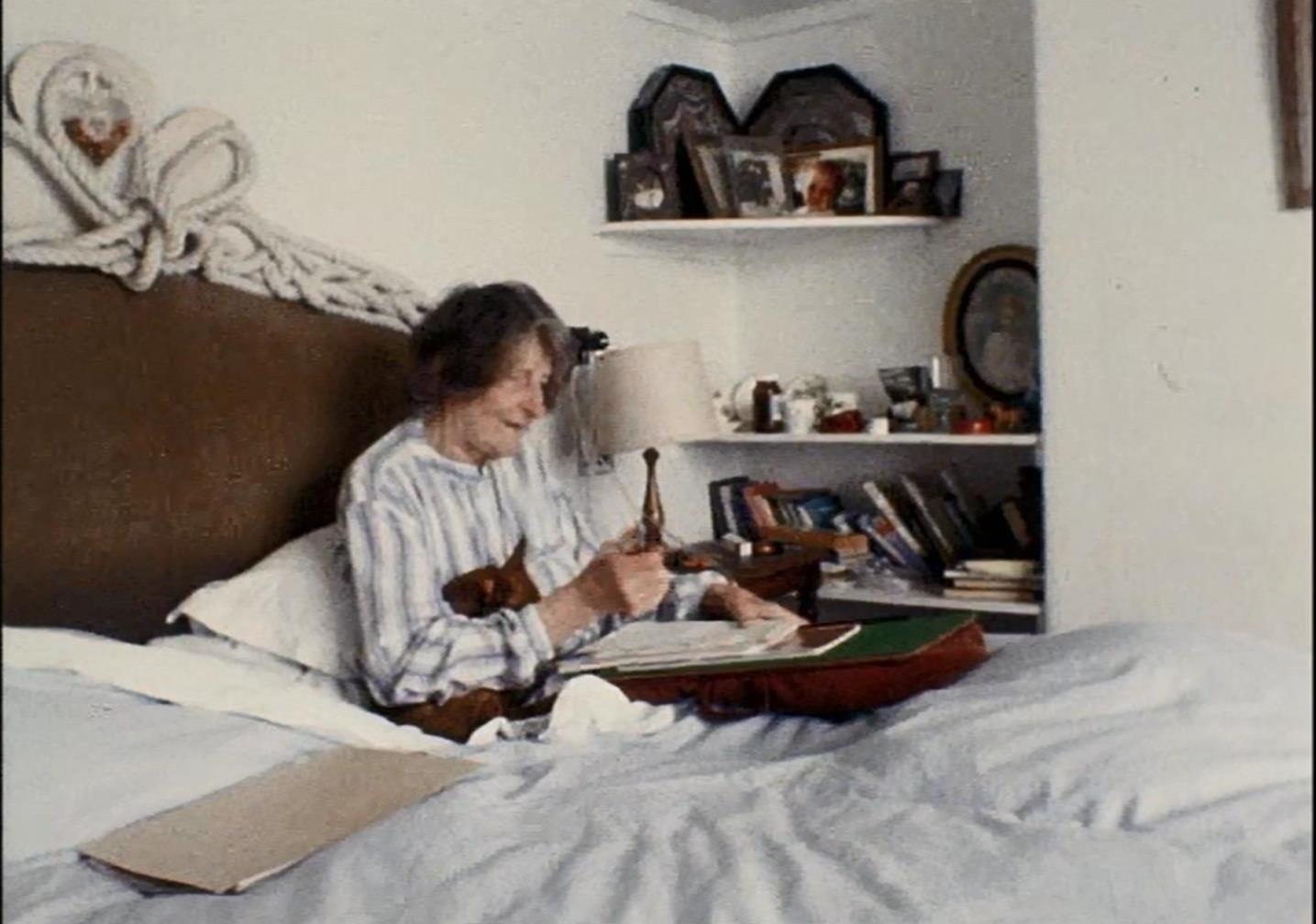
The story of Molly Keane’s rediscovery is well-known. In 1981 at the age of 77 and under her own name she published Good Behaviour which was short-listed for the Booker Prize and led to all her earlier books being reprinted and their author receiving the credit she was due. Molly Keane went on to write two further, equally acclaimed novels, Time after Time and Loving and Giving. She always liked to write in her own bed, seen above; the lower of the two photographs (a film still courtesy of RoseAnn and Catherine Foley) shows her working away in self-same bed with her dog Hero (she called him ‘My Hero) tucked under an arm.
The special charm of Dysart is that it remains imbued with Molly Keane’s spirit; aside from her novels nowhere else will you be better able to experience the character of this clever, witty, plucky woman. Virginia is very much her mother’s daughter and forever finding ways to encourage greater use of the house, as a writers’ retreat, a centre for creative writing and a venue for one-off events, such as those presented by her own husband, film historian Kevin Brownlow. You can find out more about all these occasions on http://www.mollykeanewritersretreats.com. I will close with some lines written by the Cappoquin-born poet Thomas McCarthy who knew Molly Keane well and is a terrific supporter of Virginia’s endeavours: ‘When you lift the gate and walk down the steps into Molly Keane’s house in Ardmore you know you are coming down into a creative lair, into an eagle’s nest, into a writer’s heaven. I descend into a pillow of voices, an atmosphere that is thick with the scent of white roses, with the memories of some of the loveliest days of my youth. There is old Brigadier FitzGerald before me, happy to have another lost novel of Molly’s in his hand, impatient for Molly’s signature, impatient to get down to a right good gossip about the residents of the Blackwater valley; there is Hurd Hatfield, always hovering, ready to be charming or morose (depending upon whether a visitor remembers who he is), there is Hero, yapping, sniffling in Molly’s arms. But when you enter this house it is not just the place of personal memory: it is the house as a writer’s working space, the house as workshop where the work gets done. Here is a place to come to in County Waterford if you want to attend to the writer’s task.’
image

Terms and Conditions May Apply

St Werburgh's

Seen on the rear wall of St Werburgh’s, Dublin. The church was built to the design of Thomas Burgh around 1715 but extensively refurbished after a fire less than forty years later. As can be seen, this elegantly composed notice dates from June 1728 and carries a full list of charges for the services on offer, along with their respective fees. Note how non-parishioners were charged considerably more, so for example muffled bells cost a parishioner £1 and a shilling while a ‘foreigner’ had to pay an additional six shillings. And for the former burial within the church’s vault was almost half the price it was for the latter. Conclusion: one way or another in the 18th century you paid your dues at St Werburgh’s.
More on St Werburgh’s in the coming weeks.

A Hundred Little Pieces

IMG_3076

Radiating Portland stone lozenges cover the floor of the staircase hall at Townley Hall, County Louth. Dating from the late 1790s, the house is architect Francis Johnston’s masterpiece, one of the purest examples of neo-classicism in Ireland.
This also marks the hundredth piece from the Irish Aesthete since the site made its debut last September. And so readers, you are cordially invited to offer feedback: what subjects most interest you; about what would you like to read more; are there buildings or subjects you wish to see featured? As ever, comments of the literate and temperate variety are welcomed.
I shall be writing further about matchless Townley Hall in a few weeks’ hence.

Of Wonderous Beauty Did the Vision Seem*

IMG_2688

Writing to a friend in September 1795, the English Romantic poet Anna Seward, known during her lifetime as the Swan of Lichfield, reported ‘I must not conclude my letter without observing, that, on my second visit to the fairy palace [Llangollen Vale], a lovely Being cast around its apartments the soft lunar rays of her congenial beauty. — Mrs. Tighe, the wife of one of my friend’s nephews, an elegant and intelligent young woman, whom I should have observed more had his wife’s beauty been less. I used the word “lunar” as characteristic of that beauty, for it is not resplendent and sunny, like Mrs. Plummer’s, but, as it were, shaded, though exquisite. She is scarce two-and-twenty. Is it not too much that Aonian inspiration should be added to the cestus of Venus? She left an elegant and accurate sonnet, addressed to Lady E. Butler and her friend, on leaving their enchanting bowers.’
The ‘Mrs Tighe’ to whom Seward here refers was another poet, Mary Tighe, while ‘Lady E. Butler and her friend’ were the famous Ladies of Llangollen, and a house in Ireland, today a ruin, links them all together: Woodstock, County Kilkenny. Lady Elinor, who grew up in Kilkenny Castle, knew the place well since it was here in 1768 that she met her lifelong companion, Sarah Ponsonby. Lady Elinor was then aged 28, Miss Butler some fifteen years younger but they formed so close a bond that more than a decade later, braving the opprobrium of their respective families, and of society at large, they ran away together and set up home at Plas Newydd, near the Welsh town of Llangollen. Although living quietly and on a relatively modest income, they soon became famous and attracted visitors from throughout Britain and Ireland: Queen Charlotte wanted to see their house and persuaded George III to grant them a pension. Writers in particular were especially fascinated by the Ladies of Llangollen and among those who travelled to see them were Lord Byron, Wordsworth, Shelley, and Sir Walter Scott. Plus, of course, both Anna Seward and Mary Tighe.

IMG_2670

IMG_2704

Mary Tighe (née Blachford) was born in 1772, the daughter of a Church of Ireland clergyman who died when she was very young. Her mother Theodosia Tighe was an early supporter of John Wesley and Mary had a severely religious upbringing. At the age of twenty-one she married her first cousin Henry Tighe but it appears the union was not happy. In addition Mary soon began to manifest signs of the tuberculosis that would eventually kill her.
From an early age she had written both poetry and prose but only in 1805 was her long poem Psyche, or the Legend of Love privately printed in an edition of just fifty copies. Nevertheless, it brought her considerable fame: in the same year Thomas Moore wrote his own poem To Mrs Henry Tighe on Reading her Psyche which opens with the lines, ‘Tell me the witching tale again/For never has my heart or ear/Hung on so sweet, so pure a strain/So pure to feel, so sweet to hear.’
Psyche is a six-canto allegorical poem in Spenserian stanzas recounting the classical myth of the love between Cupid and Psyche, and the travails the couple must endure before they can achieve happiness. In sentiment it is of its own era and not of ours, but stylistically the work is highly accomplished and one can understand why it achieved such renown in the early 19th century. A year after the death of the poem’s lovely young author in 1810 a new edition of Psyche, along with some of her other verses, was published and this helped to cement Mary Tighe’s fame across Europe.

main-house-woodstock-inistioge

IMG_2759

Mary Tighe spent the final months of her short life at Woodstock which belonged to her brother-in-law William Tighe. Wonderfully located on high ground above the village of Inistioge and the river Nore, the house dates from around 1745 and is believed to have been designed by the architect Francis Bindon for Sir William Fownes. Its north-east front of six bays and three storeys over part-raised basement is notable for having an elaborate central doorway comprising the door itself and two flanking windows immediately above which is a niche which originally contained a life-size statue, and an oculus over that again. So deep is the building that it has a small inner courtyard to light the central rooms.
Woodstock was inherited by Sir William Fownes’ grandson William Tighe and c. 1804 he was responsible for adding the flanking single-storey wings with pedimented breakfronts, the designer of these being local architect William Robertson. The interior was especially noted for its fine library and a couple of old photographs show ceilings with elaborate rococo plasterwork. The main hall contained a white marble figure representing Mary Tighe carved by the Tuscan Lorenzo Bartolini some five years after her death. This has gone but her mausoleum survives in the graveyard attached to the former Augustinian priory of St Columbkill is Inistioge. Inside the severe neo-classical limestone structure is another life size figure carved by the English sculptor John Flaxman and showing the recumbent poet with a small winged figure – Inspiration perhaps? – crouching beside her head.

L_ROY_04458

IMG_2716

Set on sloping ground, the gardens of Woodstock were originally laid out in the ‘natural’ style popularized by Capability Brown. However they were transformed in the middle of the 19th century by Lady Louisa Tighe, wife of another William Tighe; Lady Louisa was the daughter of the fourth Duke of Richmond and therefore the great-niece of the Lennox sisters who made such an impact on Ireland during the previous century (as anyone familiar with Stella Tillyard’s 1995 book Aristocrats will remember). Late in life, Lady Louisa who was born in 1803 recalled attending her mother the Duchess of Richmond’s legendary ball in Brussels, held three days before the Battle of Waterloo: ‘I well remember the Gordon Highlanders dancing reels at the ball. My mother thought it would interest foreigners to see them…some of the poor men who danced in our house died at Waterloo.’ (A piece of trivial information: four years after Waterloo, the Duke, by then Governor General of Canada, was bitten by a pet fox and subsequently died of rabies.)
Working with her then-head gardener Pierce Butler, Lady Louisa’s interventions at Woodstock were extensive, beginning with a series of three terraces to the immediate west of the walled garden. The middle of these three was aligned to the south with a large circular conservatory designed by the Dublin iron master Richard Turner. This work completed and Pierce Butler having died, Lady Louisa then embarked on another major project with her new head gardener Scotsman Charles McDonald: the creation of a winter garden to the immediate rear of the house. Consisting of four sunken panels each filled with elaborately planted parterres, its creation involved the removal of more than 200,000 cubic yards of soil and the building of massive granite embankments. Extant photographs indicate the style of these gardens to be of the kind now found only in municipal parks, with lines of bright bedding plants and even at Woodstock pathways of different coloured gravel. Less lurid elements elsewhere in the demesne included an arboretum, yew walk and rose garden, Monkey Puzzle and Noble Fir avenues, a grotto, rustic summer house and various other features.

L_ROY_07210

IMG_2733

Lady Louisa and William Tighe had no living children and although she remained in residence at Woodstock until her death in 1900 the estate passed to her husband’s nephew Frederick Tighe who in turn left it to his son Edward. Perhaps because Lady Louisa continued to live in the house, this branch of the family spent less time at Woodstock and once the War of Independence broke out the Tighes brought the house’s more valuable furniture and pictures to England. It proved a judicious move since the building was occupied first by members of the hated Black and Tans and then by the Free State Army. The latter left Woodstock on July 1st 1922 and the following day it was set alight, most probably by anti-Treaty forces. All the remaining contents, including the library and Bartolini’s statue of Mary Tighe, were destroyed in the blaze. It was, like so many similar occurrences of the period, an entirely gratuitous act of vandalism that did nothing other than rob Ireland of another part of her cultural heritage.
Woodstock has stood a ruin ever since, its external walls now needing support if they are not to fall down. In recent years Kilkenny County Council has undertaken extensive restoration of the gardens which are open to the public and much prized. The pity is that the once splendid house which was their centerpiece and source of meaning provided should remain a hollow shell. If only in memory of the poet Mary Tighe, Woodstock deserves better than its present condition.

Mary Tighe

*From the first Canto of Psyche.
A new biography of Mary Tighe by Miranda O’Connell has just been published by the Somerville Press.

Keeper of the Gate

IMG_2287

The former main entrance to Donadea Castle, County Kildare. Donadea was granted to the Aylmer family in 1597 and remained in their possession until the death in 1935 of the last descendant, a Miss Alymer, who bequeathed the estate to the Church of Ireland. That body sold on the place and in the 1950s the main house was unroofed. Since 1981 the demesne, much of it woodland, has been a public park. It is unknown who was the architect for this fine gateway, the lodge echoing the design of Donadea Castle which has at its core an early 17th century tower house. It may have been Sir Richard Morrison who in the early 1800s was employed by Donadea’s then-owner Sir Fenton Aylmer; the latter’s wife was a Freke of Castle Freke, County Cork which Morrison castellated around 1807. Donadea Castle is now a shell and its main entrance not much better; the unsightly rubbish bin in this photograph is explained by a modern residence on the other side of the gatewway.

Step Inside

IMG_0908

The entrance to a bedroom on the first floor gallery of Ballinlough Castle, County Westmeath. Probably dating from c.1740, the oak door frame is notable for exaggerated height and narrowness. Its geometric formality and that of the adjacent wainscotting provide a decisive contrast to the exuberant rococo plasterwork above the frame, a feature repeated throughout the two-storey hall and stairs to create an enchantingly theatrical interior.

A Lamentable Loss

image

Sir Hugh Lane, the original Irish Aesthete and the subject of my first book (published by Lilliput Press in 2000) drowned ninety eight years ago today after the RMS Lusitania on which he was returning from New York, was torpedoed by a German U-Boat off the coast of Cork. This portrait, now in the collection of the municipal art gallery in Dublin founded by Lane in 1908 was commissioned by his friends from John Singer Sargent two years earlier. One always wonders what Lane, still not yet forty at the time of his death, might have achieved had he lived longer.

A Bibliophile’s Bliss

IMG_0320

In 1971 when Anthony Powell published the tenth volume of his roman fleuve A Dance to the Music of Time he gave it the title Books Do Furnish a Room. Perhaps he was thinking of the library at Tullynally, County Westmeath? After all, Powell was married to Lady Violet Pakenham whose family has been based at Tullynally since the mid-17th century. This has to be one of the most enticing rooms in Ireland, not least because books provide the greater part of its furnishing. Discovering the weighted shelves at Tullynally is akin to attending a party and encountering lots of old friends while being introduced to just as many new ones. (It has to be said the success of this metaphor is assisted by the presence of a drinks table in one corner of the room).
Previously known as Pakenham Hall, Tullynally was deservedly deemed, ‘an early 19th century Gothic Palace,’ by John Betjeman when Britain’s future Poet Laureate stayed there in September 1939. As the late Mark Bence-Jones observed, ‘with its long, picturesque skyline of towers, turrets, battlements and gateways stretching among the trees of its rolling park, Tullynally covers a greater area than any other country house in Ireland’ and looks ‘not so much like a castle as a small fortified town; a Camelot of the Gothic Revival.’ But buried far beneath its romantic carapace of castellations and battlements lies a plain two-storied Georgian house that once served as home to the Pakenham family.
Thomas Pakenham believes the first alterations to the old building were made soon after the marriage of his forebear and namesake Thomas Pakenham to heiress Elizabeth Cuffe; most likely with her money a third storey was added to the house. That earlier Thomas was created Baron Longford in 1756 and almost twenty years later his widow became Countess of Longford in her own right. The second Baron Longford’s accounts record improvements carried out to the building around 1780, mostly raising ceiling heights and altering windows but perhaps more was done since the person responsible for this work was a ‘Mr Myers.’ He could be the Christopher Myers responsible for gothicising Moore Abbey, County Kildare some years earlier.

IMG_1704

IMG_1708

In any case it was the second Earl of Longford who initiated the real transformation of Tullynally from house to castle. Two of his brothers were professional soldiers and a portrait of one, Major General Sir Edward Pakenham hangs over the polished limestone chimneypiece in the library. He was killed at the Battle of New Orleans in 1815 and for purposes of preservation his body was returned to Ireland in a cask of rum; since he had been known to have a surly temper, one of his relatives laconically remarked, ‘The General has returned home in better spirits than he left.’
Despite his soldier brothers, and his brother-in-law being the first Duke of Wellington, the Earl of Longford seems to have preferred less militant pursuits and carried out extensive improvements on his Irish residence. Between 1801 and 1806 the pre-eminent Irish architect of the period, Francis Johnston worked at Tullynally, adding what one observer has since called ‘little more than a Gothic face-lift for the earlier house,’ notably two round towers projecting from the corners of the main block and battlements around the parapet. In 1817 Lord Longford married and no doubt it was the incentive of a new bride and soon-expanding family that encouraged him a few years later to embark on a second round of work at Tullynally, this time using Johnston’s former clerk, James Shiel. From 1839 to 1842 the third Earl, a bachelor, employed architect Sir Richard Morrison to embellish Tullynally further and to design two castellated wings linking the house with its stable courtyard; a final flourish was added by the fourth Earl in 1860 with the construction of a pinnacled tower at the northern end of the site.
Records show a ‘bookroom’ existed within the house from 1740 onwards, and the first inventory of books there was compiled in 1790, with a second made in the mid-19th century. Thomas once told me he could reconstruct the whole library as it was on either of those dates and compare them with its present holdings. The current contents of 6,000 volumes representing 2,000 titles have been meticulously catalogued across 14 different fields including author, name, subject, language and date of publication.

IMG_1673

IMG_1682

It comes as no surprise that Tullynally is such a bookish house since the Pakenhams are a dauntingly literary family. Earlier generations might have been renowned for their military prowess but the pen has now decisively vanquished the sword. Thomas’ uncle Edward, sixth Earl of Longford wrote many plays as well as several volumes of poetry. He and his wife Christine (also a playwright) were generous supporters of Dublin’s Gate Theatre from 1930 onwards and later founded the Longford Players. Following his death, he was succeeded by his brother Frank, well-known politician and human rights campaigner as well as author and his wife Elizabeth was an historian. Their children include authors Antonia Fraser and Rachel Billington as well as Thomas who is another distinguished historian but probably now more widely known for his books on trees. Thomas’ wife Valerie has written a number of excellent books and a few years ago their daughter Eliza wrote a history of the Pakenhams in the late 18th/early 19th century.
Examples of all their works can be found in Tullynally’s library, the form if not the finish of which dates from the time of Francis Johnston’s intervention. He enlarged the room by stealing a bay from its immediate neighbour so the library now has three south-east facing windows and one facing south-west. It is worth considering what are the elements that make this room aesthetically so satisfying. Obviously its ample proportions help, as does the want of superfluous decoration: the gothic ornamentation found elsewhere is employed very sparingly here. The mellow oak bookshelves covering all four walls and rising from floor to cornice make the greatest impact, especially since most of them carry an amplitude of complementarily-toned leather bindings. Note how the sequence of ten shelves is graduated in height, with smaller volumes occupying the upper levels. The only other feature of note is a set of handsome busts running along the top shelf in one corner of the room. Predating the present library by more than half a century, they represent what were then deemed ancient and modern writers of note. While the library has shutters the absence of poles or even marks in the window embrasures to indicate supports suggests there have never been curtains here. Aside from some Turkey rugs, abundant and comfortable seating, a scattering of mahogany tables and enough lamps to provide light when evening falls, nothing more is required. The library at Tullynally indicates that books do not just furnish a room, they also make it beautiful.

IMG_0319

Tullynally’s splendid gardens (and tearoom) are now open and well worth a visit especially since the weather has, at last, improved. For information, see: http://www.tullynallycastle.com

A Touch of La Touche

IMG_2615

On this beautiful bank holiday weekend, morning sunlight in the entrance hall of Harristown House, County Kildare. The original building, of nine bays and three storeys over basement, is believed to have been designed by the 18th century Irish architect Whitmore Davis. He had a decidedly chequered career, seemingly often neglecting his responsibilities and in 1797 being declared bankrupt. The original owners of Harristown were a branch of the wealthy banking family of La Touche. In the 19th century it was here that Rose La Touche, the adolescent girl with whom John Ruskin fell in love, lived with her parents who were ardent evangelical Christians. In 1891 the house was gutted by fire and although subsequently rebuilt to the designs of James Franklin Fuller it is now one storey lower than was previously the case. The large east-facing entrance hall is a near-cube extended further back beyond a screen of Doric columns to provide access to darwing room and main staircase.