Bon anniversaire

image

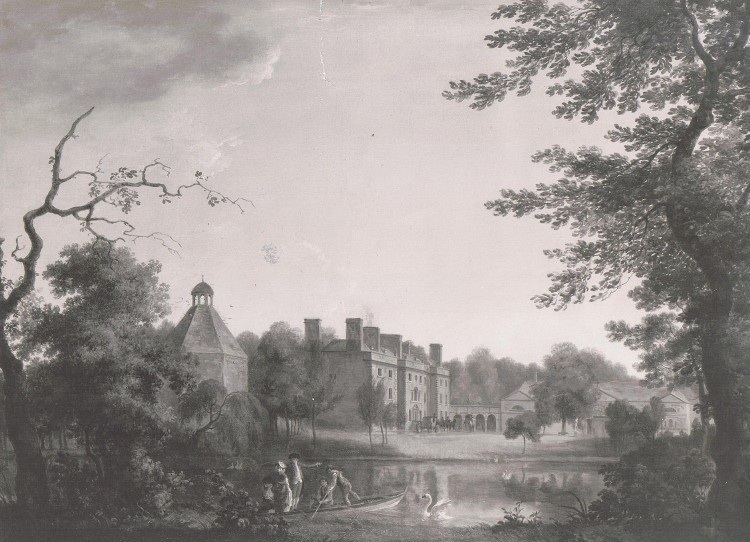
In 1970 the early 18th century Damer House in Roscrea, County Tipperary stood empty and unused, and plans were announced to demolish the building; the local authority intended to replace the house with an amenity centre comprising swimming pool, car park, playground and civic centre. North Tipperary County Council chairman Tom Shanahan justified this proposal with the argument that as long as the house stood, ‘it reminds the Irish people of their enslavement to British rule’ and dismissed objectors to the scheme as ‘a crowd of local cranks.’ The notion that Damer House represented the outstanding qualities of Georgian craftsmanship, or that it might be a major tourist attraction for the area clearly never occurred to Mr Shanahan.
Both these factors have since come to be understood, but four decades ago, the building’s inherent worth was grossly under-appreciated. Damer House dates from the 1720s and is believed to have been built for John Damer soon after he bought the town of Roscrea in 1722. Damer’s uncle, Joseph Damer, originally from Dorset, settled in Ireland in the aftermath of Charles II’s restoration in 1660 and prospered as a Dublin moneylender, to the extent that he was able to purchase estates in North Tipperary. Having no children of his own, he brought over his nephew John both to assist him in the business and to inherit his wealth.

image

image

Damer House is unusual in that it stands in the centre of a 13th century castle on which work commenced during the reign of King John although the present structure is of a slightly later date; it survives largely intact, not least the immense gate tower rising more than 90 feet with walls some eight feet thick. This castle was under the control of the Butler family, if only sometimes theoretically, until 1703 when the second Duke of Ormonde sold his Roscrea territory to the King’s Hospital in Kilmainham; less than twenty years later the place was sold again, this time to John Damer whose uncle had since died and left him extremely wealthy. Given that peace had only recently come to the country, one can understand why Roscrea’s latest owner might have thought it best to build his new residence within the protective walls of the castle, but he and his descendants do not seem to have spent much time there, since they also developed a large estate elsewhere in the county and, following John Damer’s own death without direct heirs, his nephew – another Joseph Damer – preferred to live in England where in 1792 he was created first Earl of Dorchester; in the following century Damer House passed into the hands of another branch of the family, the Dawson-Damers who were Earls of Portarlington and whose main seat was Emo Court, County Laois. Meanwhile the house in Roscrea became an army barracks, then at the start of the last century successively a school, a tuberculosis sanatorium and a local library.

image

image

Of three storeys over basement and with unusually tall narrow windows spread across nine bays, the pre-Palladian Damer House has a large annexe to one side, probably added during its time as a military barracks. Internally the finest extant feature is a carved pine staircase, in style not dissimilar to that of the slightly later Cashel Palace. Whatever other decorative features the Damers may have commissioned did not survive changes of use, but the building retains a purity of form that makes it of enormous importance in the history of Irish architecture.
Yet by the early 1970s Damer House was suffering from the consequences of long-term neglect, hence the local authority’s proposal to sweep it away rather than engage in a programme of restoration. Fortunately at this point the Irish Georgian Society then intervened and offered to take over the building on a lease and assume responsibility for its salvation. Work on this project began in August 1974 and was overseen by one of the IGS’s most industrious and committed members, Brian Molloy whose death four years later is still to be regretted. Much of the work was undertaken by volunteers who cleared away accumulated rubbish and debris, and removed unsightly additions to the house such as partition walls while professionals worked on repairing the roof and so forth. In 1976 the early 18th century carved pine staircase, which was coated in centuries of paint, was cleaned and restored to its original splendour and the following year the house was officially opened to the public.
With aid from a number of public bodies, the house’s annexe was next restored for use as a heritage centre; the first of its kind in Ireland, this opened to the public in 1983 and shortly afterwards won a special award from the adjudicators of European Museum of the Year. At the end of that year, control of Damer House was handed over to the Roscrea Heritage Society which later in turn leased the premises to the Irish State; by this means Damer House’s future has been secured. During the 1990s more work was completed not just on the house, but also on Roscrea Castle and its gardens. Today the entire complex has been refurbished and welcomes visitors.

image

image

image

Aside from its evident merits, Damer House is personally special because in 1983 my first job after university was to act as curator of the building, contentedly living in a first-floor flat on the premises (those two windows furthest right on the first floor were my bedroom) and gaining knowledge that has proven invaluable ever since; this month marks the thirtieth anniversary of my taking up that position.
Meanwhile this week marks the first anniversary of the advent of The Irish Aesthete. It has been a fascinating year in which I have likewise learnt an enormous amount (and become something of a proselytiser on behalf of social media). I should like to thank all those who have been following the site for the twelve months past and hope that you will continue to do so for the twelve ahead during which there will be abundant opportunities to explore further Ireland’s architectural heritage. Comments and enquiries are always welcome, as are suggestions of where else might be discussed; every writer needs readers and I am most appreciative of anyone who has taken the trouble to participate in and engage with The Irish Aesthete since September 2012.
It is also worth noting that The Irish Aesthete has been short-listed for the 2013 Ireland Blog Awards in two categories: Best Arts and Culture and Best Newcomer. Finalists will be announced next week.
In conclusion, today provides an opportunity to remember Brian Molloy the twenty-fifth anniversary of whose death fell recently and whose dedication to the causes many of us hold dear remains an inspiration.

image

Around the Ring

IMG_6805

Spotted recently on a minor road in County Kilkenny, this handsome pedimented arch which is flanked on either side by gates. These in turn lead to quadrants terminating in large cut-stone posts. The whole is most arresting despite being in a sad state of disrepair, and appears once to have been the entrance to an estate called Ringwood. In the 18th century, Ringwood was owned by members of the Agar family and the core of a still-extant house nearby was most likely built in the late 1730s by James Agar whose political ambitions were blighted by a long-standing dispute with one of the leading orators of the period, Henry Flood. The two men fought a duel in 1765 and then a second one four years later using pistols. Agar fired first and missed, he shouted ‘Fire, you scoundrel,’ and was promptly shot dead: although the deceased’s family brought a case against Flood for murder, he was found guilty of manslaughter in his own defence and freed. James Agar’s son George had a happier political career than his father, and was eventually ennobled as first (and last) Lord Callan. His prelate nephew Charles Agar became Archbishop first of Cashel and later of Dublin before likewise receiving a peerage as first Earl of Normanton. The Normanton seat today is Somerley, Hampshire which lies just a couple of miles away from a market town called Ringwood.

IMG_6807

London Calling

image

A view of the former Archbishop’s Palace in Cashel, County Tipperary. Now an hotel, the palace was built c.1732 for Theophilus Bolton, its design usually credited to Sir Edward Lovett Pearce. For those in London next Monday evening 23rd September, I will be offering the Irish viewpoint at an event organised by the National Trust and Apollo magazine to consider contemporary perspectives on the English country house. For further information, see: http://events.spectator.co.uk/nationaltrust.html

Miss Austen Requests the Pleasure…

????????????

2013 being the bicentenary of the publication of Pride and Prejudice, inevitably particular attention is being paid to the novel’s author. Earlier this year, for example, a Jane Austen Society of Ireland was formed; one hopes its members will grant at least some notice to the writer’s Irish near-contemporary Maria Edgeworth who was much the better-known author during their respective lifetimes and whose books ought to be more widely appreciated in this country. A cheer too for Sydney Owenson, Lady Morgan whose 1806 novel The Wild Irish Girl is a remarkable piece of work.
Be that as it may, various events have been taking place in Ireland in recent months to celebrate Jane Austen and her links here, not least through the three daughters of her brother Edward whose lives are recalled in Sophia Hillan’s 2011 book May, Lou and Cass: Jane Austen’s Nieces in Ireland. On Sunday October 6th Dr Hillan will be speaking about the three sisters at Salterbridge, County Waterford (seen above). Sitting high above the Blackwater, this is a most interesting house, originally built c.1750 but enlarged by the addition of a new front almost a century later.
Salterbridge is the location for a day of Jane-ite festivities, since after Dr Hillan’s talk there is to be a splendid Regency lunch (guests are promised jelly shapes galore) followed by an afternoon performance by Vanessa Hyde of Empire Line Productions of ‘Ladies of Jane: Scenes and Musings from the Pen of Jane Austen.’ Those attending are encouraged to wear appropriate costume and rather charmingly, as in Miss Austen’s day, changing rooms will be available for those who wish to complete their toilette on arrival. All proceeds from the occasion go to a restoration fund for Lismore Hall not far away.
Anyone interested in attending the day should telephone +353-058-54952/087-2030763 or email susiewingfield@hotmail.com

From Townhouse to Tenement – and Back

IMG_6641

In recent weeks a succession of events in Dublin have commemorated the centenary of the Lock-Out, an occasion when many of the city’s larger employers, determined their workforce should not become trade-unionised, denied access to factories, yards and docks to anyone suspected of involvement in the movement for labourers’ rights. One of the consequences of this remembrance has been to recall how many Dubliners of the period lived in extreme poverty, occupying houses which had been built for the wealthiest members of 18th century Irish society but were subsequently divided into tenement dwellings in which entire families would rent a single room. It is worth pointing out, incidentally, that the owners of these properties were not absentee landlords but, as is made plain in James Plunkett’s 1969 novel Strumpet City (which deals with the 1913 Lock-Out), members of the indigenous Catholic haute bourgeoisie.
The area north of the river Liffey was especially given over to tenement housing, a far cry from the circumstances in which these buildings had first been erected. Such was the case, for example, on Henrietta Street, originally laid out in 1729-30 by the period’s most visionary developer, Luke Gardiner whose descendants would subsequently become Earls of Blessington. Gardiner’s ambitions are reflected in the size of the Henrietta Street houses, some of which are four- or five-bay wide, making them considerably larger than other terraced properties of the time. As befitted such splendid residences initially Henrietta Street was occupied by some of the wealthiest aristocratic families in the country; early occupants included the Earl of Bessborough, Viscount Mountjoy and Lord Farnham; a 1792 city directory lists one Archbishop, two Bishops, four peers and four MPs as living there.

IMG_6636

IMG_6594

IMG_6599

Together with its immediate neighbour to the north, No. 12 Henrietta Stree is among the earliest extant terraced houses in Dublin and dates from 1730-1733 when both were erected by Luke Gardiner with the intention of being either rented or sold. A surviving drawing for a stone-cut doorway by Sir Edward Lovett Pearce suggests that this pre-eminent architect had a hand in the design of the houses, although both have been so much altered since their original construction that only fragmentary evidence survives of their appearance when newly-built. In the case of No. 12, some of the greatest structural modifications occurred from 1780 onwards when Richard Boyle, second Earl of Shannon, decided to join the pair of buildings in order to create one vast town residence for himself.
A descendant of the original Richard Boyle, the early 17th century Great Earl of Cork, Lord Shannon inherited considerable wealth and political influence from his father Henry Boyle who for a long time served as both Chancellor of the Irish Exchequer and Speaker of the Irish House of Commons. Seemingly described by Sir Robert Walpole as ‘king of the Irish House of Commons’ he eventually relinquished his seat there in 1756 when he accepted a peerage and became Earl of Shannon. Although his son never played as significant a role in the affairs of the country, even so he became known as ‘the Colossus of Castlemartyr’ (the name of his country seat in County Cork) due to the power he wielded by controlling so many electoral boroughs. If only for this reason, he needed to have a residence close to the centre of power in Dublin and thus settled on linking the two houses on Henrietta Street.

IMG_6583

IMG_6589

IMG_6592

Among the most significant changes made to No. 12 Henrietta Street after its acquisition by Lord Shannon was the removal of its main staircase and, on the first floor, the instatement of windows very much longer than their predecessors which, as was the fashion earlier in the century, had only dropped to dado level. Some of the wooden window and door frames appear to have been recycyled on the floor above, where they remain to this day. The piano nobile rooms were also re-decorated during this time with simple neo-classical plasterwork cornices designed by Dublin stuccodore Charles Thorp. What most impresses a visitor today are the height and volume of these spaces, and the purity of light with which they are suffused.
The Earl of Shannon remained in residence until his death in 1807 after which the two buildings were once more divided. From 1821 No.12 was occupied by Captain George Bryan of Jenkinstown Park, County Kilkenny, known as the richest commoner in Ireland – although he suffered a dent in his wealth through the long and ultimately unsuccessful legal claim he made to a dormant Irish peerage. Presumably it was during his time that the present staircase was installed in the rear hall; its antecedent had been located immediately inside the front door as remains the case next door. Until the close of the 20th century, Captain Bryan was the house’s last owner-occupier since it next became offices for a solicitor and a Proctor before passing into the possession of the British War Office which from 1861 onwards used the premises as headquarters of the City of Dublin Artillery Militia. After which it went into precipitous decline and sunk into an open-door tenement building, remaining such until rescued in 1985.

IMG_6602

IMG_6560

IMG_6563

When No. 12 Henrietta Street came into the hands of its latest owner – who has since invested it in a legal entity called The Irish Land Trust – he had to undertake an enormous amount of work to secure the house. At the time of his acquisition there was extensive dry rot, deteriorating timbers, roof valley decay and many other daunting structural problems. All of these have since been resolved and the property can now look forward to a secure future. Some internal decoration has also been undertaken, not least the removal of internal partitions which had been fitted in order to accommodate more tenants. The original chimneypieces had long since been taken out and sold, as had all intercommunicating doors but the latter have since been replaced. Fortunately, buried beneath successive layers of linoleum, the original wood floors had survived, as had the window shutters.
Despite its great size, the house does not hold very many rooms: just two on the ground floor and three on each of those above. Limited financial resources means the interior has been lightly decorated, and in some places, such as the smallest of the first-floor rooms, evidence of the house’s use as a tenement has been retained: look at the way successive layers of paint were applied to walls only as high as could be reached by the inhabitants. One advantage of this light touch is that the building’s remarkable architectural qualities can be appreciated without the distraction of furniture and pictures. In particular the main reception rooms come into their own when lit at night by candles alone. On such an occasion it is possible to imagine the house as it must have looked more than 200 years ago when the Lord Shannon was in residence and entertaining his political cronies.

IMG_6566

During the forthcoming Open House Weekend (October 4th-6th) No. 12 Henrietta Street will be the location for an exhibition of contemporary artworks, which will launch a new venture called @TheDrawingRoom designed to develop public awareness of architecture, culture and heritage through a series of events in some of Dublin’s finest Georgian houses. For more information, see: http://www.thedrawingroom.info

Remembrance of Lost Time

Carton - Fire buckets

The sad tale of what befell the Dukes of Leinster in the last century, the loss of the family estates and the scattering of their inheritance, has been told so often that it does not need to be repeated here. Heads of the FitzGerald family and once princely figures in Ireland, the Leinsters no longer have any presence here, and their main seat Carton, County Kildare has metamorphosed into just another golf resort and spa.
Over recent decades various FitzGerald heirlooms have come on the market, and next week more items will be sold by English auctioneers Cheffins of Cambridge. Some of the lots are significant: a series of family portraits executed in pastel by Hugh Douglas Hamilton; a set of George II mahogany and parcel gilt dining chairs; even Lord Edward FitzGerald’s ring, bequeathed on his deathbed to a favourite sister. Yet somehow the more poignant items are the commonplace ones such as the set of eight George III leather fire buckets shown above. Each painted with the ducal monogram and coronet, they would once have been kept at Carton but now, following the rest of the house’s original contents, are set to join a general dispersal. One ought not to become too sentimental about such matters, but still it is regrettable that these functional yet handsome mementoes of quotidian life in an Irish country house should be lost.
For more information on the Cheffins sale, see: http://auctions.cheffins.co.uk/asp/searchresults.asp?pg=1&ps=50&st=D&sale_no=F180913

Casting Light on the Subject

IMG_3153

An elaborate late-Gothic window with double trefoil arch below a quatrefoil at the east end of the south aisle of St Mary’s, Gowran, County Kilkenny. The core of the present building dates from around 1275 when it was erected on the site of an earlier monastery. St Mary’s was a collegiate church, meaning it was placed under the care of a “college” of clerics who lived in a community without submitting to any specific monastic rule. Since the 19th century the chancel and central tower have served as the local Church of Ireland church while the main body has remained a picturesque ruin. The play of patterned sunlight seen here comes from the great west window at the nave end.

Majestic Though in Ruin

IXSMBURCOHJONBP-03b5704419b1465c8a20e1614a7b13aa

IXSMBURCOHJONBP-4c3e2e2438904107bb6fb651f07ff123

On August 29th last, the Irish Times reported that the portico of a small 18th century lodge in County Kilkenny had collapsed. Not, one might reasonably think, a matter of great import, certainly not as momentous as the disintegration of other buildings reported by the Irish Aesthete over the past year. But this is to ignore the architectural significance of the structure in question, and what its neglect over the past decade says about our failure to care for the built heritage.
The temple or columnar lodge stands within the grounds of Belline, an estate not far from Piltown. In the second half of the 18th century Belline was occupied by Peter Walsh (d. 1819), whose family appear to have been agents for the Ponsonbys, Earls of Bessborough whose Irish seat Bessborough House was in the same part of the country. Walsh may well have been a tenant of the Ponsonbys; it is known that Lady Caroline Lamb, daughter of the third Lord Bessborough, stayed at Belline with her husband William (the future Lord Melbourne and future Prime Minister at the time of Queen Victoria’s accession) in September 1812 in the aftermath of her highly-publicised affair with Lord Byron.
Whatever Peter Walsh’s precise status, he was regarded in Ireland as an improving landholder, much given to agricultural improvements and to bettering the circumstances of less-fortunate residents in the region. Of particular relevance to the subject under consideration here is the fact that he was also an ardent antiquarian, commissioning and collecting architectural drawings of Ireland’s ancient monuments, and keen to preserve the relics of our history, some of which have since passed into national collections. Both during his lifetime and after his death Walsh was held in high regard; James Norris Brewer in his Beauties of Ireland (1825) declared ‘we are well convinced that every reader, to whom he was known, will join in the warmth of our admiration and the sincerity of our regret; so general was the esteem created by his unassuming virtues!’

IXSMBURCOHJONBP-25bc5ea9a8fe4a4597a32546dce94af4

IXSMBURCOHJONBP-b15c7f1626f34d30a1dd3370337507d9

IXSMBURCOHJONBP-4630672feba4472ebbd0f6298141de97

Dating from around 1770, Belline House was built by Peter Walsh who then went on to construct a number of other splendid edifices in the surrounding grounds, the majority of which survive to the present day. These included a detached gallery, known as the ‘Drawing School’ since according to Brewer, it ‘was constituted as a sort of academy for students by the active liberality of the late Mr Walsh…several children of the peasantry in this neighbourhood have lately evinced a considerable degree of genius for drawing. Such as were of greatest promise, Mr. Walsh took under his immediate protection, and supported in the pursuit of the art to which they aspired.’ Then there was ‘a most admirable pattern for a farm house; it is an octagon of two stories, inclosing a yard in the centre; below is a dairy, a residence for the dairy-man, cow-house, stable, and other offices, above is a loft for corn, extended over the whole building.’ And in addition there is a pair of circular pavilions behind Belline House, each three storeys high, the top floors serving as pigeon houses, and a pair of octagonal stone gate lodges (one still standing) at the southern entrance to the demesne.
Finally we come to the smallest but perhaps most remarkable of Peter Walsh’s buildings: the temple lodge. Comprising portico, front room and two rear chambers, its precise date of construction and purpose are unclear; standing in the midst of the estate and not beside an entrance it was unlikely to have been a gate lodge but might have been intended as a summer pavilion or model dairy. But what is most important is that Belline’s temple lodge has been judged the earliest known example in Britain and Ireland of the 18th century ‘rustic hut’ inspired by theories on the origins of man-made structures expounded first in 1753 by the French Jesuit and philosopher Marc-Antoine Laugier in his Essai sur l’architecture (translated into English in 1755) and then by Sir William Chambers in A Treatise on the Decorative Part of Civil Architecture (1759). In fact it has sometimes been proposed that the Belline lodge was designed by Chambers since it shares similarities with a drawing he made in 1759 for just such a building. The identity of the architect responsible may never be known but we can be confident that the Belline lodge is an important expression of the 18th century’s interest in exploring the past, and that its composition reflects the ideas proposed by Laugier and Chambers. Hence the building is intentionally ‘primitive’ incorporating tree trunks bound with ropework on every side and a pedimented portico to the front below the gabled roof that extends beyond the walls to end in stone blocks.

Recent 3

Recent 2

Recent 1

By the mid-19th century Belline had reverted to the Bessboroughs and remained in their ownership until 1934 after which the estate changed hands a number of times until being bought ten years ago for €3 million by businessman James Coleman. Managing director of a company called Suirway Forklifts based in Carrick-on-Suir, County Tipperary Mr Coleman has in the past declared himself a passionate enthusiast of motor rallying and indeed his business has sponsored a number of events for this sport. On the other hand, he seems less keen to support and sustain the national heritage, since over the past decade Belline’s temple lodge has fallen into such dilapidation that, as was reported by the Irish Times less than a fortnight ago, the building’s portico has now collapsed.
It is inconceivable that the lodge’s deteriorating condition was unknown to its owner: there have been two reports on the building and its importance, one compiled by architect John Redmill in 2005, the other by chartered surveyor Frank Keohane earlier this year. Furthermore the National Inventory of Architectural Heritage designated the lodge as being of architectural interest under the Categories of Special Interest. On the other hand as Frank Keohane noted in his report, to which I am much indebted, until now the lodge has not been designated a protected structure in its own right but rather ‘deemed to be protected owing to its being located within the cartilage of Belline House which is a protected structure.’ Clearly this has proven inadequate.
Keohane wisely makes the point that the lodge at Belline must be regarded as of international importance both in its own right and as part of a planned 18th century demesne in which diverse complementary elements contributed to the resultant whole. As he writes, ‘The temple lodge is not an artefact to be appreciated in isolation. It is in fact an important element in a group of related structures within the demesne.’ Destroy one of those related structures and you disrupt the entire picture: it is not unlike cutting a section out of a painting.
According to the Irish Times, John McCormack who is a Director of Services at Kilkenny County Council with responsibility for heritage said the authority had served a planning enforcement notice on Mr Coleman in May 2012 ‘for failing to undertake works to prevent this protected structure from becoming or continuing to be endangered.’ Legal proceedings commenced the following October and since then ‘there have been four separate court appearances in relation to this prosecution while the council sought to negotiate with the owner. A full hearing of the case is listed for October 7th next at Carrick-on-Suir District Court.’
One waits to see what will happen in four weeks’ time since not only is the survival of Belline’s temple lodge at stake but the forthcoming hearing represents something of a test case. If owners of protected structures can ignore their responsibilities with impunity, then still worse misfortunes lie ahead for our architectural heritage. The national patrimony is at risk in a way that would, one imagines, have appalled Peter Walsh.
The first two photographs show Belline’s temple lodge as it looked in the 19th century, note how at one time the building was thatched. The next three show the lodge in 2005, already with its slates removed from the roof, followed by another three photographs taken earlier this year. Finally below is a picture of the lodge as shown in the Irish Times with its portico in ruins.

image

September 2013

IMG_6547

September 1913
William Butler Yeats

What need you, being come to sense,
But fumble in a greasy till
And add the ha’pence to the pence
And prayer to shivering prayer, until
You have dried the marrow from the bone;
For men were born to pray and save?,
Romantic Ireland’s dead and gone,

It’s with O’Leary in the grave.
Yet they were of a different kind,
The names that stilled your childish play,
They have gone about the world like wind,
But little time had they to pray
For whom the hangman’s rope was spun,
And what, God help us, could they save?
Romantic Ireland’s dead and gone,
It’s with O’Leary in the grave.

Was it for this the wild geese spread
The grey wing upon every tide;
For this that all that blood was shed,
For this Edward Fitzgerald died,
And Robert Emmet and Wolfe Tone,
All that delirium of the brave?
Romantic Ireland’s dead and gone,
It’s with O’Leary in the grave.

Yet could we turn the years again,
And call those exiles as they were
In all their loneliness and pain,
You’d cry ‘Some woman’s yellow hair
Has maddened every mother’s son’:
They weighed so lightly what they gave.
But let them be, they’re dead and gone,
They’re with O’Leary in the grave.

Inspired by Dublin Corporation’s refusal to provide financial assistance to Sir Hugh Lane for the building of a modern art gallery in the city, Yeats’ poem was published in The Irish Times 100 years ago today. The picture above shows one of the designs prepared by Edwin Lutyens for the projected gallery, not that of a bridge spanning the river Liffey but more conventionally sitting within the western railings of St Stephen’s Green.
You can discover more about the events behind the writing of September 1913 by watching: http://www.youtube.com/watch?v=62C1sbgKVk4

Read All About It

IMG_2255

In the library at Russborough, County Wicklow an open page of James Malton’s A Picturesque and Descriptive View of the City of Dublin displayed in a Series of the most Interesting Scenes taken in the Year 1791. In 1799 Malton, an architectural draughtsman by training, published in a single volume his series of twenty-five engravings showing key buildings in the Irish capital, noting ‘The entire of the views were taken in 1791 by the author, who, being experienced in the drawing of architecture and perspective, has delineated every object with the utmost accuracy; the dimensions, too, of the structures described were taken by him from the originals, and may be depended upon for their correctness.’ Malton’s images remain one of our most important sources of information about the appearance of Dublin at the end of the 18th century.
For more about Russborough, see my article on the house in the September issue of American Elle Decor: http://www.elledecor.com/design-decorate/interiors/irish-heritage?click=main_sr#slide-1