Where there is Darkness, Light

IMG_8322

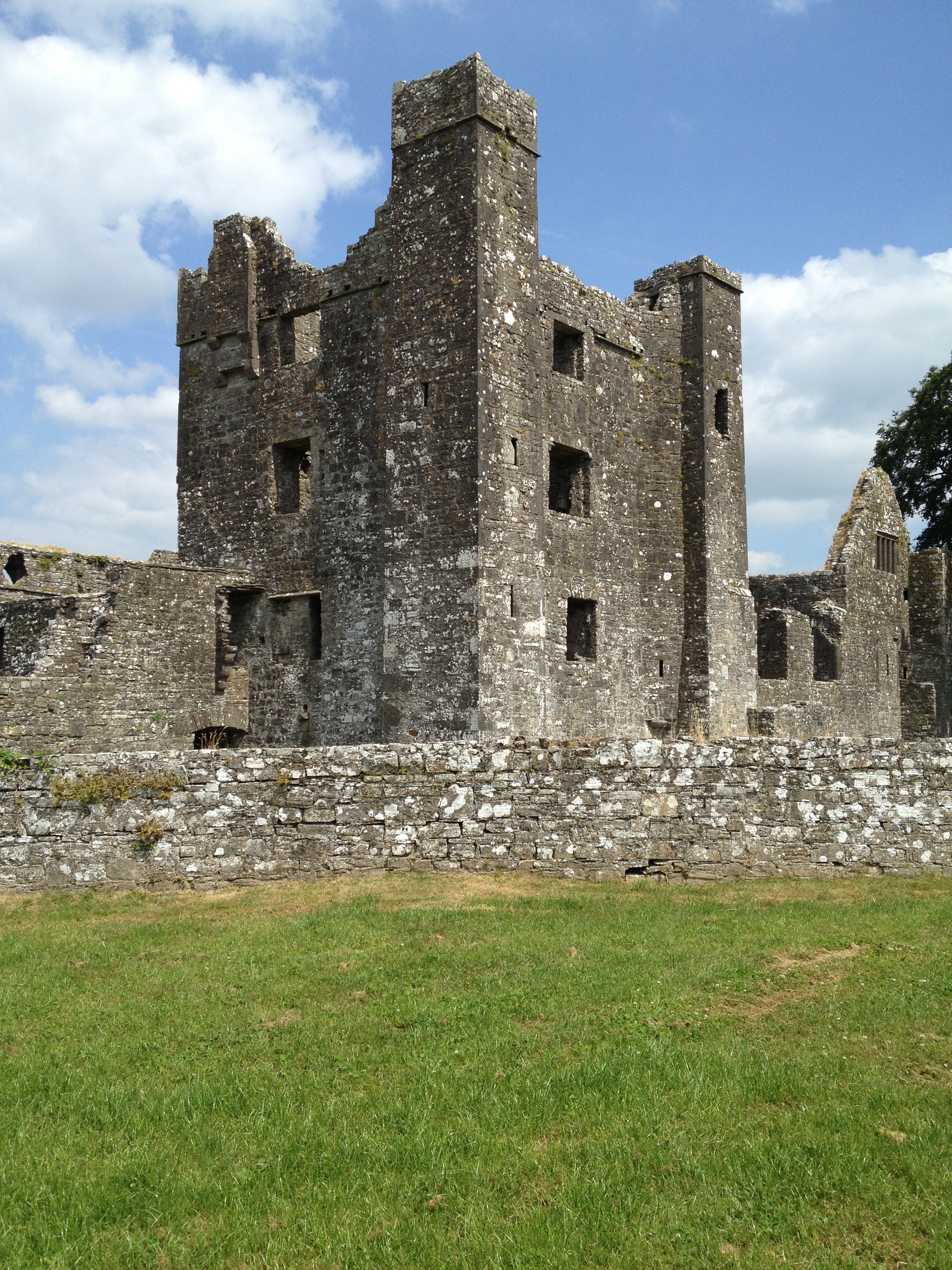
Passing through the village of Kilconnell, County Galway one sees an extensive range of ruins to the immediate west of the main street. Here in a field grazed by sheep who look blithely impervious to the architectural glories around them stand the remains of a former Franciscan friary.
There has been some discussion about the precise date of the building’s foundation, perhaps because it is proposed to be on the site of an earlier religious settlement established in the sixth century by St Conal, or Conall (of whom there seems to have been more than one). Hence the Irish placename Cil Chonaill, meaning Conall’s church. In any case, if monks did live here before the Franciscans arrived no evidence of their presence remains. It is most commonly suggested the friars established their house around 1414 at the request of and with assistance from William O’Kelly, Lord of Uí Maine – one of the oldest and largest kingdoms in Connacht that included much of this part of the country – who died in 1420.

IMG_7855

IMG_7894

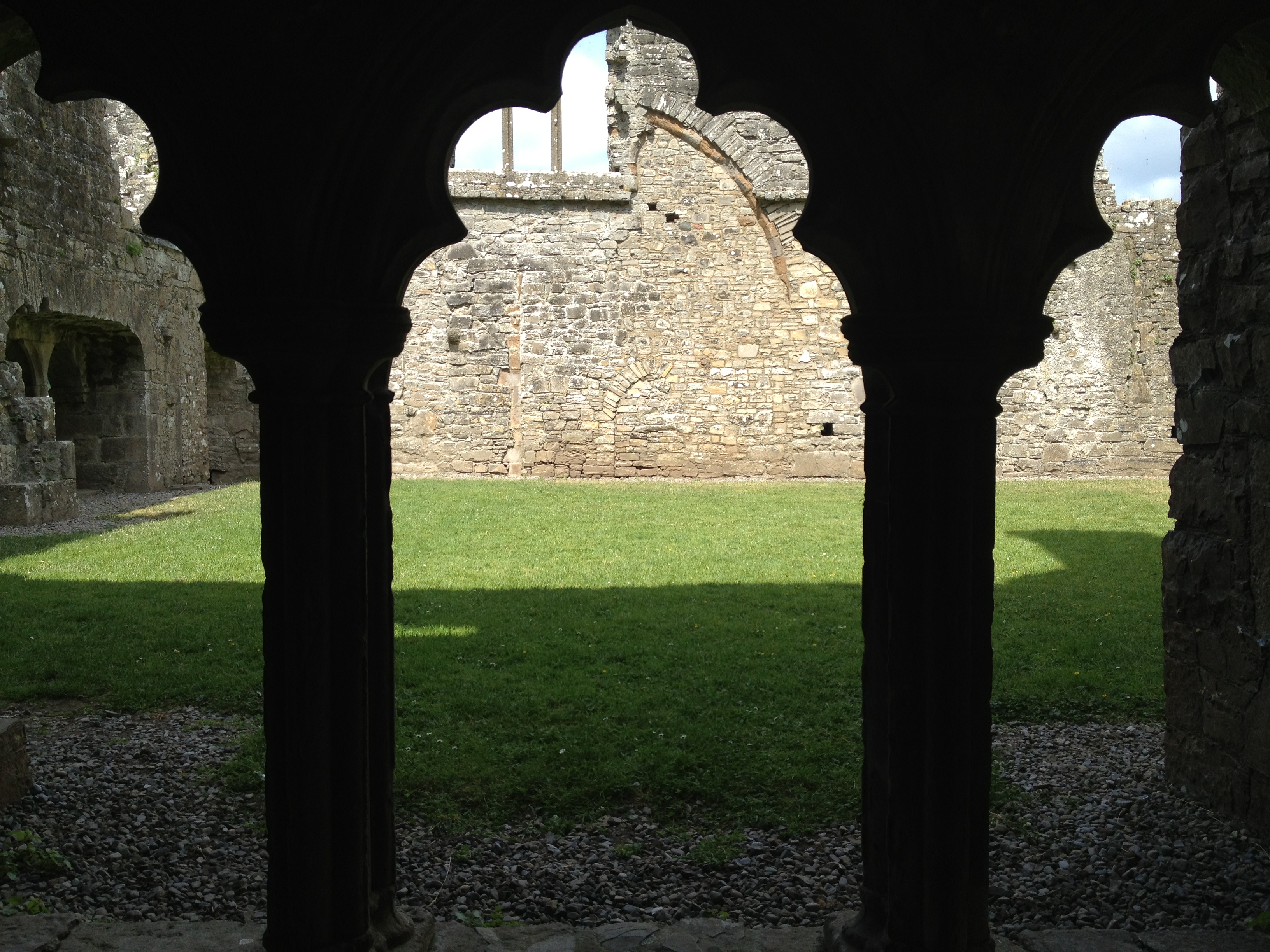
Kilconnell Friary is more elaborate than most such Franciscan establishments. The original body of the church consisted, as was always the case with this religious order, of a single long nave continuing into a choir of similar proportions. A cloister to the immediate north of the church then ran east to a two-storey domestic range that held offices below and a dormitory above. Only the east and part of the south range of the cloister arcades survive but these are notable for the variety of stonemason’s marks carved into them.
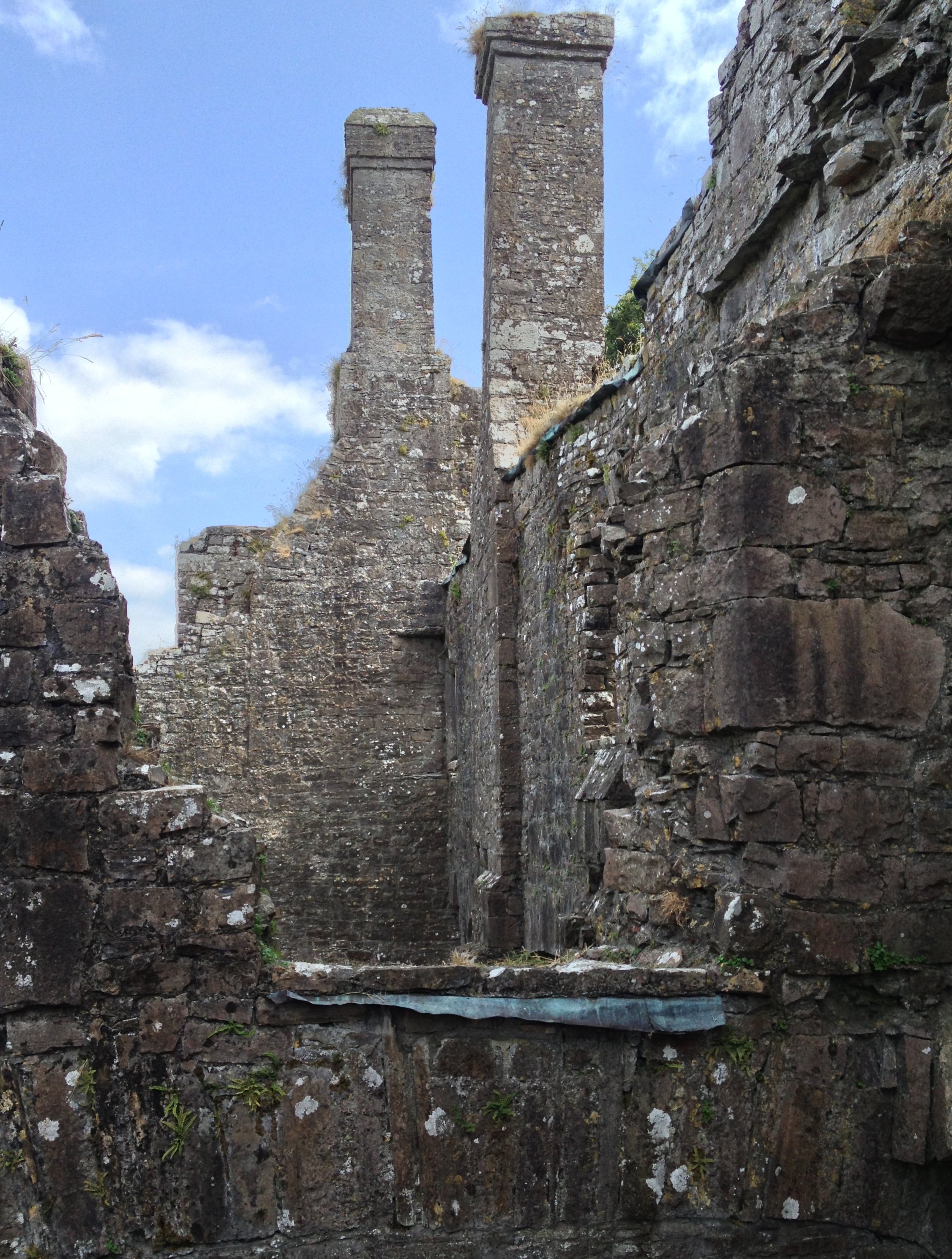
Later in the 15th century, and rather unusually, a large square tower was erected at the central point and running the full width of the church; it still rises three storeys higher than the former roof line and can be sighted across the surrounding countryside. It has very handsome vaulting the piers beneath which sport a couple of delicate carvings of an angel and an owl. Around the same period a south aisle was joined to the nave by an arcade as well as a south transept accessible from both nave and choir, with a small chapel added to the immediate east in the 16th century. These adjuncts make Kilconnell larger and finer than the majority of its sister houses in Ireland.

IMG_8333

IMG_8328

IMG_8330

IMG_8331

What further distinguishes Kilconnell Friary from other such churches is its exceptionally impressive collection of niche tombs found lining the walls of both nave and choir. The former holds the most elaborate of all, located just inside the west entrance on the north wall. The upper section is dominated by an ogee canopy with flamboyant stone tracery and capped by a carved panel containing two figures widely believed to represent St Patrick and St Francis. The base of this monument is given over to a long slab featuring six further figures, each identified by name: St John the Evangelist, St Louis of Toulouse, the Virgin, St John the Baptist, St James Major and St Denis of Paris. There has been some speculation why two French saints should appear on this tomb, but perhaps the explanation lies with the family responsible for its erection; unfortunately it is unknown who that might have been.
Another similarly flamboyant gothic tomb, albeit without the carved figures, can be found on the north wall of the choir, this one associated with the O’Daly family and another on the opposite side is an O’Kelly tomb of marginally less splendour. The main windows are also particularly good, including those in the south aisle and transept but best of all, and probably latest, is that on the west wall.

IMG_8326

IMG_8324

Kilconnell Friary’s prominence, apparent in its size and decoration, remained long after other religious establishments were closed as part of the Dissolution of the Monasteries in the 1540s. Although occupied by English troops in 1596, twenty-one years later it was claimed that the buildings were intact and still in use, with a community of six friars. Their lands were granted by James I to the Norfolk-born judge Charles Calthorpe in 1616 and in 1667 Matthias Barnewall, 8th Baron Trimlestown, who on Oliver Cromwell’s orders had been transplanted to Connacht from his family estate in County Meath was interred inside the friary, as commemorated by an armorial tablet set into the wall of the former sacristy.
There were still friars on the site in 1709 and a few remained until 1766. Seemingly the last one, who had been acting as a parish priest, only left in 1801. Long before that date, however, the buildings had become ruinous: an engraving included in Francis Grose’s Antiquities of Ireland published in 1791 shows the church roofless, its walls already half-smothered in foliage (in fact the image suggests the structure was in poorer condition then than is the case today).
In his Tour of Connaught (1839) the Rev. Caesar Otway wrote ‘The shell of the abbey is as picturesque as can be, where there are neither hills, rock, lake nor river, and but a few distant trees to improve the scenery; perhaps its ivy-mantled tower and time-tinted roofless gables, with all their salient angles, producing the happiest effects of light and shadow, are better in keeping with the waste and desolation that preside over the place, destitute as it is of any modern improvement or decoration whatsoever.’ So it remains to this day, a monument to the glories of late-mediaeval Ireland still unadorned by modern improvements and still mostly frequented only by a flock of disinterested sheep.

IMG_7850

For One Knight Only

IMG_7380

The 13th century church at Kilfane, County Kilkenny is now a fine ruin, notable for its adjacent castellated presbytery and also for being home to a stone effigy known as the Cantwell Fada. Carved from a single slab of limestone is a knight looking decidedly dapper in his suit of chain mail. One leg daintily crosses over the other not in demonstration of a mediaeval dance step but, it is believed, to indicate the knight’s participation in a crusade. His large shield bears the arms of the Cantwell family and it is therefore presumed the figure commemorates Thomas de Cantwell who died in 1319 and whose family, of Norman origin, were once Lords of Kilfane. Most likely the carving was the lid of a sarcophagus since lost. Over two metres high, it is the tallest such effigy in Ireland or Britain.

IMG_7375

I shall be writing more about Kilfane and its picturesque Glen and Waterfall in a few weeks’ time.

Casting Light on the Subject

IMG_3153

An elaborate late-Gothic window with double trefoil arch below a quatrefoil at the east end of the south aisle of St Mary’s, Gowran, County Kilkenny. The core of the present building dates from around 1275 when it was erected on the site of an earlier monastery. St Mary’s was a collegiate church, meaning it was placed under the care of a “college” of clerics who lived in a community without submitting to any specific monastic rule. Since the 19th century the chancel and central tower have served as the local Church of Ireland church while the main body has remained a picturesque ruin. The play of patterned sunlight seen here comes from the great west window at the nave end.

Abbey Road

15

In 1142 St Malachy of Armagh was responsible for founding Ireland’s first Cistercian monastery at Mellifont, County Louth. Five years later a small group of this house’s residents walked some 35 miles to establish a second monastery close to the banks of the Boyne river at Bective, County Meath. Built on land granted by Murchadh O’Melaghlin, King of Meath the new monastery was dedicated to the Virgin Mary and quickly grew into a thriving community. Half a century after its foundation, such was the importance of Bective Abbey that in 1196 the body of the Anglo-Norman Lord of Meath Hugh de Lacy was interred here; it was later moved to St Mary’s Abbey in Dublin. By the start of the following century Irish Cistercians would appear to have slipped into laxness; attempts by the church authorities to initiate a programme were rebuffed, not least by the Abbot of Bective who in 1217 participated in a ‘riot’ at Jerpoint Abbey, County Kilkenny and was further charged with imprisoning a man in a tree stump until he died. The Abbot was subsequently sent to Clairvaux in France for trial and prior of the Norman Abbey of Beaubec appointed to take responsibility for Bective.

2

13

8

Nothing remains of the original monastic establishment at Bective; the earliest part of the present range of buildings dates from the 12th – 13th century buildings and include there remain the chapter house on the south-east side, a plain rectangular building with central column, also part of the west range and fragments of the aisled cruciform church. By the 15th century a serious decline in numbers had occurred and the premises were reduced in size. The church, for example, was substantially shortened and its south aisles demolished which in turn blocked off the adjoining arcades. Massive fortified towers were erected on the church’s west façade and on the south-west corner of the monastery, giving Bective the appearance more of a castle than a religious establishment. The most striking feature to the modern eye is the cloister that was built at this time, smaller than its predecessor (measuring no more than 33 feet square) and now the best-preserved Cistercian cloister in Ireland. The passages are set not beyond the walls but within them and are thus recessed, with each arcade composed of three miniature arches supported by double-column shafts. In one instance a panel between inner and outer shaft is decorated with the carved figure of an unidentified cleric set into an ogee-headed niche with his arms including three fleur-de-lys (see the top-most picture for a detail of this feature).

12

16

5

Despite having fewer occupants, Bective Abbey remained a considerable land owner; at the time of the dissolution of the monasteries in 1537, this establishment was recorded as possessing a total of 4,400 acres in Meath. And the land was of high quality, so there was no shortage of lay people eager to acquire it, beginning with the Staffordshire-born Thomas Agard who came to Ireland in the crown service and charged with the task of assessing the country’s mineral resources and the possibility of developing lead mines. He began the process of converting the former monastery into a domestic residence, with the cloister transformed into an internal courtyard and the refectory turned into a Great Hall. Larger openings were inserted to create windows and tall chimneys rose above the roofline. After Agard’s death house and estate were briefly owned by Ireland’s Lord Chancellor John Allen before being bought in 1552 by Andrew Wyse, Vice-Treasurer of Ireland for £1,380 16s 7d. It passed through a couple of generations of his family but already by 1619 the abbey was described as being deserted. Twenty years later the property came into the possession of Sir Richard Bolton, like Agard originally from Staffordshire but by this date Lord Chancellor of Ireland. The estate remained in the possession of the Boltons for the next two centuries although they usually rented it out and by 1800 had built Bective House on the other side of the Boyne. In 1884 Bective was inherited by the Rev. George Martin, Rector of Agher, County Meath and ten years later he vested the abbey ruins to the Board of Public Works. It has remained in state ownership ever since but has recently been made more accessible than hitherto the case. The surrounding flat land and its high towers make Bective Abbey easy to spot and since access to the site has recently been improved exploration of this wondrous relic of late-mediaeval/early modern Irish architecture is a delight.

17

Simply Divine

St Werburgh's Dublin

St Werburga was born in Staffordshire in the seventh century, the daughter of King Wulfhere of Mercia and his wife Ermenilda who is likewise deemed a saint. Werburga spent most of her life as a nun and ended her days as Abbess of Ely (like her mother, grandmother and great-aunt before her: the odour one detects is a subtle blend of sanctity and nepotism). Dying c.699 she was initially buried in Hanbury, Staffordshire but owing to the threat of Viking invaders her tomb was moved to Chester Abbey (since 1540 Chester Cathedral), and she remains the patron of that city. The cult of St Werburga was sufficiently strong for churches to be founded in her name elsewhere, not least in Dublin where the original St Werburgh’s was established close to Dublin Castle around 1178.

werburghsfront

0124

DublinCastleMalton

The first church was burnt down in 1300 and rebuilt. It subsequently underwent many vicissitudes, being rebuilt in 1601 and enlarged sixty years later but remained in use and Jonathan Swift was baptised here in 1667. At the start of the 18th century, Dublin’s then-Anglican Archbishop William King, who was responsible for restoring many of the city’s old churches, decreed that St Werburgh’s should once more be rebuilt. Ireland’s Surveyor General Thomas Burgh, also responsible for the likes of the library at Trinity College and Dr Steevens’ Hospital, was given the job of designing a new church for the site. It is sometimes suggested that Alessandro Gallilei (original architect of Castletown, County Kildare) had a hand in the task and certainly the original facade was distinctly Italianate in character.

IMG_3287

IMG_3336

That original facade’s octagonal tower crowned with a cupola – seen above – was replaced in 1729 by a square tower with Corinthian pilasters, the whole being finished by a spire in the late 1760s. It rose to a height of 160 feet and must have been a marvellous spectacle. However in the aftermath of Robert Emmet’s abortive rebellion of 1803, the government authorities were suspicious that the spire St Werburgh’s overlooked Dublin Castle’s Upper Yard (as can be seen in James Malton’s 1792 print above) and so arranged for no less than seven architects to declare the structure unsafe. Although another architect, Francis Johnston, offered to secure the spire, it was nevertheless taken down in 1810. Twenty-six years later the tower, and it is presumed the upper section of the facade, was likewise removed. What remains, looking magisterial but decidedly truncated, is a building of three bays faced in sandstone and dominated by towering Doric pilasters, the centrepiece being a powerful segmental-pedimented Doric doorcase. From the exterior St Werburgh’s conveys the impression of a scarred but still noble giant.

IMG_3315

IMG_3342

In 1754 St Werburgh’s had suffered another grievous fire when the roof of the church fell ‘all at once’ into the main body of the building (with such an unfortunate history of conflagrations, no wonder the entrance porch continues to hold a number of ancient fire-fighting devices). The interior was accordingly rebuilt seemingly as a re-creation of what had been lost. The main body of the church is a long high hall with a simple coved ceiling. The recessed chancel’s upper walls are decorated with paired and tripled Ionic columns on the parapet above which rest a sequence of oversized urns, interspersed with masks and garlands of flowers; the plasterwork was executed by Michael McGuire and Thomas Tierney. The main body of the stone-flagged church is filled with dark stained boxed oak pews, above which runs a gallery with additional seating. In 1767 a wonderful new organ was installed at the west end of the gallery, its elaborate case designed by John Smyth. Immediately in front was the vice-regal ‘box’ rather like that in an old theatre, faced with a large carved and painted panel featuring the royal coat of arms.

IMG_3348

IMG_3357

In the early 19th century, St Werburgh’s lost not only its spire but also its status as vice-regal church since during this period Francis Johnson was responsible for building the Chapel Royal within the walls of Dublin Castle. Yet ultimately St Werburgh’s gained something from this deprivation since in 1878 it acquired the oak pulpit designed by Johnston and carved by Richard Stewart for the aforementioned Chapel Royal. In high Gothick manner, the octagonal pedestal is reached by a flight of steps with thin traceried balusters and is supported by a single slender column. On a swollen base sits a copy of the bible from which rises a cluster of colonnettes, their capital being composed of heads of the four Evangelists on each of whose heads can be found a copy of his own gospel. The sides of the pedestal are likewise heavily carved and carry sundry royal and religious coats of arms. Quite different in spirit from the rest of the interior, this virtuosic piece of work somehow finds a place within St Werburgh’s.

IMG_3388

IMG_3403

Despite its association with the vice-regal court, even in the 18th century St Werburgh’s was never a rich parish; by that period, fashion had moved north and east, and Toby Barnard (in his 2003 book A New Anatomy of Ireland) noted that of 114 named pew holders in 1725 a mere five were listed as ‘esquires’ with the majority being grocers, goldsmiths, printers and so forth, explaining why the previous decade the parishioners had been described as ‘mostly shopkeepers and tradesmen.’ There were a few notable incumbents, not least Dr Patrick Delany (subsequently husband of the wondrous Mary Delany) who was rector in 1730. But mostly St Werburgh’s was left to slumber. The advantage to this state of affairs is that, whatever about its exterior, after the 1760s very little was done to alter the inside of St Werburgh’s probably because of shortage of funds. It therefore remains as an admirable example of the 18th century Anglican church, box pews and gallery still in place, even the windows’ clear glass remaining in place. Even better, unlike many other city centre parishes services continue to be held at St Werburgh’s and the building has undergone a certain amount of refurbishment in recent years, without any loss of its distinctive ambience. At the moment the church is open for a certain number of hours each day, and a visit is to be encouraged.

IMG_3306

Terms and Conditions May Apply

St Werburgh's

Seen on the rear wall of St Werburgh’s, Dublin. The church was built to the design of Thomas Burgh around 1715 but extensively refurbished after a fire less than forty years later. As can be seen, this elegantly composed notice dates from June 1728 and carries a full list of charges for the services on offer, along with their respective fees. Note how non-parishioners were charged considerably more, so for example muffled bells cost a parishioner £1 and a shilling while a ‘foreigner’ had to pay an additional six shillings. And for the former burial within the church’s vault was almost half the price it was for the latter. Conclusion: one way or another in the 18th century you paid your dues at St Werburgh’s.
More on St Werburgh’s in the coming weeks.

Spring is Here

IMG_2640

As is evidenced by these new-born lambs in a field beside the Cathedral of St Laserian in Old Leighlin, County Carlow. The building occupies the site of a monastery founded here by St Gobban in the early 7th century and takes its name from one of the first abbots, Saint Molaise of Leighlin whose feast day fell last week. The core of the present cathedral was begun by Donatus, Bishop of Leighlin around 1152-1181 and completed by the end of the 13th century but there have been various changes made since. Today St Laserian’s is one of the country’s smallest cathedrals.