May These Characters Remain, When All is Ruin Once Again*

IMG_1215
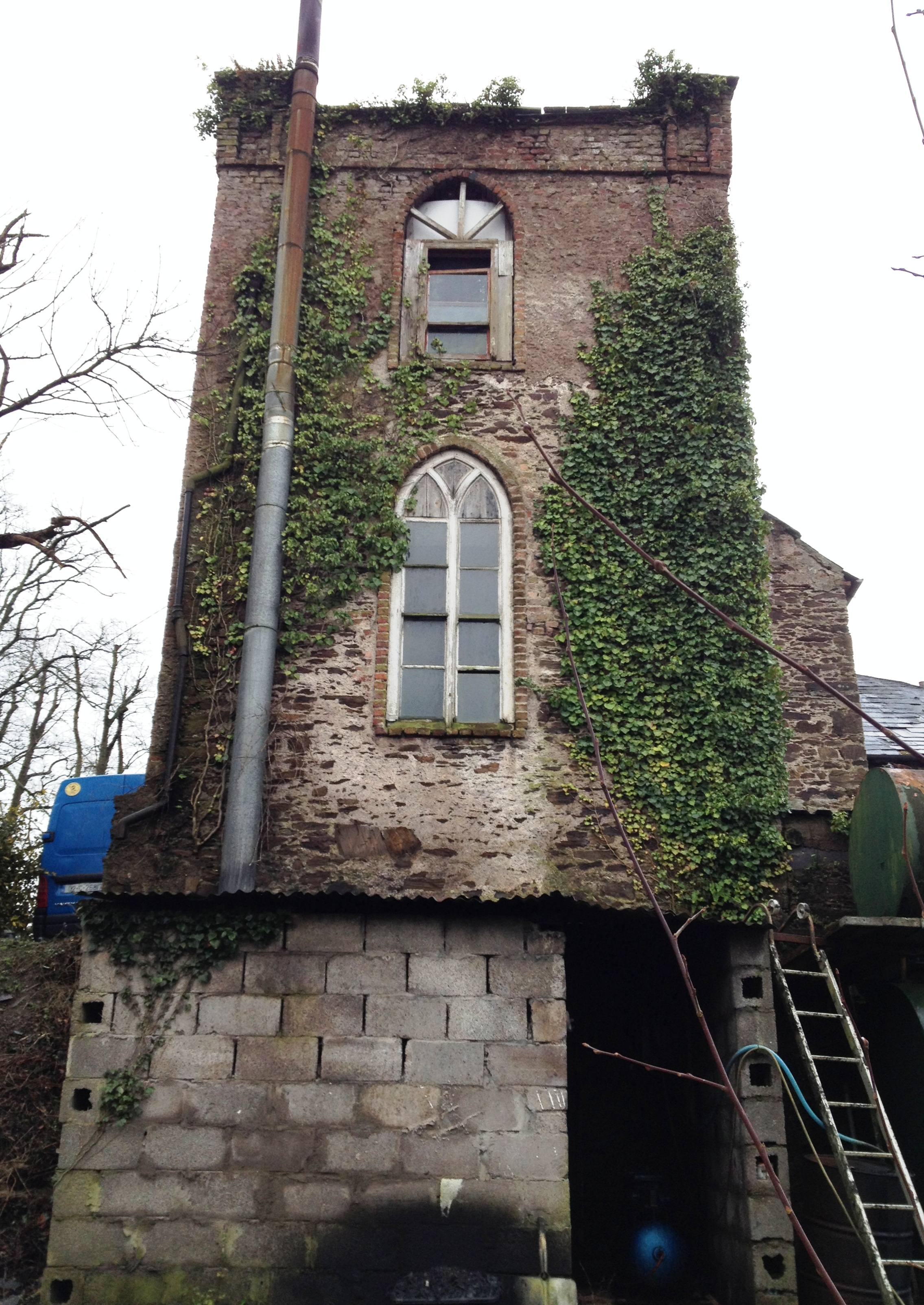
Thoor Ballylee, County Galway is a 15th/16th century tower house originally built by the de Burgo family but now best known as the former property of poet William Butler Yeats who acquired it a century ago and subsequently undertook a restoration of the old building. Opened to the public in 1965, the tower closed seven years ago after being flooded by adjacent Streamstown river. It might have remained shut thereafter but for the endeavours of a local group, the Yeats Thoor Ballylee Society, which tirelessly worked for the building’s refurbishment in time for last year’s 150th anniversary of the poet’s birth. These pictures were taken two months ago, since when the tower – like so much of the surrounding country – has once more been subjected to severe flooding. However, according to the society’s website (http://yeatsthoorballylee.org) determined efforts are being made to ensure it will reopen later in the spring: an example of local, private initiative that deserves to be applauded and emulated elsewhere.

IMG_1223
*A plaque on the castle’s wall contains the following text: ‘I the poet William Yeats/With old millboards and sea-green slates/And smithy work from the Gort forge/Restored this tower for my wife George./And may these characters remain/When all is ruin once again.’


An Active Afterlife

Jeremy 1
The west entrance to the 12th century church at Ullard, County Kilkenny, its much-weathered Romanesque doorway featuring the outline of human and animal heads. It was directly facing this entrance that Jeremy Williams was interred last Saturday following a service at nearby Duiske Abbey. Everyone interested in Ireland’s built heritage will have known Jeremy, architect, author and superlative draughtsman, a constant presence at meetings, outings and social gatherings. Always full of enthusiasm, always embarking on a fresh project, always determinedly encouraging others to share his current passion, there were no houses in Ireland where he was not assured of a welcome: and little of the country’s architectural patrimony that he hadn’t nimbly recorded with his pen. His sudden death on Christmas Eve has left a void impossible to fill. Impossible also to imagine Jeremy resting in peace: one imagines that already he is persuading the Almighty to cast an eye over freshly-drafted plans for the refurbishment of Heaven’s Gates.

Jeremy 2

Occupational Therapy

FullSizeRender
During this post-festive season, when evenings can seem especially long and monotonous, readers might like to consider occupying their time with the creation of a print room. This once-fashionable pursuit, which had its heyday in the second half of the 18th century, subsequently fell out of favour and only one intact example survives in Ireland: that at Castletown, County Kildare. The design and execution of print rooms was customarily left to women, although it evolved from the mostly-male habit of collecting valuable prints and storing these either in a cabinet or within albums. Later on prints might be hung in a chamber designated for the purpose, often kept shrouded in order the work avoided suffering light damage: while cheaper than paintings prints, especially those of larger dimensions could be expensive to produce. However, larger runs of prints in the 18th century, often reproductions of popular works of art, helped to bring down costs and make these pictures accessible to a broader market than had hitherto been the case. Cheaper prices led to greater disposability and the emergence of the print room, a phenomenon effectively unique to Britain and Ireland (although there were some instances of the vogue found in America).

IMG_3175
IMG_3173
IMG_3176
IMG_3179
Located behind the house’s main staircase and part of an enfilade on the ground floor overlooking the garden, Castletown’s Print Room was created in 1768 by Lady Louisa Conolly. She had been collecting pictures for at least the previous six years, and in addition had gained experience through assisting in similar ventures with her sister Emily, Countess of Kildare at nearby Carton and with Lady Clanbrassil at Cypress Grove House, Templeogue, County Dublin. Both these rooms have since been lost. The project was a long time in gestation: in 1762 she wrote to her sister Lady Sarah Bunbury, ‘I always forget to thank you my Dear for the Prints you sent me, I hope you got them of Mrs Regnier, for I have a bill there, the two little ones that you admired so, are the very things I wanted, that of Helen is charming. I have not had time to do my Print room yet.’ It is likely the reason the Print Room took so many years coming into existence is both because the Conollys were preoccupied with other work at Castletown and because Lady Louisa did not want to rush preparing the layout of what is a larger space than that customarily used for such a purpose: the ceiling here, for example, is twenty-five feet high. As a result, an awful lot of prints were needed. As late as February 1768 she was still writing to her sister Lady Sarah, ‘…any time that you choose to go into a print Shop, I should be obliged to you, if you would buy me five or Six large Prints, there are some of Teniers engraved by LeBas, which I am told are larger than the common size, if you meet with any, pray send me a few.’ Working out the design for this room was a complex business, particularly since border frames for each of the frames also had to be prepared, as well as garlands, trophies and other elements of the overall decoration.

IMG_3180
IMG_3178
IMG_3181
IMG_3196
When Lady Louisa finally came to embark on the scheme, the prints were duly cut out and then glued onto lengths of warm off-white painted paper. These in turn were attached to the room’s walls on battens overlaid with cloth. As Ruth Johnstone has noted, in many cases Lady Louisa ‘made editorial decisions based on the outside shapes of images.’ Accordingly she altered the original rectangular format of forty-six images to either an octagonal, oval or circular shape, or to a rectangle with a convex top. Most likely because of the need to create a visual balance based on size and shape there is no overriding theme to the pictures but rather they reflect mid-18th century taste. A handful of images were included for a specific reason. In central position between the two windows, for example, is a print of Van Dyck’s portrait of the children of Charles I, a group including Lady Louisa’s great-grandfather Charles II. In the same position on the opposite wall is a print taken from Sir Joshua Reynolds’ portrait of Lady Louisa’s sister, the aforementioned Lady Sarah Bunbury (the original painting, incidentally, is now in the collection of Chicago’s Art Institute). Providing a centrepiece on the east and west walls are prints of the era’s most famous actor, David Garrick, and the room also includes a portrait of William Pitt, Earl of Chatham, rather surprising since he was a political opponent of Lady Louisa’s brother-in-law Henry Fox, first Baron Holland. Otherwise the sources were diverse, with a fondness for both pastoral and classical subjects taken from the works of diverse artists including Teniers, Greuze, Jan Steen and Claude Lorrain. Despite such dissimilitude, Castletown’s Print Room conveys an impression of homogeneity thanks to its designer’s careful preparation. Anyone intending to embark on a similar enterprise will find these long winter evenings perfect for similarly thorough planning.

Last Pic
Much more information on Castletown’s Print Room can be found in Ruth Johnstone’s essay on the subject including in the Office of Public Work’s 2011 publication Castletown: Decorative Arts.


Getting Thoroughly Plastered

IMG_9646
One of the past year’s most fascinating personal discoveries was the dining room at Altidore Castle, County Wicklow. Often described as a Georgian ‘toy fort’ the house was built c.1730 for General Thomas Pearce, uncle of the architect Sir Edward Lovett Pearce, who may well have been responsible for its design. Much of the interior decoration dates from that period, including the dining room’s panelling. In the last quarter of the 18th century, however, additional ornamentation was added with the introduction of oval and circular plaster medallions featuring female classical deities and graces: this would have been around the period that Altidore was owned by Rev William Blachford, Librarian of Marsh’s Library and father of early Romantic poet Mary Tighe (author of the once-much read Psyche, or the Legend of Love),  and subsequently by her brother. During the same period the interiors of nearby Mount Kennedy – designed by James Wyatt in 1772 but only built under the supervision of Thomas Cooley the following decade – was being decorated by the celebrated stuccadore Michael Stapleton. The medallions are not unlike those seen in Lucan House, County Dublin where Stapleton also worked: might he have had a hand in the plasterwork at Altidore?

IMG_9659

In New Hands

IMG_4930
The 15th century de Burgo tower house which forms the core of Tulira Castle, County Galway. This was one of a number of country houses acquired by new owners during the course of 2015, significant others including Bellamont Forest, County Cavan and Capard, County Laois. But many others remain on the market, such as Milltown Park, County Offaly, Newhall, County Clare, Kilcooley, County Tipperary and Furness, County Kildare, all of which have been discussed here on earlier occasions. Let us hope the coming year is kind to them and all of Ireland’s architectural heritage.

IMG_4926

A Very Conspicuous Object

FullSizeRender
In early February 1779 the church at Coolbanagher, County Laois, an old building of rough stone with straw-thatched roof, was maliciously set on fire and reduced to ruin. That same year the Hon John Dawson succeeded his father as second Viscount Carlow (he would be created first Earl of Portarlington in 1785). A man of considerable cultural interests, Lord Carlow played a key role in encouraging James Gandon to come to Ireland. When the English architect did so in 1781 he was duly invited to his patron’s country residence, Dawson Court which lay close by Coolbanagher: Lady Carlow’s correspondence records Gandon being with the family over Christmas 1781, together with the local rector, her brother-in-law the Rev. William Dawson. The following spring work began on a new church at Coolbanagher, designed by Gandon. Work progressed relatively slowly. In November 1783 Lord Carlow wrote to his wife, then in London, ‘The church has been neglected but now gets on apace, and I believe I shall have the whole body of it fit for roofing before the winter sets in. I shall not, however, put on the roof till spring.’ A month later, he advised her, ‘I have concluded my work at the church for this season. It will make a very conspicuous object to the new house and to the whole province of Leinster.’ Further time passed before Lady Carlow wrote in March 1785 to her sister, a regular correspondent, ‘We are going to have great doings here next week. The new church is to be consecrated on Tuesday; the Bishop and all the clergy in the neighbourhood are to attend, besides all the country, I suppose, and Lord Carlow will ask them all to dinner both on that day and on the next, as there are races within three miles of us. I own I am sorry to begin with this sort of work so soon, but there is no help for it.’ Shortly afterwards Gandon also designed a mausoleum for his patron and this lies to the immediate south of the building (see Preparing for the End last Wednesday, December 23rd).

IMG_7794
IMG_7777
IMG_7798
During a visit to Ireland in 1792 the English judge George Hardinge visited this part of the country and observed that Lord Carlow ‘has just built a most beautiful Church for his Parish upon his own Architecture and Wyatt himself might own it with pride as a work of his.’ Despite this mis-attribution, the church of St John the Evangelist in Coolbanagher has long been judged Gandon’s work, not least because a number of preparatory sketches from his hand survive which appear to show the evolution of ideas for the building. The initial concept suggests the entire church was intended as a kind of mausoleum, with a sarcophagus altar at the east end. This scheme was abandoned (and the more modest Portarlington Mausoleum erected immediately outside the building) and instead one adopted not unlike the courthouse concourse Gandon had designed for Nottingham a decade earlier. Everything from vestibule to vestry is contained within a single compact space, with the nave measuring a neat thirty feet wide by sixty feet long. This chamber is divided into three compartments articulated by alternate piers and niches, the former being carried up and across the barrel vaulted ceiling. Light is provided by Diocletian windows on the upper walls, these flanked by draped medallions. An arched and bow-fronted gallery at the west end was supported on slender Doric columns while presumably the altar table stood below a similar arch to the east. As Edward McParland has commented, stripped of all superfluous ornament, ‘when Coolbanagher was consecrated in 1785, there was no more nobly simple nor any more calmly grand church in the country.’ A view of the interior attributed to James Malton shows the building as Gandon intended (see above, the three figures in the foreground are supposed to represent the architect, Lord Carlow and the Rev. William Dawson).

FullSizeRender 3
FullSizeRender 4
FullSizeRender 2
Visitors to Coolbanagher church can still gain a sense of Gandon’s design, although this has since been the subject of some alteration. During the 19th century evangelical revival, the building must have seemed rather too pagan in character: more Roman bath (those Diocletian windows) than place of Christian worship. There also appear to have been problems with the roof, since it had to be repaired in 1822 and again in 1827. Radical alteration occurred in 1865 when, working on plans commissioned from Thomas Drew, a decision was taken by the rector and vestry to create an enlarged semi-circular chancel accessed by railings and containing a pulpit, reading desk and altar; the arch was given some gothic-spirited carvings presumably at the same date. Out too went the theatre-box gallery, and the old box pews, supposedly ‘to afford increased accommodation in the Church, so as to leave the aisle clear – which is at present inconveniently crowded.’ Finally the barrel ceiling went for good, replaced by the present pitched roof with exposed wood beams. More recently and reverting to the site’s original spirit, the late Major Cholmeley-Harrison commissioned urns (which were designed by Gandon but may never have been made) to be placed in the nave niches. Today the building represents a clash of cultures (not helped by the present colour scheme) in which Enlightenment idealism does battle with religious dogma, neither emerging victorious. Even so, Coolbanagher church remains, as Lord Carlow intended, a ‘very conspicuous object’ to the whole province of Leinster, if not to the entire country.

IMG_7818

A Path Through the Fields

IMG_2791
In the depths of grey winter, a memory of six months ago, and a distant view of Kilcrea Castle, County Cork. This five storey tower house was completed by 1465 by Cormac Láidir Mór, then-head of the McCarthy clan. As Coyne and Wills wrote in The Scenery and Antiquities of Ireland (1841), ‘The ruins evince it to have been a place of considerable extent and rude magnificence.’ Although today on private land, the castle is regularly explored by visitors to the area, as testified by a well-worn path through the field.

Seasonal Greetings

IMG_0506

Looking across the river Boyne, a view of Donaghpatrick parish church, County Meath. On an ancient site (as the name implies, the original church is said to have been founded by St Patrick), the building was extensively reconstructed in the 1860s by architect James Franklin Fuller but still incorporates a mediaeval tower. To the right can be seen the charming parish hall of 1890.
The Irish Aesthete wishes all friends and followers a very Happy Christmas.

Preparing for the End

IMG_7807
On the south side of the chancel wall at the church of St John the Evangelist, Coolbanagher, County Laois: the Portarlington Mausoleum. Like the main building, this was designed by James Gandon for John Dawson, second Viscount Carlow, and from 1785 first Earl of Portarlington, a notable patron of the architect. The mausoleum carries the date 1788 but Lord Portarlington did not die until a decade later. An instance of being well prepared for when the end comes…
More on Coolbanagher and its church on Monday.