Developments Awaited


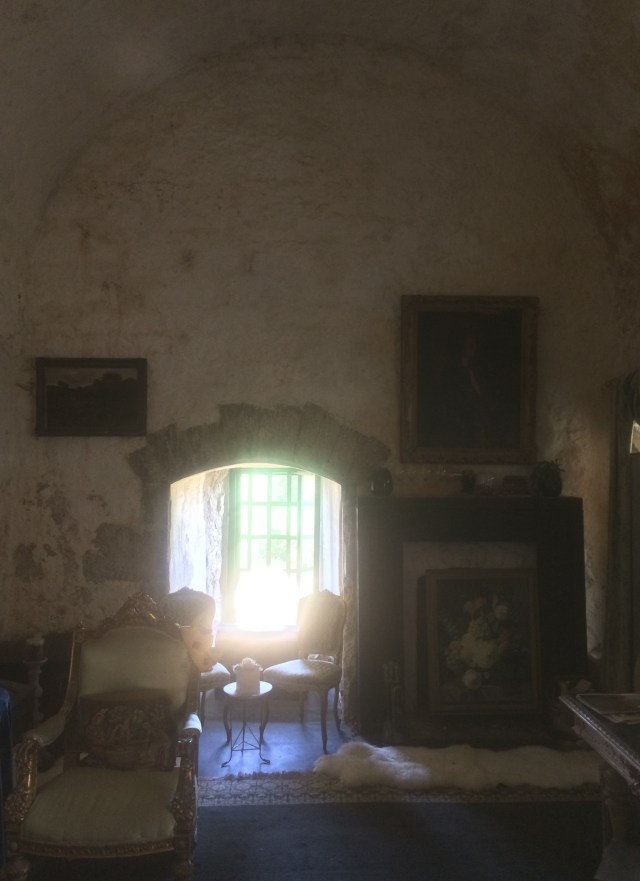
The recent run of good weather in Ireland has turned everyone’s attention to gardens (if only to wonder, given a recent hose ban, how to keep them sufficiently watered). There has always been a strong public appetite for visiting gardens, especially those developed over a long period of time. One of the most popular in recent years has been Altamont, County Carlow, which offers the additional allure of free admission. Running to almost 100 acres, Altamont was developed around a house which, as so often in this country, has a complex and at times unclear history.


Originally known as Rose Hill, the present property at Altamont dates from the 18th century, although it has been proposed that the house incorporates an older dwelling, possibly a mediaeval religious establishment. Various dates are given for the core of the building, anything from 1720 to 1770 but during the earlier period a branch of the St George family was in residence and seems to have been responsible for its construction, including the polygonal bay on the east-facing façade. By the later part of the 18th century Altamont was occupied by the Doyles: curiously Sir Arthur Conan Doyle’s father, a mid-19th century illustrator and watercolourist, was called Charles Altamont Doyle. By that time, the place was owned by Dawson Borror whose father had been a landscape architect: it was he who initiated changes to the demesne and gardens to provide local employment in the aftermath of the Great Famine (not least the creation of the lake). Borror also extended the house, adding a wing on the north side for a library and other rooms, and then making further alterations in the early 1870s. Half a century later, Altamont came into the ownership of Feilding Lecky Watson: first he and then his daughter Corona North were largely responsible for giving the gardens their present appearance.


Following the death of Corona North in 1999 Altamont passed into the care of the Irish State, which through the Office of Public Works has continued to care for the gardens and keep them open to the public. Hitherto the house at the centre of the site remains closed. An article in the Irish Times in December 2007 noted that the building had been rated by the National Inventory of Architectural Heritage as being of national importance and quoted then-Minister for the Environment, Heritage and Local Government John Gormley as saying that the house would be ‘a very important tourist attraction in the Carlow area and a wonderful amenity for local families.’ The economic recession began soon afterwards and the building stayed shuttered. It also appears legal complexities delayed the formal handing over of the property to the OPW: this only occurred in January 2014 when then-Minister of State with special responsibility for the Office of Public Works Brian Hayes announced plans to open Altamont House to the public in the future. The following year a government press release reported that Simon Harris, then-Minister of State with special responsibility for the Office of Public Works had visited Altamont where he explained his office ‘has already carried out vital remedial and maintenance works to the house and the entrance road and I am pleased to confirm that design work is at an advanced stage for the new Tearooms for which it is hoped to lodge planning permission very shortly.’ In December 2016 local media advised that work was ‘finally going to start in earnest into developing Altamont House into a place for visitors to the gardens to go.’ In February of last year the Carlow Nationalist reported that then-Minister of State with special responsibility for the Office of Public Works Seán Canney had visited Altamont and announced the organization was close to submitting planning permission for tea rooms in the building: ‘It’s a hugely ambitious project to renovate the house and it’s going to cost a substantial amount of money.’ Since then necessary repairs have been carried out on the roof. Further developments are awaited and, all being well, before too long the building at the heart of Altamont’s gardens will open its doors to the public.


Sorrow in Sunlight


The graveyard of Grey Abbey, County Down. A Cistercian monastery was founded here in 1193 by Affreca, wife of John de Courcy and daughter of Godred Olafsson, King of the Isles after she had vowed to create such a house if given a safe passage across the Irish Sea. The abbey was closed down in 1541 and then the buildings burnt some thirty years later by the O’Neills to stop English colonists using them. On land directly behind the east end of the church the graveyard, where once monks had been buried, continued in use and is accordingly packed with tombstones tumbling one over the other. Particularly poignant is this stone erected to commemorate Isabella Green who died in December 1816 aged ten months.

On the Fringes of Europe


The name Ballinskelligs derives from Baile an Sceilg meaning ‘Place of the craggy rock’ and refers to a coastal village on the Iveragh peninsula in County Kerry. On the western fringe of Europe, this has always been a remote and none-too affluent part of the country, which is likely why early Christian monks, in search of solitude settled on Skellig Michael, one of two islands some miles off the coast, where they lived in bleak isolation: some of their beehive huts and oratories can still be seen by visitors prepared to make the boat journey. Eventually in the late 12th or early 13th century, the monks moved to the mainland and took up residence in Ballinskelligs, where evidence of their buildings remains, along with another historic property.


Ballinskelligs Castle is one of the many tower houses that can be found throughout Ireland. As so often, it is impossible to date the building precisely but the consensus seems to be that it was constructed in the 16th century by the dominant MacCarthy family, ancient Kings of Desmond. The tower stands on an isthmus at the western end of the bay but much of the surrounding land has been eroded over time and it is most easily accessible at low tide. Presumably it was built as an observation post for all vessels coming into this part of the coast and to keep an eye on the arrival of potential pirates. Originally of three storeys, the tower has lost its upper section but corbels to support a floor survive. Following the dissolution of the Kingdom of Desmond at the end of the 16th century, and the loss of the MacCarthys’ authority, the building passed to the Sigerson family but later in the 17th century was reduced to being used as a pilchard-curing station as part of Sir William Petty’s fisheries enterprise.


Ballinskelligs Priory, at the other end of the long beach, was an Augustinian house likely established after the abandonment of Skellig Michael as a religious settlement: certainly the priory retained control of the island until it was in turn shut down during the 16th century Dissolution of the Monasteries. The present collection of remains dates from the 15th century and has been extensively – and perhaps rather too rigorously – conserved in recent years: a certain sterility now pervades the site. But, as with Ballinskelligs Castle, the views are outstanding. In the case of the priory, it is better to be inside looking out rather than outside looking in.

In need of TLC


The limestone doorcase of Abbeyfield House, Ennis, County Clare. Believed to date from c.1750, in the early 19th century the building was home to Matilda Crowe with whom Thomas ‘Honest Tom’ Steele, the friend and supporter of Daniel O’Connell, was passionately in love. He would sit on a rock on the other side of the river Fergus and gaze at Abbeyfield House in the hope of catching a glimpse of Miss Steele but to no avail: she ignored his overtures. Today the house is a police station and desperately in need of some of the love once lavished on its former chatelaine.

A Writer’s Haven


Dating from c.1800, this house in Banagher, County Offaly is described in http://www.buildingsofireland as being a striking feature of the streetscape ‘and one of the grandest structures within the town.’ The bowed breakfront with conical roof and the finely tooled stone doorcase is charming, as are the Wyatt windows on ground and first floor. In use as an hotel from the early 19th century onwards, two celebrated writers spent several years here: Anthony Trollope between 1841 and 1844 while working as a Post Office Surveyor’s Clerk (and writing his first published novel The McDermotts of Ballycloran) and James Pope-Hennessy in the early 1970s while writing biographies of both Trollope and Robert Louis Stevenson. Badly damaged in an arson attack in September 2012, damage to the building was not repaired which now looks in danger of being lost forever.


A Significant Anniversary


Limerick City’s oldest building still in continuous daily use, St Mary’s Cathedral this year celebrates its 850th anniversary. Standing on raised ground on King’s Island, the location had even earlier been used as a ‘Thingmote’ or meeting place by the Vikings who first established a settlement in Limerick. The cathedral was founded in 1168, reputedly on the site of a palace belonging to Donal Mór O’Brien, descendant of Brian Boru and last claimant to the title of King of Munster. Legend has it that the Romanesque west door was originally the entrance to O’Brien’s residence. His tomb – of which more anon – is in the Lady Chapel. Unusually the cathedral tower is located not in the centre of the building but above the west door: added in the 14th century, it rises 120 feet. The belfry holds a peal of eight bells, six presented in 1673 by William Yorke and cast by William Perdue who died before the job was complete and is buried in the graveyard. Especially during the 17th century when Limerick was besieged four times, the building experienced considerable upheaval. In 1651 Henry Ireton, General in the Parliamentary army then in Ireland, surrounded Limerick which held out for almost six months before surrendering (Ireton would die just weeks later). The victorious troops reputedly used the cathedral as stables for their horses (legend would have it the same behaviour occurred in almost every place through which they passed) and also removed the Pre-Reformation high altar. Some thirteen feet long and carved from a single block of limestone, the altar – the largest of its kind in Ireland and Britain – was only reinstated in the cathedral in the 1960s. Meanwhile during the Williamite Wars of 1689-91 Limerick was again besieged – twice. On the second occasion in 1691 as had happened exactly forty years earlier, the city resisted for several months before surrendering to William III’s general Godert de Ginkell, later first Earl of Athlone: he then concluded the Treaty of Limerick with Jacobite leader Patrick Sarsfield. However, during the course of the siege St Mary’s Cathedral had suffered so severely from bombardment that King William provided £1,000 towards the building’s repair. A number of cannonballs from the 1691 siege can be seen in the cathedral.


St Mary’s is so full of items of interest that much more space than available here would be required to detail them all. On this occasion just a couple will be discussed, the first of which is a 17th century funerary monument on the north side of the chancel. This commemorates Donogh O’Brien, fourth Earl of Thomond. The latter title had been created in 1543 when an earlier member of the family, Murrough O’Brien submitted to English authority and surrendered his position as the last King of Thomond. Raised in England at the court of Elizabeth I, Donogh O’Brien only settled in Ireland in 1582 following the death of his father. A member of the Established church and keen supporter of the government, he spent much of the next twenty years fighting his rebellious fellow countrymen on behalf of the crown. Ultimately Lord President of Munster, on his death in 1624 he was buried in St Mary’s Cathedral where construction of his tomb had already begun. A fascinating article by Dr Clodagh Tait published in the North Munster Antiquarian Journal in 2002 discusses this monument’s origins and history. In his will, drawn up some seven years prior to death, O’Brien mentions the tomb and requests that his heir Henry O’Brien finish the monument to his specifications. Dr Tait notes the similarities in design with the tomb of the earl’s friend Richard Boyle (the Great Earl of Cork) in St Mary’s Collegiate Church, Youghal, County Cork: both employed the sculptor Alexander Hills of Holborn. But that of O’Brien is less elaborate and uses cheaper materials than he first intended and, it seems, this is why he removed from the immediate area an earlier, and more sumptuous monument celebrating Cornelius O’Dea, Bishop of Limerick who had died in 1426. What survived of O’Dea’s tomb later disappeared as the poor of the city, believing it to have miraculous healing powers against the ‘bloody flux’ (what would now be called gastro-intestinal dysentery) gradually chipped away fragments until nothing was left. The O’Brien monument is often said to have been damaged by Ireton’s troops in 1651 but Dr Tait proposes that in fact it was subject to attack when the cathedral temporarily reverted to Catholic use in the 1640s: O’Brien’s vigorous espousal of Protestantism would have been well remembered, hence the particular damage to his recumbent figure (on the lower shelf) and that of his second wife Elizabeth FitzGerald. What we see today is the tomb as reconstructed by the seventh Earl of Thomond in 1678. It features three tiers of different coloured marble, surrounded and supported by columns of the Ionic, Corinthian and Composite orders, and decorated with O’Brien arms and trophies. Beneath and in front of all of this has been inserted the coffin lid of Donal Mór O’Brien’s tomb.


The other item in St Mary’s worth examining, and indeed for which the building is best known, are the stall misericords now lining the walls of the north transept. The misericord is a clever mediaeval device to get around the proscription against sitting during religious services: when the seat is raised, a small protruding ledge allows the participant to lean back at rest while still standing, arms settled on the sides of the stall. These devices were commonplace in the Middle Ages but the set in Limerick are the only extant Irish examples. Dating from 1480-1500 they were carved in oak taken from the woods at Cratloe, County Clare less than six miles away: the same wood was also used for the barrel-vaulted roof of the cathedral. Each of the surviving 23 misericords has a different carving on the seat underside. Some of these are of human beings or actual animals, others are of mythical beasts, such as a Wyvern (a two-legged dragon with a barbed tail) or a Griffin (its front half being that of an eagle while the rear was that of a lion). At some date, believed to have been in the 19th century, the misericords were removed from the main body of the cathedral and stored in the crypt before being brought up and placed in their present position. Over six hundred years old, they are a remarkable survival but, as already mentioned, only one of the many gems to be found in St Mary’s, an historic building that merits repeated visits.


As part of its 850 anniversary, the cathedral has organized an extensive programme of celebratory events. Information about these can be found at: http://saintmarys.bookeventsireland.com/saintmarys

Well Red


It is now half a century since Castletown, County Kildare opened to the public. Constructed during the 1720s as one of our earliest and still greatest extant country houses, the building might have been lost had it not been for the plucky vision of the Hon Desmond Guinness in purchasing Castletown, and then the sterling work of the Irish Georgian Society in undertaking restoration work so that it could welcome visitors. Since 1994 Castletown has been in state ownership and the Office of Public Works, together with the Castletown Foundation, supports an ongoing programme of further improvements to house and contents.


One of the latest projects undertaken inside Castletown has been the conservation of the Red Drawing Room, part of an enfilade on the northside of the ground floor. The design of this space dates from the second half of the 1760s when much work was being undertaken in the house by Tom and Lady Louisa Conolly but the walls were hung in crimson hand-woven damask probably in the late 1860s/early 1870s. An early decision was made not to replace this much-weathered material but to preserve it in situ, carrying out necessary repairs while leaving evidence of age and wear-and-tear. This work is now complete and the room returned to inspection by visitors who will be able to admire a rehang of pictures and other additions to the decorative scheme, not least new curtains of damask woven to match that on the walls. An essay on the Red Drawing Room’s conservation by Christopher Moore is included in Volume XX of the Irish Georgian Society’s Irish Architectural and Decorative Studies journal which has just been published.

Standing Proud


All that survives of the former Church of Ireland church in Rathconrath, County Westmeath. According to Samuel Lewis writing in 1837 the building had been erected eighteen years earlier ‘almost on the site of the ancient church’ at the cost of £738, the entire sum being provided by the Board of First Fruits. At that time the living was in the patronage of Brinsley Butler, fourth Earl of Lanesborough who had inherited large estates in this part of the country through his grandmother Jane Rochfort, a daughter of the first Earl of Belvedere, notorious for having locked up his wife for over thirty years after he suspected she was having an affair with his younger brother (who he sued for criminal conversation).

Making a Show of Itself


Over 250 years ago a small group of ambitious Irish artists came together in Dublin to establish a new society dedicated to promoting their work. Within a couple of years they had not only organised an annual exhibition but also constructed a domed octagonal chamber in which this could take place. Known as the City Assembly House, it is the oldest extant public art gallery within these islands and very likely in Europe. Restored over recent years by the Irish Georgian Society, from today the space features ‘Exhibiting Art in Georgian Ireland’, a recreation of how the room would have looked when used by the Society of Artists between 1765 and 1780. All the work featured is by exhibitors in those original shows and among the more familiar names are Francis Wheatley, Thomas Roberts, Jonathan Fisher, Hugh Douglas Hamilton, Robert Hunter and Samuel Dixon. Running until July 29th, the exhibition is a unique celebration of an earlier and still insufficiently appreciated era in Irish art. Admission is free.


For more information on Exhibiting Art in Georgian Ireland and the programme of complementary events associated with it, see: http://www.igs.ie/events

Awaiting Salvation


No site looks its best in torrential rain, but under these circumstances there is something especially melancholic about Kilmacurragh, County Wicklow. Over the past couple of decades, the historic gardens here have undergone a wonderful and welcome rebirth, but the house which has formed the centrepiece of the estate for over three centuries now stands a roofless shell. It is located on the site of an early Christian settlement, based around a hermitage established by St Mochorog, said to be an Englishman of royal birth who came to Ireland at the start of the 7th century. A monastic community remained here until Henry VIII’s dissolution of all such religious establishments, but some of the building’s foundations have been found under parts of the present garden at Kilmacurragh. Ownership of the lands were then disputed between the local Byrne family and various settlers. However, in 1697 Thomas Acton secured a lease on the property from the Parsons family, then as now based in Birr, County Offaly (where their gardens are likewise renowned). The original Thomas Acton – grandfather of the one already mentioned – is believed to have come to Ireland in the mid-17th century with the Commonwealth army, and like so many other of its members to have stayed because rewarded for his service with property here. In 1716 the younger Thomas Acton obtained from the then-Viscount Rosse ‘leases for lives renewable forever’ at Kilmacurragh; twenty years later his son William Acton married the Viscount’s cousin, Jane Parsons. Thereafter successive generations of Actons would live at Kilmacurragh and develop its gardens until the opening decades of the last century.


Almost from the moment of arrival at Kilmacurragh, the Actons seem to have been particularly interested in the improvement of their demesne. Presumably around the same period that he built the present house at the close of the 17th century, Thomas also laid out a formal Dutch-style park, with canals and formal avenues. He also created a forty-acre Deer Park. In turn his son William Acton laid out a two-mile beech avenue to celebrate his marriage to Jane Parsons in 1736. Fourteen years later she received a premium of £10 from the Dublin Society (founded less than two decades before) for the planting of ‘foreign trees’ and accordingly large numbers of these were given a place on the estate. In 1780 her son, another Thomas Acton, married Sidney Davis who would in turn receive grants from the same society for growing small plantations, using the money to acquire further rare species. Lt. Col. William Acton inherited the estate in 1817 and he undertook further work, both in the demesne and on the house. With regard to the former, he is believed to have built the walled garden with an orangery and ranges of glasshouses, as well as providing employment during the Great Famine by the restoration of the ha-ha that surrounded the old deer park. He also further added to the planting at Kilmacurragh, buying trees from a nursery established nearby at Dunganstown in 1780. When he died in 1854, the estate was inherited by his eldest son, once more Thomas, who did most to give the gardens their present appearance, not least by sweeping away the formal layout created by his forebears more than a century and a half earlier. Thomas Acton and his sister Janet worked closely with David Moore, then curator of the Botanic Gardens at Glasnevin, Dublin, and with his son and successor in the position, Sir Frederick Moore. It has been noted that Kilmacurragh during this period became an unofficial outpost for the Botanic Gardens, thanks to its climate and soil but also to its sympathetic owner who with his like-minded sibling travelled the world in search of plants to bring home to County Wicklow.


The fourth Thomas Acton never married and when he died in 1908 Kilmacurragh was inherited by his nephew Captain Charles Annesley Acton, another bachelor. He had little time to take care of the place since on the outbreak of the First World War he signed up for service and was killed in September 1915 while assisting another wounded soldier. Kilmacurragh duly passed to his only brother Major Reginald Thomas Annesley Ball-Acton who in turn was killed just eight months later at Ypres: his heir was a two-year old boy Charles (later a well-known music critic for The Irish Times). During his youth the house stood empty and the grounds lay neglected, but in 1932 the place was taken over by a German, Charles Budina, who successfully ran an hotel there. Unfortunately, following Charles Acton’s sale of Kilmacurragh in 1944 a legal dispute seems to have arisen over possession of the property which was eventually acquired by the Land Commission thirty years later. More recently the gardens have come under the care of the National Botanic Gardens, an ideal association given the long links between the two sites. Since then much wonderful work has been undertaken in the grounds to bring them back to peak condition. However the house, which suffered the consequences of two fires in 1978 and 1982, has fallen into a ruinous state. Much has been written about the building of Kilmacurragh, traditionally dated to 1697 when Thomas Acton first took a lease on the land here. However, a few years ago in the Irish Arts Review Peter Pearson, who had examined relevant family papers including Thomas Acton’s account book, proposed that the house was constructed about a decade later. Nevertheless it would still have been one of the first unfortified residences in this part of the country and it appears likely that William Robinson, the Surveyor General (who was paid £1.1.3d by Thomas Acton in 1704 for unspecified work) had a hand in its design. Stylistically Kilmacurragh is suggestive of Robinson’s work, not least a handsome doorcase that once provided access to the building which was originally of five bays and two storeys (with an attic window in the pedimented breakfront). Photographs of the interior when still intact show it to have been extensively panelled, with a staircase featuring barley-sugar balusters not unlike those found in the Red House, Youghal, County Cork and other contemporaneous houses. The wings on either side of the main block were added in the 1840s by Lt Col. William Acton. Alas, nothing of his work on the house, nor that of his predecessors, remains. Today only the outer walls survive to look especially dispiriting in the rain…