Restoration Drama

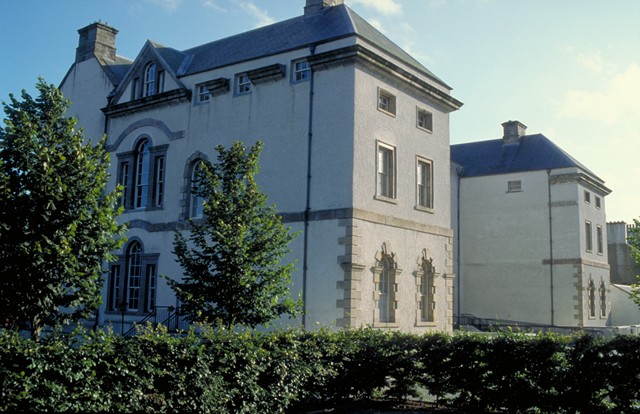
IMG_5093

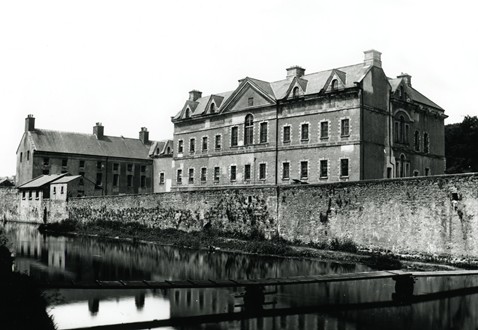
Since last October work has been underway restoring the City Assembly House on South William Street, Dublin. This week it will be possible for members of the public to see the results of this enterprise and to (re)discover an important part of the city’s 18th century architectural heritage.
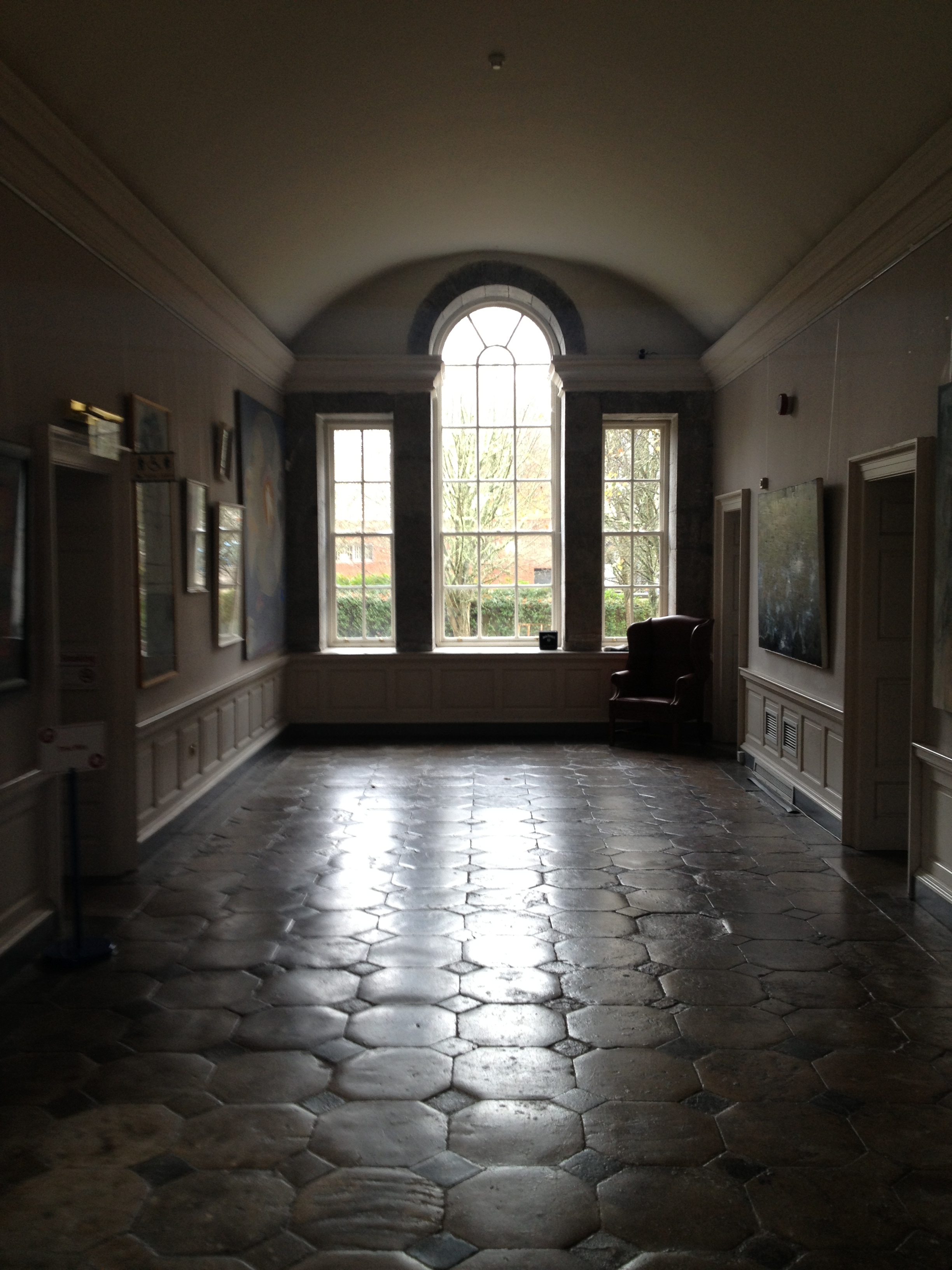
The City Assembly House dates from the second half of the 1760s and was built by and for the Society of Artists of Ireland. It was an idealistic organisation which believed the best means of advancing interest in and awareness of the creative arts in the country was to have a venue where these skills could be taught and the results put on display. Thus the core of the building is a top-lit octagonal space 40 feet wide and 33 feet high. Today this is the oldest purpose-built exhibition gallery in Britain and Ireland.

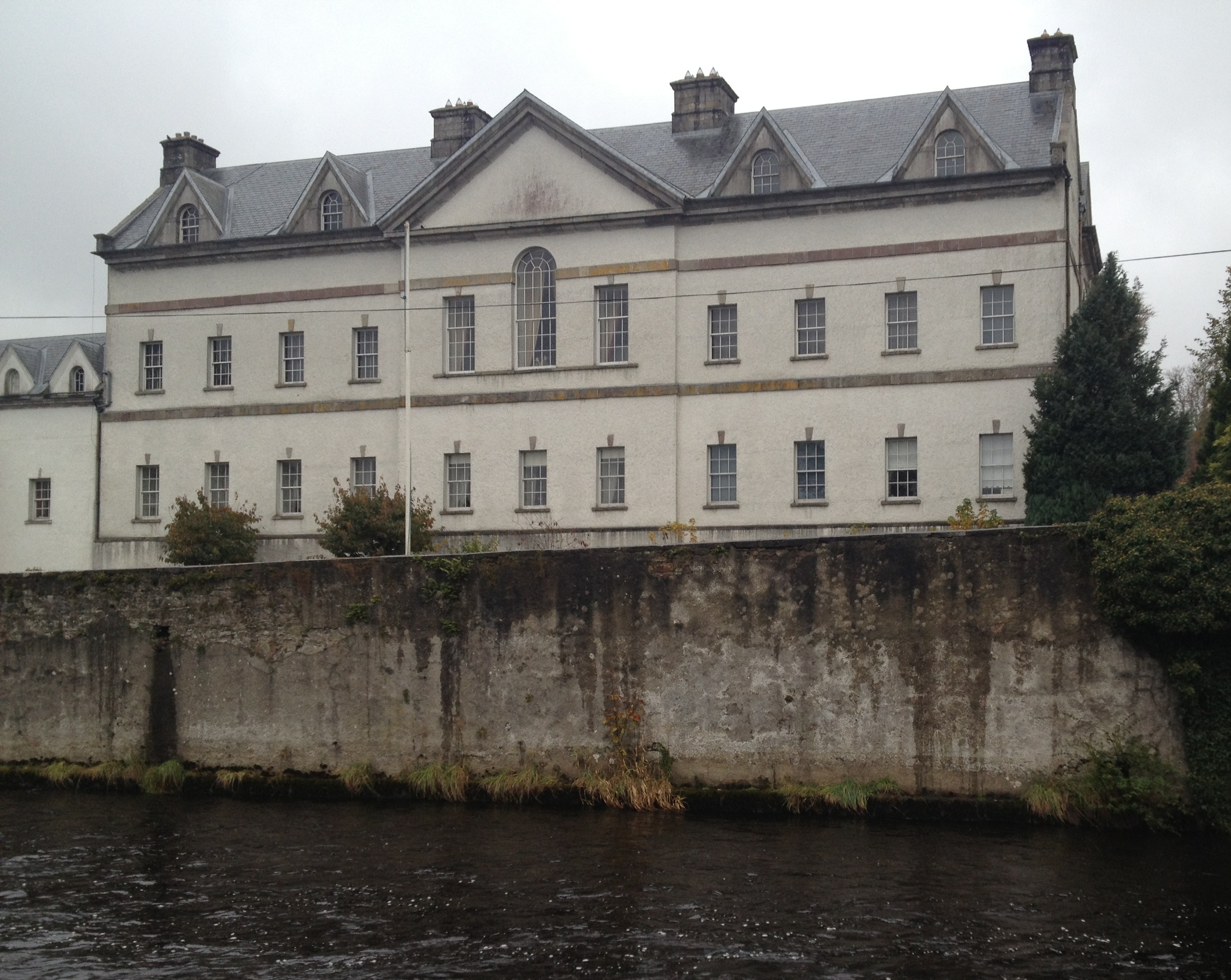
IMG_5108

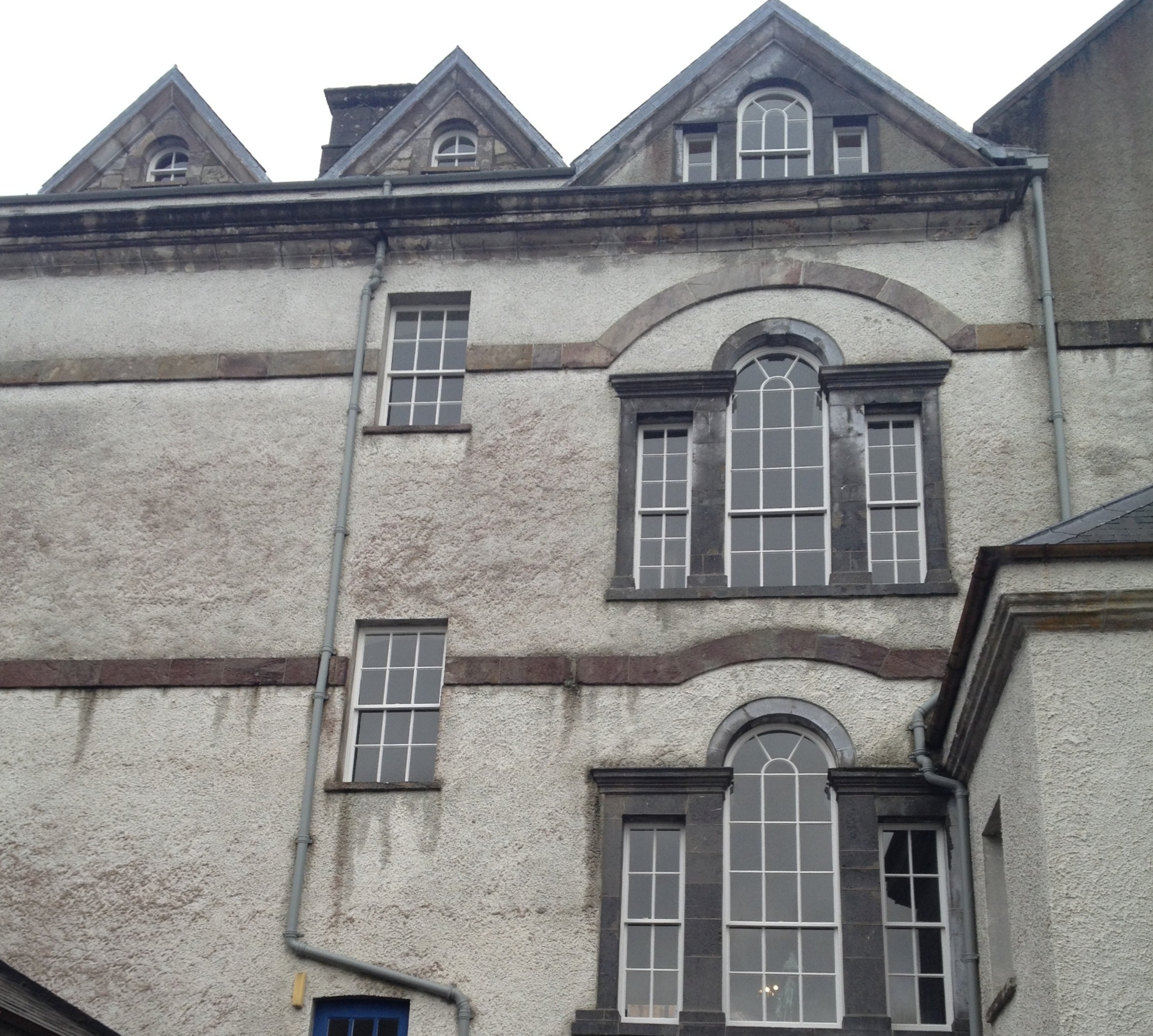
IMG_5104

While the gallery occupies the rear of the City Assembly House, the front section was intended to hold offices for the society as well as rooms where students could learn to draw, paint and sculpt. It is this forward area which has now been restored by the Irish Georgian Society, wishing to give the old building a new lease of life.
The City Assembly House has had a somewhat chequered career, since the society responsible for its erection had gone out of existence by 1780. Thereafter the premises were used for debates, shows, balls, masques and so forth until the building was acquired by Dublin Corporation in the early 1800s. It then acted as City Hall for half a century before becoming a law court and, in more memory, a civic museum. The last of these ceased to operate out of the building a decade ago and since then the City Assembly House has stood empty.

IMG_5133

IMG_5131

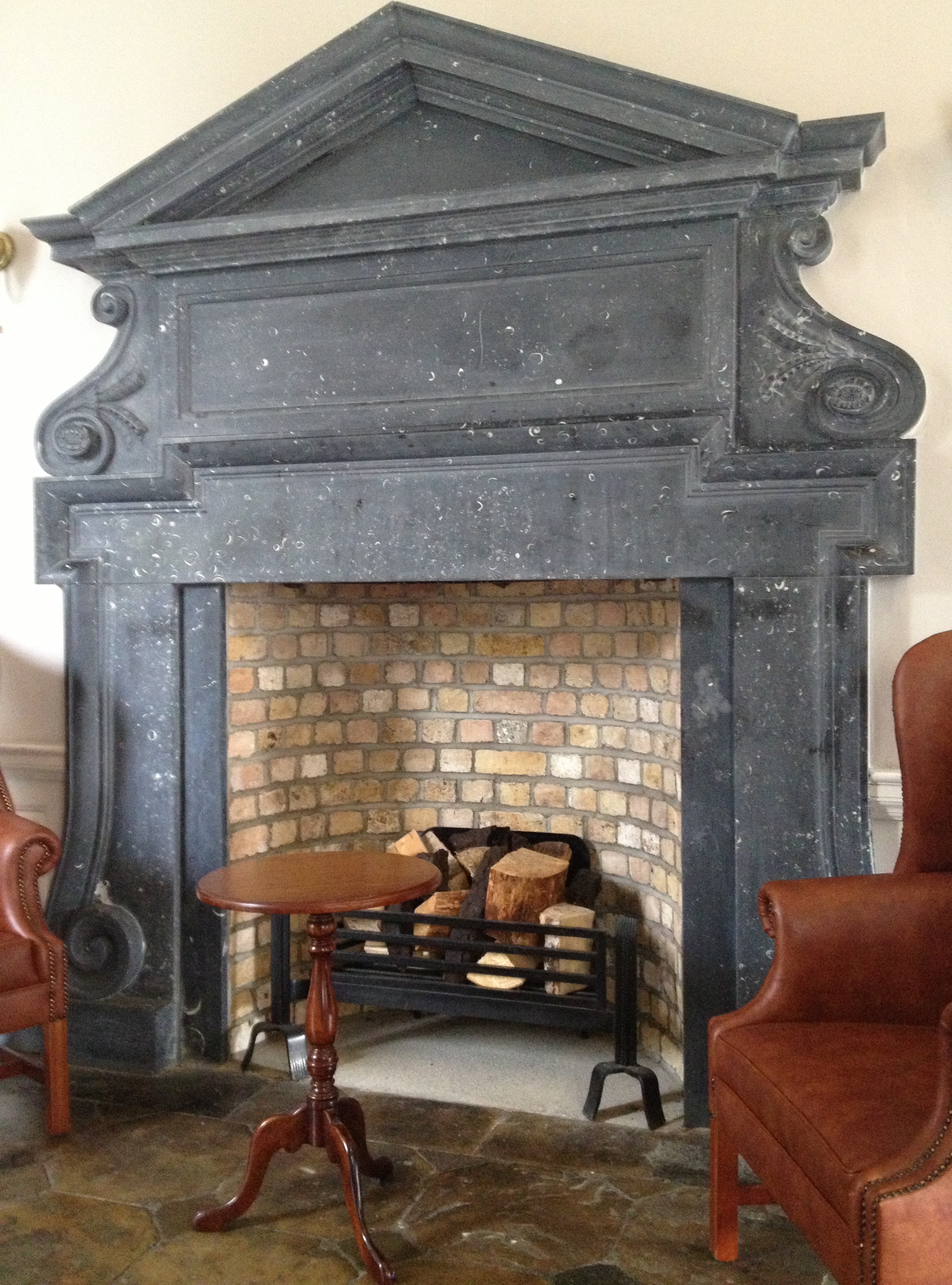
Now the IGS has assumed responsibility for the City Assembly House and for its complete restoration. The first phase was completed a few weeks ago, returning the front of the structure to its original understated elegance. Of particular interest is a top-lit staircase that cleverly climbs up and accommodates landings at different levels to front and rear. The stairs terminate in a handsome oval gallery beneath a glazed dome that provides light down to the ground floor and in particular draws attention to the pretty rococo cornice. Much of this had become indiscernible behind layers of paint and while certain sections required repair, a surprising amount of the original plasterwork has survived intact. Other discoveries included splendid neo-classical decoration in the large first floor room overlooking South William Street, and a granite wall on the ground floor return. Original floors have been cleaned and repaired, chimney pieces reinstated and doors repaired. The result is an absolute delight.
As of last month the City Assembly House is the headquarters of the IGS, but it has always been intended the building should open to the public. And so it will from Wednesday on, with a reception area and bookshop just inside the front door and the main gallery used for temporary exhibitions, beginning with photographs from the Vanishing Ireland project of James Fennell and Turtle Bunbury (until August 31st). Admission is free, so anyone visiting Dublin – or indeed living there – should take this opportunity to delight in one of the city’s lesser-known architectural gems, and to learn more about the work of the IGS. Incidentally, funds permitting it is hoped to begin full restoration of the main exhibition gallery next year.

IMG_5124

For more information about the City Assembly House, and the work of the Irish Georgian Society, see http://www.igs.ie

Thinking Periodically

image

Rathfarnham Castle, County Dublin as depicted in a watercolour by the Huguenot artist Gabriel Beranger in 1774. It shows the structure, built around 1583 for Adam Loftus, Lord Chancellor of Ireland and Protestant Archbishop of Dublin as a semi-fortified residence, after it had been extensively altered by his descendants in the 18th century.
In state ownership since 1987, today and tomorrow Rathfarnham Castle is the venue for the Period Buildings Show, an event organised by the Irish Georgian Society & South Dublin County Council, in partnership with the Office of Public Works. Ireland’s leading conservation practitioners will demonstrate everything from sash window repairs and stained glass and fanlight conservation to stone carving and traditional wallpaper making. Inside the house will be talks on a variety of topics relating to conservation. The occasion ought not to be missed especially since, mirabile dictu, admission is free.
For further information see: http://www.igs.ie/Programmes/Conservation-Outreach.aspx

Mythical Beasts

IMG_1920

A panel from the pedestal on which rests one of the lions at the four corners of the casino at Marino, County Dublin (see Casino Royale, March 25th). Although the building was designed by Sir William Chambers, the work here was overseen by Engish sculptor Simon Vierpyl who had first met his patron, the Earl of Charlemont when both men were in Rome in the 1750s. Chambers gave due credit when he wrote of the casino that it ‘was built by Mr Verpyle [sic] with great neatness and taste.’ The Portland stone used for the exterior was imported from England and presumably carved on site under Vierpyl’s supervision. It is astonishing to see that some 250 years later despite exposure to the elements the two figures of winged fauns are still as sharp as ever, down to the curls on their respective heads.

The Good Shepherd

CH26-%20Drawqing%20room%20DSC_9397

One last image for the moment from Cappoquin House, County Waterford (see Risen from the Ashes, 4th March). Here the central panel from an 18th century chimneypiece removed from the building before the fateful fire of 1923 and reinstated in the drawing roomm (now billiard room) following restoration. The carved marble is a complete delight, filled with enchanting details, whether the dog at his master’s feet, the obelisk in the field behind or even the smoke rising from a cottage further back. A little late for Easter but never mind: it’s a wonderful tribute to Irish craftsmanship.

Casino Royale

Marino Casino by William Ashford 1776

In 1760 James Caulfeild, Viscount Charlemont (he would be created first Earl of Charlemont three years later) wrote in his memoirs, ‘I quickly perceived and being thoroughly sensible it was my indispensable duty to live in Ireland, determined by some means or other to attach myself to my native country: and principally with this view I began those improvements at Marino which have proved so expensive to me.’ Wonderfully situated on rising ground looking south across Dublin Bay and towards the Wicklow Mountains, Marino was Lord Charlemont’s pocket estate just a couple of miles east of Ireland’s capital. At its heart were some 50 acres acquired by his stepfather Thomas Adderley on which the latter built a residence originally called Donnycarney House. This he presented in 1755 to Charlemont on the young man’s return from a Grand Tour lasting no less than nine years during which period, together with time spent in the customary European destinations, he had taken an extended voyage to Greece, Turkey and Egypt.
However, unquestionably the most important country visited by Charlemont was Italy and the painting above, painted in 1773 by Thomas Roberts, Ireland’s finest landscape artist of the 18th century, portrays the kind of arcadian Italianate view first proposed over 100 years before by Claude Lorrain and Poussin, complete with shepherd and flock of sheep. The picture furthermore gives expression to Charlemont’s ambition to improve not only the Marino estate but also the country of which it was part. This is embodied by the building at the heart, if not the actual centre, of the painting: a small temple or casino.

James Malton

Milton

While in Rome during the course of his Grand Tour, Lord Charlemont came to know a number of artists such as Pompeo Batoni, whose wonderful portrait of him can now be found in the Yale Center for British Art. He also associated with Giovanni Piransi, the first four-volume edition of whose Antichitá Romane (1756) was dedicated to his Irish friend, ‘Regni Hiberniae Patricio’ although the two men subsequently quarrelled. But the link to Piranesi demonstrates Charlemont’s interest in architecture from an early age, also evidenced by his commissioning a design for a garden temple from Luigi Vanvitelli, today best-known for the enormous Bourbon palace of Caserta. Vanvitelli’s proposal for an Irish building was rejected on the grounds of expense, but another architect with whom Charlemont first became acquainted while in Rome produced a more satisfactory, if ultimately no less costly, scheme. This was Sir William Chambers, responsible not just for the casino in the grounds of Marino but also Charlemont’s superb townhouse in central Dublin (today the Hugh Lane Gallery of Modern Art). Despite designing both these buildings and Trinity College’s Chapel and Examination Hall it should be noted that Chambers never came to Ireland.
Work on the casino at Marino was not completed until the mid-1770s perhaps in part because its owner placed many other demands on his income and was therefore constantly short of funds. But even before completion the building’s exceptional merits were recognised, as can be testified by the number of artists who produced paintings in which it features. Aside from Thomas Roberts, there was James Malton whose watercolour dated 1795 is shown above, together with an engraving by Thomas Milton after Francis Wheatley which was produced twelve years before. Jonathan Fisher, James Coy and George Mullins were among those who also exhibited work depicting the casino during the same period. It is difficult to think of any other building, certainly one of the casino’s relatively modest proportions, that attracted as much notice in 18th century Ireland.

IMG_1900

IMG_1904

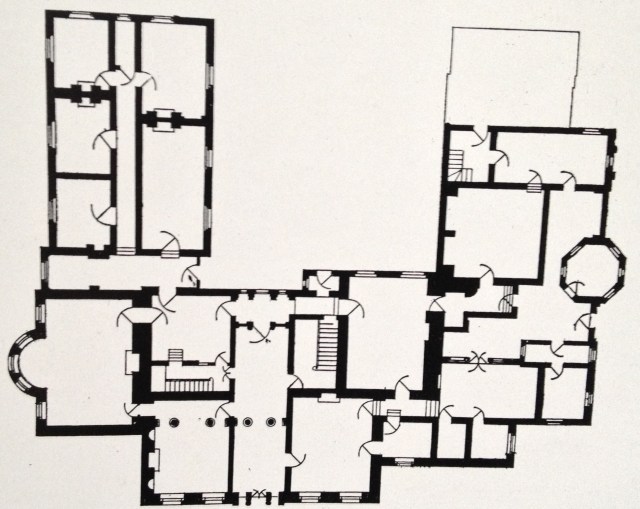
The sublime perfection of the casino at Marino – contained within a elaborately carved Portland stone exterior the Greek Cross plan measures just 40 by 40 feet yet contains 16 rooms spread over three floors, many of them with splendid plasterwork and inlaid floors – has been often described and analysed, and I do not intend to do either here. Less appreciated is the fact that this was just one of a number of ornamental buildings once found on Charlemont’s estate which he gradually extended to three times its original acreage. size. The main residence was Marino House seen above; the early 20th century photograph shows the principal facade behind which were two long wings creating a kind of rear courtyard; the rooms here included an important library and a gallery to accommodate some of the owner’s extensive book, picture and sculpture collection.
We know that Charlemont employed Matthew Peters to help with the design of the parkland at Marino. Born in Belfast, before settling in Dublin in the early 1740s he had worked as a gardener for his uncle who was employed by Lord Cobham at Stowe, Buckinghamshire. Given the influence exerted by Stowe’s park for many years hence, Peters’ presence there as a young man strikes me as highly important in the layout of Marino. In the evolution of garden design during the 18th century from French-style formality to the supposedly natural but carefully planned ‘English garden’ championed by Capability Brown (who also worked at Stowe), a slightly earlier alternative to the former was proposed. Best described as picturesque it is represented today by the likes of Stourhead in Wiltshire and Painshill, Surrey; can it be mere coincidence that the man responsible for the latter’s creation, the Hon Charles Hamilton, was born in Dublin the son of an Irish peer? At Stourhead and Painshill – both of which evolved around the same time as Marino – the park is treated as a series of rooms, each with its own character and focal point. Visiting them is like moving around a gallery holding different but complementary paintings and, I would propose, the same was once also true of Marino with the casino as the finest but by no means the only item meriting visitors’ attention.

IMG_1817

IMG_1891

So at Marino, Charlemont’s park once held an extensive series of buildings of widely divergent character. We have become so accustomed to the casino as the embodiment of neo-classicism it can come as a shock to discover that not far away on the same estate was a tall Gothic tower known as ‘Rosamund’s Bower.’ Dating from 1762, it stood at the end of a serpentine lake populated by ducks and swans. The tower’s front imitated a ‘highly ornamental screen, adorned with tracery and niches…a crocketed pinnacle conveying the idea of a spire’ while the interior, lit by stained glass windows ‘has been fitted up to imitate a nave, and side aisles of a cathedral.’ Two views of Rosamund’s Bower are shown above. It has been suggested that this structure was designed by Johann Heinrich Muntz, a Swiss-born painter and architect who was encouraged by Horace Walpole to move to England where he worked with Sir William Chambers. Marino House itself contained an ‘Egyptian Room’, so called because of its decoration, while elsewhere in the grounds could be found rustic hermitages, a root house and a moss house, together with such resting points as a covered gothic seat which, in a surviving drawing looks like a much-pinnacled bus shelter. A handful of drawings of the other structures at Marino were made by Thomas Roberts’ younger brother, confusingly called Thomas Sautelle Roberts. Two of them can be seen below and offer us a suggestion of how the grounds of Marino must have looked in the late 18th century.

IMG_1824

IMG_1826

The greater part of Marino as originally laid out no longer exists, and with it has gone the context in which the casino was intended to be seen and understood. Like so many Irishmen before and since Lord Charlemont spent beyond his means and left his heir heavily in debt. The family never recovered and even by 1835 the Dublin Penny Journal could remark that the estate’s grounds, to which Charlemont had always admitted the public – and in which he was mugged on a number of occasions – had ‘now lost its attraction – it has long been neglected’ while Rosamund’s Bower was ‘in ruins and a stranger seldom visits it.’ Furthermore the estate’s proximity to an expanding city made it vulnerable to encroachment. In the early 1880s the Caulfeilds sold the land to the Christian Brothers who initially occupied Marino House but eventually moved to other buildings put up in the grounds. In the 1920s Dublin Corporation acquired some 90 acres of the former estate and build almost 1,300 houses for local families; it was at this time that Marino House was demolished with almost nothing other than a couple of chimneypieces salvaged. The casino might likewise have been lost but thankfully its importance was recognised: in 1930 the building was taken into state care, the first post-1700 structure to be designated a National Monument. Now standing on just a few acres and surrounded on all sides by buildings of later date and lesser merit, today the casino is looked after by the Office of Public Works and open to the public.

???????????????????????????????????????????????????????????????

The Casino at Marino is currently hosting an exhibition, The Absent Architect, until the end of April. For more information, see http://www.heritageireland.ie/en/dublin/casinomarino/

Risen from the Ashes

IMG_0750

In 1913, Sir John Keane, who had succeeded his father as fifth baronet twenty-one years earlier, decided to carry out some embellishments of the family seat, Belmont, more commonly known as Cappoquin House, County Waterford. Sir John was a descendant of the O’Cahans of Ulster who had lost their lands during the province’s plantation in the early 1600s and, like so many others, been forced to resettle west of the Shannon. Towards the end of the 17th century, one of them changed his name to Keane, converted to Anglicanism and entered government service as a lawyer. In 1738 his son John Keane acquired three 999-year leases on the town of Cappoquin and surrounding estate from Richard Boyle, fourth Earl of Cork and Burlington. John Keane’s grandson, also called John (1757-1829) and created a baronet in 1801, was responsible for building Cappoquin House on the site of an old Fitzgerald castle around 1779.

IMG_0733

We will probably never know the architect responsible, although the name of John Roberts (1712-96), responsible for many other notable buildings in Waterford City and County, has often been proposed. Located on a prominent site above the point where the river Blackwater turns 90 degrees en route to the Irish Sea, the house’s south-facing seven-bay ashlar facade with three-bay breakfront rises two storeys over basement, its parapet finished with a line of urns. There are scarcely any images of the house before 1930 other than an 1843 watercolour signed R Armstrong. This shows the old conservatory to the immediate east side of the house and also a servants’ wing unattached to the main house, which explains the former’s survival after the latter went up in flames in 1923.
Seemingly much of the interior of Cappoquin had charming Adamesque plasterwork but this did not extend to the drawing room. So in 1913 Sir John Keane engaged the services of Page L Dickinson to embellish that part of the house. Dickinson is a curious character, the author of a memoir The Dublin of Yesterday published in 1929 after he had moved to England in voluntary exile from post-independence Ireland and filled with laments for a since-lost ancien regime. But he also wrote, in conjunction with Thomas Sadleir, the excellent Georgian Mansions in Ireland (1915) which contains detailed accounts of, among many other houses, Dowth Hall (see Netterville! Netterville! Where Have You Been?* of December 24th).

235

238

Fifth son of the Dean of the Chapel Royal in Dublin, Page L Dickinson was first apprenticed to the architect Richard Caulfield Orpen (brother of artist William Orpen), and then became his partner in the practice. In 1913 he was asked to improve the appearance of Cappoquin House’s drawing room primarily through the addition of plasterwork decoration. Lack of photographs, which the building’s owner would lament after it had been gutted by fire, means we do not know how the finished room looked. But an idea of its appearance can be gleaned from surviving correspondence between the two men because in some of his letters Dickinson not only described what he proposed to do but included sketches of same. The latter show oval wall panels and swags in the Adam-revival style then fashionable. The work was carried out by a Dublin craftsman, Michael Creedon of Clare Lane and again extant documentation shows that he expected to complete the job at a cost of £130 ‘as the ornament would be rather close to the eye & would consequently have to be modelled with special care.’
In addition to the drawing room decoration, Dickinson also designed a new loggia immediately outside on the west front of the house. This was to replace a flimsier 19th century timber and slate structure, and was sufficiently robust to survive the 1923 fire. Once more, Dickinson’s letters show the evolution of the design to its final form, an excellent example of architect and client working together to produce a satisfactory result. All the work was completed in late spring 1914, just months before the outbreak of the First World War.

IMG_0732

IMG_0759

So how was it that Cappoquin House came to be gutted by fire in February 1923? The explanation lies in Ireland’s complicated history during this period. In December 1921 representatives of the British government and those of the fledgling Irish state had signed a treaty concluding hostilities and providing for Ireland’s independence – except for six counties in Ulster which remained part of the United Kingdom. Not everyone in this country welcomed the treaty’s outcome and an extremely violent civil war ensued. Among those targeted by anti-Treaty supporters were members of the new state’s upper parliamentary house, the Senate: no less than 37 houses belonging to Senators were deliberately burnt out. In December 1922 Sir John Keane had accepted an invitation from the Free State government to become a Senator. The consequences were inevitable.
In fact, he had already realised that Cappoquin House, like many other similar properties in Ireland, was vulnerable to attack. His wife and children had moved to England and he had arranged to have the best furniture, pictures and silver taken away and put into storage. Much was lost when the house was set on fire, not least an historic library, but a great many of the contents were spared destruction. Immediately Sir John set about applying to the Irish government for compensation for his losses and investigating how best to go about restoring the hollow structure. Although he received less financial support than had been requested, he still went ahead with the project, initially intending to work with the same architect as ten years before. But by this time Dickinson had already moved to England, so he recommended his former partner Richard Orpen who did take on the job.

IMG_0753

Cappoquin House is a very rare example of an historic Irish property rebuilt following its deliberate destruction, and it stands as a tribute to the tenacity of the redoubtable Sir John Keane who, incidentally, also remained as an active Senator until 1944, by which time he was aged over seventy. A lot of trouble was taken to ensure the house’s interiors were as splendid as they had been before the fire, and the extensive papers dealing with its gradual reconstruction make for fascinating reading. This time the exquisite plasterwork decoration in most of the main reception rooms had to come from the London firm of G Jackson & Sons – one can only assume Mr Creedon was no longer in business in Dublin – and all their invoices remain. For example plasterwork of the octagon above the main stairs (seen at the start of this piece) cost £166. Ironically due to insufficient funds the only area not redecorated was the old drawing room which had been given its splendid new appearance just a decade before the fire. Today Cappoquin House and its equally delightful gardens remain in the ownership of the same family, admirably cared for by Sir John’s grandson, Sir Charles Keane and his wife Corinne. They welcome visitors so here is an opportunity to see for yourself an Irish house that rose like a phoenix from the ashes of destruction (see http://www.cappoquinhouseandgardens.com/).

L1010913

For more about the restoration of Cappoquin House after the 1923 fire, see my article on the subject in the current spring issue of the Irish Arts Review.

One Step at a Time

image

In the centre of Roscrea, County Tipperary stands Damer House, a superb residence built by John Damer at some date not long after 1722 when he purchased the town and surrounding lands. One of the building’s most important features is its carved pine staircase, a wonderful example of early 18th century Irish craftsmanship.

Fit for a King

8

Boyle, County Roscommon is a provincial market town, seemingly indistinguishable from many others throughout the country. Once of importance as a centre of trade for the locality, it now appears to have slipped into irreversible decline. Somewhere, in other words, to by-pass except that rising in the middle of the town and towering over all other buildings is an immense early 18th century townhouse.
Known as King House, the name taken from the family responsible for its construction, this marvellous edifice is reminiscent of the seigneurial chateaux one finds in regional French urban centres, evidence of a powerful dynasty determined to wield and enforce authority. The family association with Boyle was due to John King (d.1637), an English adventurer who had come to Ireland with Sir Richard Bingham, the royal-appointed Governor of Connacht. In 1603 the Boyle estate running to over 4,000 acres and originally developed by the Cistercian monks whose abbey had since been dissolved, was leased to King and another soldier but in 1617 the former was granted the entire property as a reward for ‘reducing the Irish to obedience.’ One of his children Edward King, a fellow of Christ’s College, Cambridge drowned while on a boat sailing to Ireland in August 1637 and was soon eulogised by his friend John Milton in the poem Lycidas. However, Sir John had six sons and thereafter successive generations of the family increased its holdings until the Kings became the area’s most prominent land owner.

5

6

Of three storeys over basement, King House was built for Sir Henry King, dates from 1720-30 and is believed to occupy the site of an earlier structure. As ever, we do not know the architect responsible. Both Pearce and Castle have been mentioned, but so too has William Halfpenny (d.1755), an Englishman who worked in Ireland during the 1730s in Dublin, Hillsborough, County Down and Waterford City. There is also some speculation that the building as seen today is incomplete; the pedimented north front is strikingly plain, so it has been posited that the two-bay projecting wings were meant to be joined by another block so as to form an enclosed courtyard. If this was the intention, then it helps to explain the want of external decoration. The rear of the house, which looks south to the river Boyle and would once have had a pleasure garden running down to water’s edge, is more satisfactory if rather too rigorously symmetrical. In fact the best views are those of the two sides, where a pair of Venetian windows sits one above the other. Roughcast render suggests a variety of material was used for the building, although all the window and door surrounds are of fine cut limestone.
Not a lot of the original interior remains, but there is an explanation why this should be the case. The Kings used their house for little more than half a century before it was damaged by fire in 1788. By this date tastes had changed and it was considered more desirable to reside in the countryside, so the family moved to the nearby estate of Rockingham (of which more in the months ahead). King House was first leased and then in 1795 sold for £3,000 to the government. Subsequently it was converted into an army barracks and during the 19th century was occupied by the Connaught Rangers; presumably during this period was added the large extension to the south-west of the main block. As evidence of its size the house was able to accommodate 12 officers and 260 non-commissioned officers and private foot soldiers, as well as a 30-bed hospital and stabling for horses. Following Independence, the building continued to serve the same purpose for members of the Free State Army until the 1960s when King House passed into private hands and was used as a store and fuel depot. Its condition quickly deteriorated and by the 1970s tenders were invited for the building’s demolition to make way for a car park. I remember first seeing the place at that time, when the chances of its survival looked slim. Thankfully in 1987 King House was acquired by Roscommon County Council with a full programme of restoration work beginning two years later.

2

3

Today King House is a public amenity, a museum and a facility used for various purposes, from wedding receptions to library services. Given its chequered history, the building’s want of interior ornamentation does not come as a surprise. The 1788 fire, followed by conversion for use as a barracks helps to explain the lack of an elaborate staircase, for example, and also the absence of much plasterwork embellishment. The most striking extant feature is the gallery found running the length of the house on each floor and lit at either end by the aforementioned Venetian windows. That on the groundfloor retains a splendid stone flagging and two immense baroque chimneypieces of Kilkenny marble. The vaulted ceilings of red brick are unusual since this is customarily only found in basements. Seemingly the notion was that vaulting would prevent the spread of fire, a theory soundly disproved by the conflagration of 1788. Elsewhere some rooms have decorative cornicing but overall the impression is of refined purity.
Or at least that would be the case if those responsible for King House would allow the building to speak for itself. Loath as one is to speak ill of any organisation prepared to ensure a future for the country’s architectural heritage, what a shame that in this case the relevant authorities have shown scant confidence in the house’s inherent qualities. The restoration work has been exemplary but rather than allow the interior’s handsome proportions to make an impression, everywhere is filled with furniture, display units, information panels, mannequins and assorted bric-a-brac relating to a disparate variety of topics. The place is so busy one is constantly denied an opportunity to assess architectural merit (or, incidentally, to take a decent picture). A dissapointment as the building is of such rare merit it deserves to be cherished as and for itself, and not treated as the setting in which much less interesting material is shown. The current style of presentation is unquestionably to the building’s detriment. King House dominates not just Boyle but much of the surrounding region since nothing else can begin to approach its resplendence. Accordingly nothing else ought to be required. Here is an instance where less would achieve more.

10

This last is an old photograph of King House when still a military barracks (and, by the looks of it, already in poor shape).

A Man of Some Importance

????????????????????????????????????????????????????????????????????????????????????????????????????

So here is Castletown, County Kildare, famed as Ireland’s first, largest and grandest Palladian house. Astonishingly in the mid-1960s it was threatened with destruction and only saved through the ceaseless endeavours of the Irish Georgian Society. Among those most closely associated with securing Castletown’s future, both then and now, was Professor Kevin B Nowlan who died earlier this week at the age of 91.
Small of stature, stout of heart Kevin was an indefatigable campaigner on behalf of Ireland’s architectural heritage, member of countless boards and committees – on a number of which I have also sat – and always both passionate and articulate in the cause of conservation. Aside from being intelligent and well-informed and determined, one of his chief merits was a complete lack of self-interest: nobody could ever accuse Kevin of deriving personal benefit from his involvement in any enterprise.
The other great quality he possessed was tirelessness; for over half a century Kevin never grew bored or despondent, even when a campaign met with setback. Interviewed by the Irish Times on the occasion of his 90th birthday, he remarked, ‘As long as you’re in good health and keep your mind active you can’t ask for much more.’ Kevin certainly did remain active. Until just a couple of weeks ago, one was most liable to see him either going to or coming from a meeting. His funeral takes place this morning but I suspect he is not at rest: no doubt right now he is chairing a new group established to ensure a proposal for the reconfiguration of the Pearly Gates will be defeated.

IMG_0982

Building on a Prelate’s Ambition

IMG_0407

In 1751 an impoverished but well-connected Anglican clergyman came to Ireland and within a year had been consecrated as Bishop of Killala. Over the next decade he advanced through two further sees before being appointed Archbishop of Armagh in 1765. Richard Robinson (1709-94) was the sixth son of a Yorkshire landowner and as such it was inevitable that after graduating from Christ Church, Oxford he should have considered the Church as a lucrative career. Few of his clerical contemporaries, however, acquired so much or spent so lavishly.
He arrived in Dublin as chaplain to the then-Lord Lieutenant, Lionel Sackville, Duke of Dorset, whose support helped secure that first episcopacy. But it is clear that Robinson was always destined to make a mark. After his death it was said that during his time there Armagh had been converted ‘from an unsightly crowd of mud cabins into a handsome city of stone dwellings.’ Among the buildings for which he was responsible are the public library, the Royal School, the barracks, a county gaol, the public infirmary and, most famously, in 1793 the Armagh Observatory for which he created an endowment. Long before that date, finding the Archbishop’s residence unsatisfactory, he had a new one built for him on a 300 acre demesne, together with stables, farmyard and a chapel. No wonder Methodism’s founder John Wesley accused him of being more interested in building that in the care of souls.

IMG_0408

Robinson behaved like a continental prince-bishop. In his memoirs the playwright Richard Cumberland, whose father was Bishop of Clonfert, recalled accompanying the Archbishop to Armagh Cathedral one Sunday: ‘He went in his chariot with six horses, attended by three footmen behind… On our approach the great western door was thrown open, and my friend (in person one of the finest men that could be seen) entered, like another Archbishop Laud, in high prelatical state, preceded by his officers and ministers of the church conducting him in files to the robing-chamber and back again to the throne.’
Robinson’s lofty aspirations – the reliably-waspish Horace Walpole judged him ‘a proud but superficial man’ – led him to seek secular as well as religious preferment and in 1777 he was created Baron Rokeby in the Irish peerage. Some years later he acquired an estate in Marlay, County Louth and here built a house which was given the name Rokeby Hall (http://www.rokeby.ie). By so doing he evoked the Robinson family’s Yorkshire seat which his older brother Sir Thomas, an amateur architect but professional spendthrift, had been obliged to sell in 1769. So the new Rokeby in Ireland was intended not just to serve as a country retreat but also to replace a lost estate and provide an alternative dynastic base: although the Archbishop never married, there were several potential heirs among his siblings’ offspring.

IMG_0391

IMG_0394

IMG_0400

As his architect for the house, Robinson chose Thomas Cooley who had already been responsible for many of the new buildings in Armagh, including the Archbishop’s Palace. Unfortunately Cooley died in 1784 and so his plans were handed over to the youthful Francis Johnston. Born in Armagh, Johnston’s abilities had been noticed by Robinson who sent him as an apprentice to Cooley in 1778. Nevertheless, although the younger architect oversaw Rokeby’s construction surviving plans show just how much its layout is as originally devised by Cooley.
Rokeby’s limestone exterior looks somewhat severe, the facade relieved only by the slightly advanced three centre bays with first-floor Ionic pilasters beneath a pediment. To the immediate right and reticently recessed is a long extension which might appear to be a later addition but is in fact contemporaneous with the main house and originally contained many of the necessary services such as a large kitchen. The main house is often described as being two-storey over basement. However there is a splendid attic storey tucked behind the parapet and centred on a striking circular room lit by glazed dome; as a result of an acoustic trick when you stand directly beneath this your sense of hearing is affected.

IMG_0431

IMG_0428

While obviously not a small house, Rokeby is by no means palatial and the appeal of its interiors lies in their neo-classical refinement devoid of superfluous ornamentation. This is evident in the entrance hall where the space is simply but effectively divided by the intervention of two Doric columns. There is relatively little plasterwork decoration, except on the main staircase and the upper landing. The latter is one of the finest features of the house: a circular lobby off which open various bedrooms and dressing rooms, every second door topped by an oculus providing light for this space.
These rooms look to have retained their original chimneypieces, sadly not the case on the groundfloor. On his death Archbishop Robinson left Rokeby to a nephew, John Robinson, Archdeacon of Armagh (created a baronet in 1819) but he fled Ireland after his father-in-law, Captain James Spencer of Rathangan House, County Kildare, was killed by rebels during the 1798 Rising. Rokeby was then rented to a sequence of tenants; James Brewer’s The Beauties of Ireland published in 1826 noted that the house ‘is now, we believe, in the hands of a farmer, and the chief apartments are let furnished to casual inmates.’ Only some time after Archdeacon Robinson’s death in England in 1832 did his son Sir Richard return to Rokeby and presumably embark on a programme of refurbishment necessary after almost half a century of neglect. Hence the chimneypieces in the main rooms are of a later date as are some doors, evident in the different disposition of their panelling.

Rokeby 1

IMG_0384

Descendants of the Robinsons remained in possession, although not necessarily in occupation of Rokeby until the middle of the last century, after which the house passed through a variety of hands often with unfortunate consequences. When the present owners bought the place in 1995, for example, the library had been stripped of its bookcases and divided in two with one half used as a kitchen.
Over the past eighteen years, a process of gradual restoration has taken place at Rokeby, driven by just the right balance of enthusiasm, commitment and ongoing research into the house’s history. At the moment, the owners are undertaking the restoration of Rokeby’s most notable 19th century addition: a substantial conservatory designed c.1870 by Richard Turner. This is due to be reinstated later in the spring. One feels confident that even if members of his family are no longer in residence, Archbishop Robinson would be delighted to see the country house he commissioned so well maintained and loved.

Robinson-Reynolds

A mezzotint produced in 1764 by Richard Houston and based on a portrait of Richard Robinson painted by Joshua Reynolds the previous year and now in Christ Church, Oxford. Reynolds painted Robinson three times and a version of the last of these hung in Rokeby until the last century. Today it is in the collection of the Barber Institute of Fine Arts, Birmingham.