The Lonely Sentinel

IMG_7560

A solitary obelisk standing on raised ground in what was once the parkland of Dangan Castle, County Meath. Dangan was the seat of Richard Wesley, created first Baron Mornington in 1746. He spent a great deal of money improving his house and grounds, and Bishop Pococke in his 1752 Tour in Ireland described the former as being ‘situated on a most beautiful flat, with an Amphitheater of hills rising round it, one over another, in a most beautiful manner; at the lower end is a very large piece of water, at one corner of which is an Island, it is a regular fortification, there is a ship a sloop and boats on the water, and a yard for building; the hill beyond it, is improved into a beautiful wilderness: on a round hill near the house is a Temple, and the hills round are adorned with obelisks: Pillars and some buildings, altogether the most beautiful thing I ever saw.’ Mrs Delany also visited Dangan several times, being godmother to Mornington’s heir Garret, future first Earl of Mornington and, in turn, the father of Arthur Wellesley, future Duke of Wellington who likewise spent much of his childhood here. Yet before the end of the century the family had sold the estate, the house was accidentally destroyed by fire and in 1841 J. Stirling Coyne could write ‘The noble woods, too, which adorned the demesne, have shared in the general destruction; and all the giants of the sylvan scene have been prostrated by the ruthless axe.’ Today there remain few signs of Dangan’s former splendour other than this obelisk rising in the midst of a field, and another not far away, the latter restored of late with help from the Meath branch of An Taisce.

Building Up and Tearing Down

Fitzwilliam Street 1

Ten days ago the state’s Electricity Supply Board announced plans to pull down its existing premises on Dublin’s Lower Fitzwilliam Street and build anew on the site. Since then there has been much discussion about what the replacement should look like. In order to assist in that dialogue, here follows a synopsis of how the present office block came into being.
In 1952 the late Maurice Craig wrote with rapture of this street and those on either end, describing how down its length, ‘the light ripples in gay vertical streaks, varied within modest limits, and disappearing, as cheerful as ever, into the anonymous distance.’ So it might have remained to the present but for the ESB which in 1927 had arrived in the area to occupy just the drawing room of a single building (No. 28 Lr Fitzwilliam Street). However, as the company grew and its duties and staff swelled, additional buildings were acquired along the same block until almost its entirety had come into the organisation’s possession. It was in December 1961 that the ESB first announced the intention to demolish sixteen houses on the street, Nos.13-28, and to replace the terrace with a purpose-built office block designed by the winner of a proposed architectural competition. Although this would mean the destruction of Europe’s longest unbroken line of Georgian houses (the ‘Georgian Mile’ actually somewhat less but running unbroken from the northern end of Merrion Square to the top of Fitzwilliam Place) various arguments were presented as justification for the demolition. These ranged from declaring the buildings ‘structurally unsound’ to claims that dry rot had been discovered in their roof timbers. Yet, as the Irish Georgian Society’s Bulletin noted at the time, if structural problems did exist then ‘the ESB, having used these buildings for 20 years cannot entirely disclaim responsibility for this.’ More significantly, in an interview carried by the IGS’s Bulletin in 1962 the ESB’s chairman Thomas Murray admitted his organisation had in fact envisaged rebuilding the terrace more than twenty years earlier: ‘Rules for an architectural competition to provide a replacement were drawn up in 1938, but the competition was abandoned because of the war.’

IMG_7576

IMG_7572

The ESB’s plans attracted widespread opposition, both at home and abroad, with The Manchester Guardian‘s correspondent asking ‘Is there a public opinion in Ireland sufficiently concerned to put a stop to this vandalism; and if not, why not?’ In an editorial on the same subject The Irish Times invited readers to ‘stand outside Holles Street hospital and look towards the Dublin Mountains. What would Canaletto have made of the view?’ A public meeting called at Dublin’s Mansion House attracted some 900 people, with 300 more having to be turned away at the door and therefore being denied the opportunity to hear the ESB denounced by the likes of actor Mícheál MacLiammóir and artist Sean Keating, then President of the Royal Hibernian Academy who warned that if Fitzwilliam Street’s destruction went ahead, ‘the next move will be to feed the books in the Library of Trinity College to the boilers of the Pigeon House.’ (Similarly in a report written by Dublin City Architect Daithi Hanly the question was posed ‘How important is the Book of Kells? At what price and for what convenience would we divide it and allow 16 pages of it to be destroyed?’). The audience at the Mansion House meeting also heard read the contents of a telegram of objection to the ESB’s scheme sent by the ground landlord of Fitzwilliam Street, the Earl of Pembroke whose forbears were responsible for the original development of the area. In an attempt to preserve the Fitzwilliam Street buildings, he now offered the ESB an alternative site nearby on James Street East. This proposal was not only declined but a compulsory purchase order was served on the Fitzwilliam Street houses, for which Lord Pembroke was paid a derisory £1,000; he immediately donated half the sum to the Irish Georgian Society to help its campaign.

IMG_7695

IMG_7674

On the other hand there were voices heard in favour of the terrace’s destruction. For example, two groups of architectural students attended the Mansion House meeting to demonstrate their support of the ESB’s intentions and in February 1962 the council of the Royal Institute of Architects in Ireland declared itself ‘satisfied that a new building need not destroy the beauty of the existing environment’ – despite the fact that the design of the new building had yet to be seen. (One wonders if the RIAI would still stand over that declaration). It was only in November 1962 that the winner of the ESB’s architectural competition was announced: Stephenson Gibney and Associates in which Sam Stephenson – who would write to The Irish Times the following summer denouncing Georgian buildings’ general shoddiness of construction – was a partner. The distinguished architectural historian Sir John Summerson was now hired by the ESB to champion the company’s cause. Having already pronounced that the only reasonable course was ‘to build to an entirely new design,’ in an interview carried by the Irish Georgian Society’s spring 1962 Bulletin (which was entirely devoted to the subject of the Fitzwilliam Street houses) in his report for the ESB he went further, calling the existing houses ‘a sloppy, uneven series’ and declaring ‘It is nearly always wrong to preserve rubbish, and by Georgian standards these houses are rubbish.’ In doing so, of course, he was viewing the houses individually and not as part of a greater – and more architecturally important – whole. The IGS retaliated by inviting an expert of its own, another architectural knight, Sir Albert Richardson. His retort to Summerson’s dismissal of Fitzwilliam Street was to argue that ‘no eighteenth century houses were substantially built – does that lessen their merit?’

IMG_7666

IMG_7669

The battle went on for more than two years. Both the IGS and the Old Dublin Society organised meetings and petitions against the ESB’s plans but no matter how much support they mustered or how vocal their objections it made no difference, not least because the Government of the day had no objections to the buildings’ demolition but instead gave support to the proposal. In late September 1964 on the very day before a new Planning Act – which could have provided salvation for the old houses – came into effect, then-Minister for Local Government Neil Blaney signed an order granting full planning permission for the new office development on Lower Fitzwilliam Street. The timing was surely no accident, and sealed the buildings’ fate. The following summer the sixteen houses were knocked down and work began on their replacement which ever since has continued to disrupt the unity of the area’s layout.
Thus we come to the present situation where the block commissioned by the ESB half a century ago has now been deemed unfit for purpose and only good for demolition. There was no need for the ESB to remain in this location in the 1960s and there is no need for it to do so today. On the contrary this is an ideal opportunity for the company to move out, allowing proper redevelopment of the terrace as a series of residential units. Instead, it has continued to acquire property in the area and commissioned a replacement of the Lr Fitzwilliam Street block from Grafton Architects and O’Mahony Pike. In no circumstances can the current building be declared an object of beauty but nor is its proposed proposed successor. The design is, quite frankly, a piece of poor pastiche: it acknowledges the authority of the original streetscape but then insists on fiddling with details of the buildings in a facile manner by playing around with window and door heights. The result suggests the architects, while accepting the power of the past, are nevertheless desperate that their interpretation, no matter how weak, receive some notice.
At the time of the old buildings’ demolition, Build magazine predicted, ‘If the ESB’s victory fires the starting gun for a wholesale onslaught on the remaining splendours of the eighteenth century, then it will be a victory most Pyrrhic indeed for the city of Dublin.’ And so it came to pass: where the ESB led, dozens of other state and private organisations followed and terrible destruction was wrought across the capital. It is surely telling that today Dublin City Council wants the lost facades to be reinstated, a huge change in attitudes over the past half-century. But one thing remains the same: the inability of corporations and individuals in Ireland ever to admit a mistake has been made. The ESB wouldn’t accept it was wrong then, and it won’t accept it is wrong now. Instead the company has declared its hand and shown the course intended to take: no matter how fierce the opposition, be prepared for the ESB to resist any change to announced plans.

Fitzwilliam Street 3

Today’s photographs show Lr Fitzwilliam Street as it was in the early 1960s and as it looks today. Immediately above is a picture of the proposed Grafton Architects and O’Mahony Pike replacement. A facebook page has been established to campaign for the restoration of the original streetscape, see: https://www.facebook.com/pages/Restore-Fitzwilliam-Street-Dublins-Georgian-Mile/303073159831331

A Plucky Survivor

IMG_5610

The entrance to the last remaining 18th century house on O’Connell Street, Dublin. Set in the red brick façade, No. 42’s limestone door case has a handsome carved tablet centred on a lion mask not unlike those one finds on Irish mahogany tables of the period; the lintel above has been damaged for as long as I can remember. On a site leased in 1752 to Robert Robinson, State Physician and Professor of Anatomy at Trinity College, the building appeared four years later on Roque’s map of the city. The first floor contains a fine room to the front with very pretty rococo decoration on its ceiling.
At the time of the house’s construction, O’Connell Street (then called Sackville Street) was the city’s finest residential thoroughfare and not the grubby strip of fast-food outlets and slot-machine arcades the local authority has of late encouraged it to become. Yet one wonders whether this building can survive when it has suffered such sore neglect for years. The site to the immediate north, for example, formerly occupied by the decidedly mediocre Royal Dublin Hotel is now an vacant plot with obvious consequences for this structure. Somehow it still stands but for how much longer…

About Last Knight

IMG_7137

The late Desmond FitzGerald has been mentioned here before more than once (Knight and Day, October 1st 2012 and Shanid A Boo, July 8th last). I am now happy to advise that my new book The Last Knight which celebrates Desmond’s many achievements has been published and is available from the Irish Georgian Society (see: http://www.igs.ie). Thanks to the generosity of a number of benefactors, all proceeds from the sale of this work go to benefit the IGS.

Faith of Our Fathers

IMG_4275

In his 1997 book Grace’s Card, the late Charles Chenevix Trench debunked the notion that after the passage of Penal Laws at the start of the 18th century all Irish landowners who remained loyal to the Roman Catholic faith were deprived of their property. Certainly a great many members of the old order were dispossessed of their land, and often left the country as a result. But this was by no means always the case; in fact, as Trench demonstrates, some families were able to hold onto their ancient estates and even improve their circumstances through advantageous marriage, even though they were not permitted to hold public office or sit in the Irish Houses of Parliament. Having a single heir was certainly helpful: where there were several male children born into the same family, it was possible one of them would join the Established Church and then make claim to the estate. This happened, for example, with the O’Conors of Balanagare: in 1777 the then-O’Conor Don, Charles – a notable antiquarian – found himself fighting for retention of the family property after his younger brother Hugh became an Anglican (in the end Charles won, and Hugh returned to Catholicism). But there are many other instances of families remaining firmly in possession of their land, such being the case in Meath with the Prestons (as Gormanston Ireland’s premier Viscountcy) and Plunkett (as Fingall Ireland’s premier Earldom). Both these old estates are now broken up but in a neighbouring county another family continues to practise the faith of its forebears and to hold onto some of its ancestral lands.

IMG_6708

IMG_6730

Ballinlough Castle, County Westmeath has been rightly described as offering ‘all that anyone might hope for in an Irish country house. A wooded lakeside setting, a charming and eccentric house of several building periods and a family history of distinction.’ To begin with the family, originally their surname was O’Reilly and they have lived in this spot since the Middle Ages. In 1795 Hugh O’Reilly, despite being a Roman Catholic, was created a baronet but then in 1812 he changed his name to Nugent in order to receive an inheritance from his maternal uncle. It would seem not everyone approved of this switch of nomenclature, since the phrase went around, ‘Better an Old Reilly than a New Gent.’ Nevertheless ever since the family has been called Nugent.
As for their house, high above the main entrance can be seen a carving of the O’Reilly coat of arms carrying the date 1614 but this is considered not to be accurate. It may be that the original southernmost section of the castle is older, perhaps a late-Mediaevel fortified tower although subsequent changes make it hard to assign precise dates to this part of the building. In any case, the block looks to have been modernised in the first half of the 18th century when it was transformed into a two-storey, seven bay house with breakfront centre. At the same time long narrow windows were inserted and larger rooms created inside.

IMG_6710

IMG_6720

Around 1790 the previously mentioned Hugh O’Reilly chose to enlarge the house by adding a central attic with castellations to the old block and then a range immediately to the north featuring slender corner towers. As is ever the case in Ireland, we cannot be certain who was responsible for the design: a chimney piece in the drawing room is identical to one in Curraghmore, County Waterford known to have been the work of James Wyatt, so his name is sometimes proposed as architect. More frequently however the extension at Ballinlough is attributed to an amateur enthusiast called Thomas Wogan Browne who lived at Castle Browne, County Kildare, which from 1788 he had elaborately reconstructed in the gothic style. Two years after his death in 1812, Castle Browne was sold by Wogan Browne’s brother (a Roman Catholic and general in the army of the King of Saxony) to the Jesuit Order which opened there a boarding school for boys known ever since as Clongowes Wood College.
The extension at Ballinlough bears similarities with similar work carried out around the same time at Malahide Castle, County Dublin; the latter property was then occupied by Hugh O’Reilly’s sister Margaret who would later be created Baroness Talbot of Malahide. Hogan Browne is believed to have been the designer of this, and therefore Ballinlough’s extension is likewise attributed to him.

IMG_6736

IMG_6738

While the rooms in the newer section of Ballinlough are certainly very fine (and will be given consideration here on another occasion) all today’s photographs are of one particular area of the house: its glorious double-height entrance hall with stairs climbing to an unusual bridge gallery. Presumably dating from around the time the building received its first refurbishment, the decoration is exuberant if on occasion somewhat unsophisticated, as though whoever was in charge had discovered a manual on current taste in design and applied its contents liberally throughout. This is part of the hall’s charm: its sheer gusto. The oak panelling is relatively restrained – note the exceptionaly tall and slender lugged door and window frames – but a freer hand has been employed for the carving on the stairs with their fluted balusters and foliate scrolls on both sides of the gallery base. This work is supplemented on the upper sections of the walls, the plasterwork embellished by swags and drapes of foliage and flowers and diverse musical instruments. In this instance, Casey and Rowan in their Buildings of Ireland guide to North Leinster reference similarities to nearby Drewstown, County Meath which is attributed to Francis Bindon but perhaps Ballinlough’s entrance hall was merely influenced by what had been done in the former house rather than designed by the same person.

IMG_6742

IMG_6772

As all these images indicate, Ballinlough Castle survives in wonderful condition but the house was almost lost in the last century. When Sir Hugh Nugent inherited the estate in 1927 he found it in poor condition and much reduced in size by the Land Commission which proposed to demolish the family home. Fortunately this did not come to pass and today Ballinlough is occupied by the eighth baronet, Nick along with his wife Alice and their children. They host a variety of events on the estate during the year, not least the highly successful Body & Soul Festival each summer.
To conclude with one more picture, the portrait reflected in a mirror below hangs on the stairs at Ballinlough and represents George Nugent-Temple-Grenville, 1st Marquess of Buckingham who in the 1780s served as Lord Lieutenant of Ireland and while in this country established by Royal Warrant the Order of St Patrick. His wife was Lady Mary Nugent, who as her name indicates was related to the family at Ballinlough. A Roman Catholic, in 1798 Lady Mary invited the Reverend Charles O’Conor to become her chaplain and librarian at Stowe, her husband’s seat in Buckinghamshire. Fr Charles was the grandson of the Charles O’Conor already mentioned. He was also brother of another O’Conor Don, Matthew another notable historian and, like the Nugents of Ballinlough, a loyal adherent to the faith of his fathers.

IMG_6782

For more information on Ballinlough, see: http://www.ballinloughcastle.ie
Ballinlough will be hosting the third Katie Nugent Duathlon on Sunday October 20th. To sign up or to find out more information about this event, see: http://precisiontiming.primo-solutions.co.uk/ps/event/KatieNugentDuathlon2013

The Wall of China

IMG_7024

A view of the contents of a cabinet in the dining room at Borris House, County Carlow. Diffused light through windows to the left disposes a radiance over an assortment of bowls, plates and vases displayed on the mahogany shelves. More on Borris in a few weeks’ hence.
And in other news, The Irish Aesthete has been included amongst the finalists for Ireland’s 2013 Blog Awards in two categories: Best Arts & Culture, and Best Newcomer. The winners will be announced on October 12th next.

Splendours and Follies

image

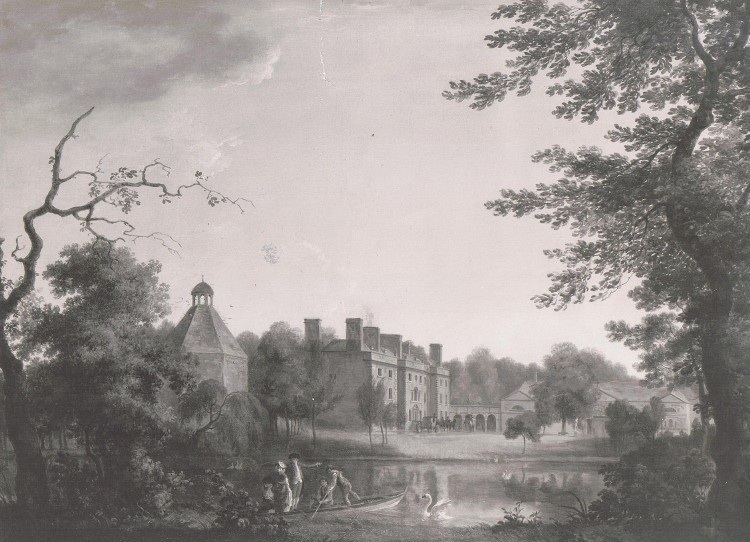
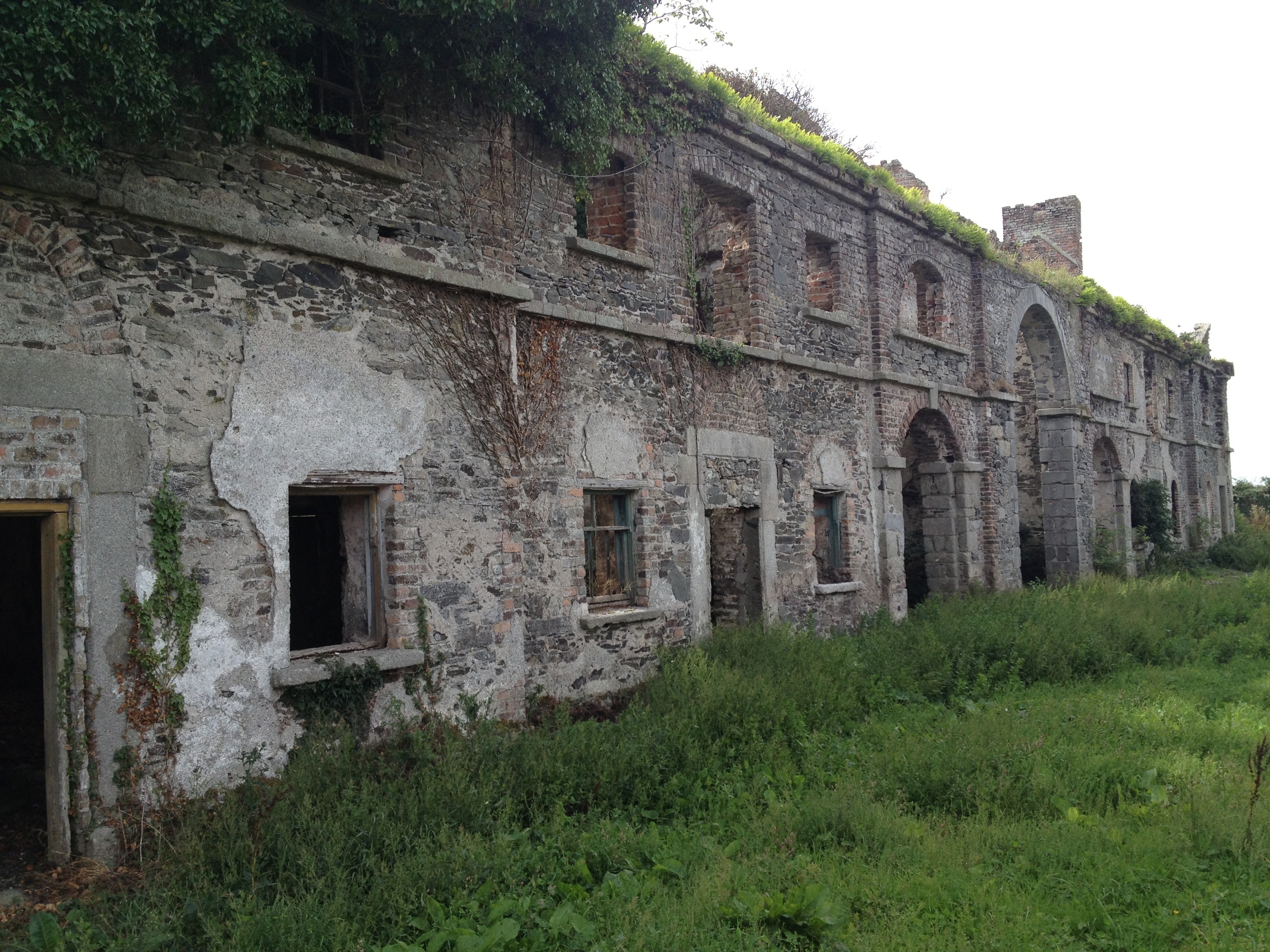
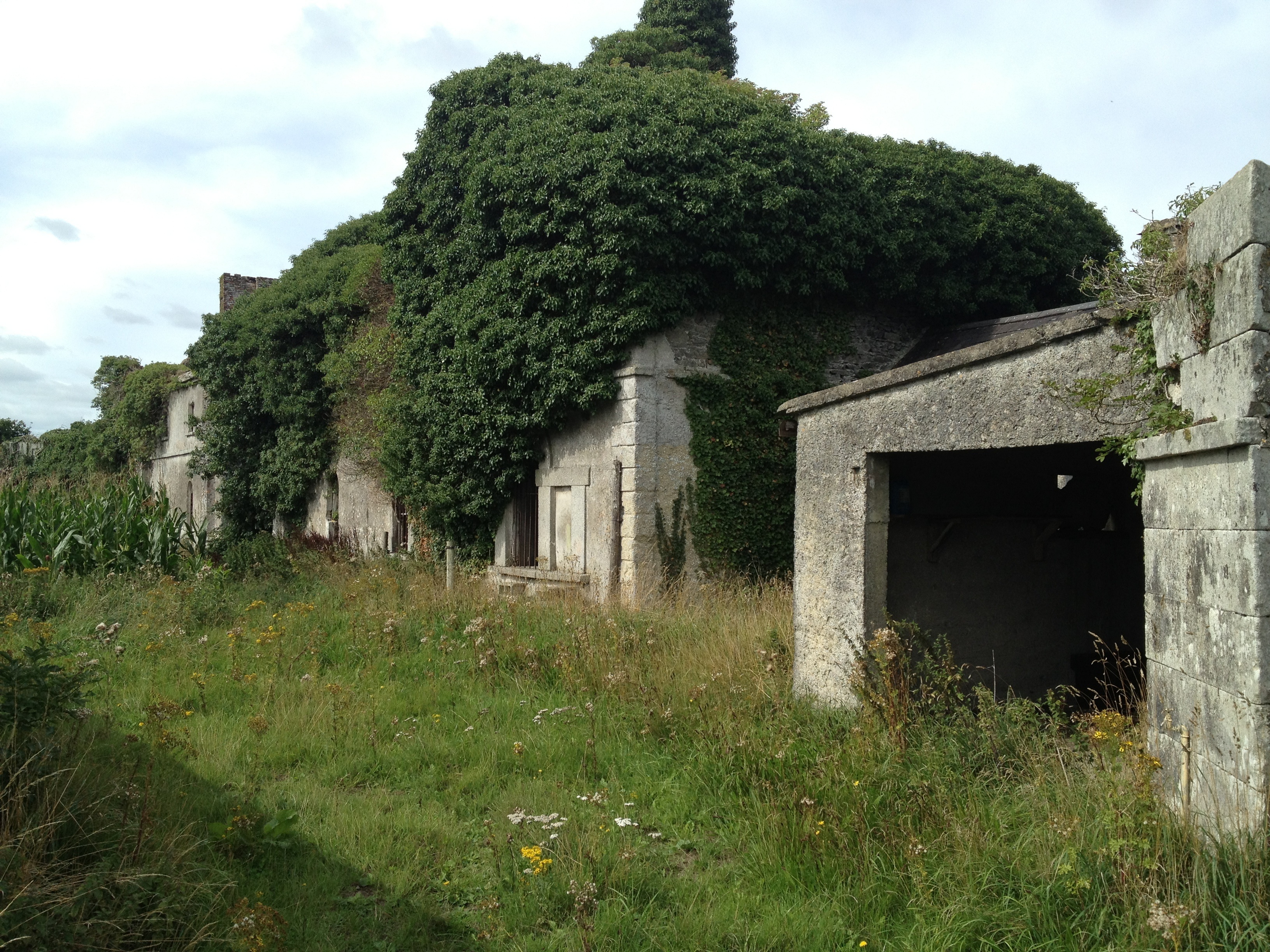
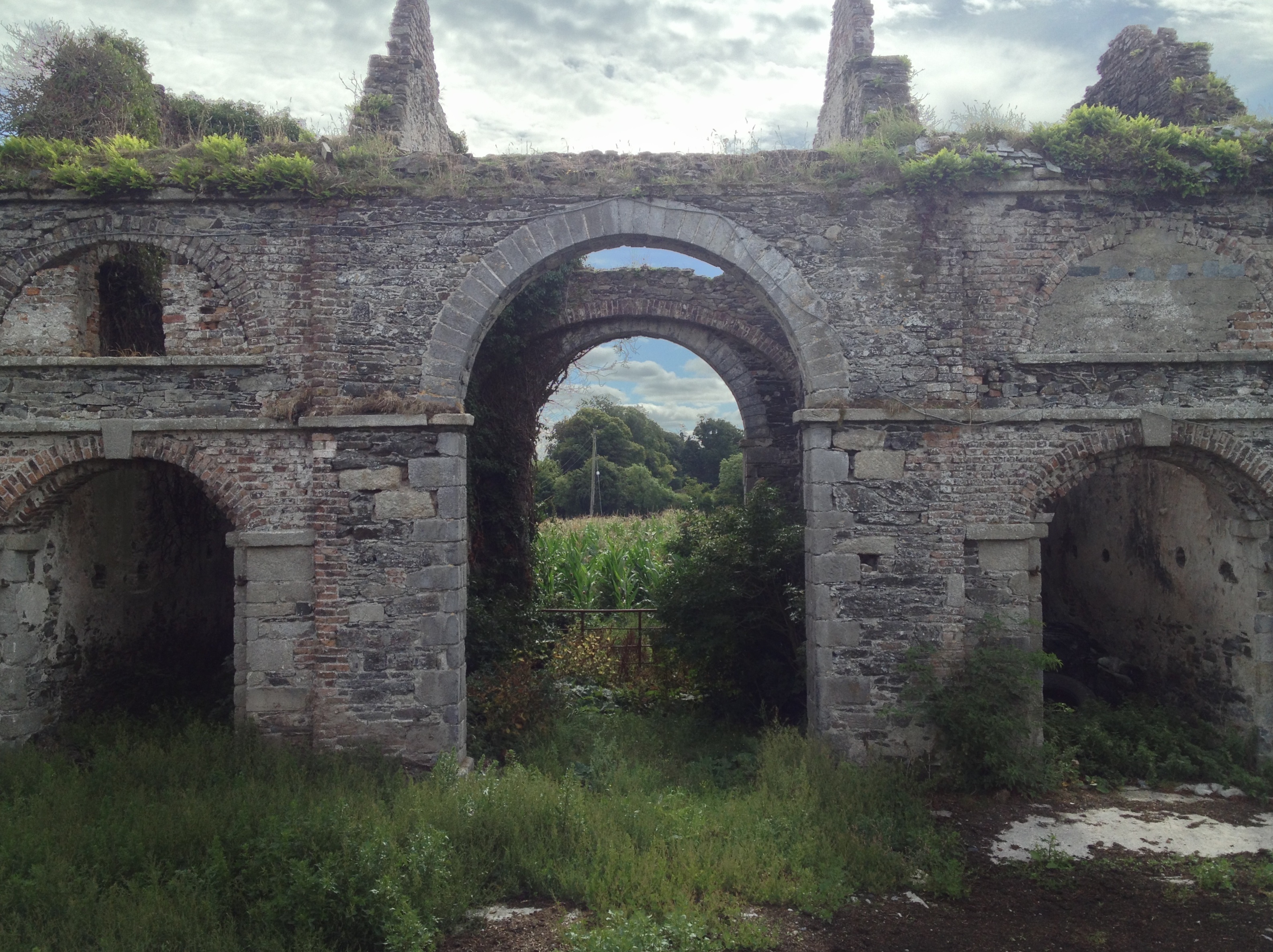
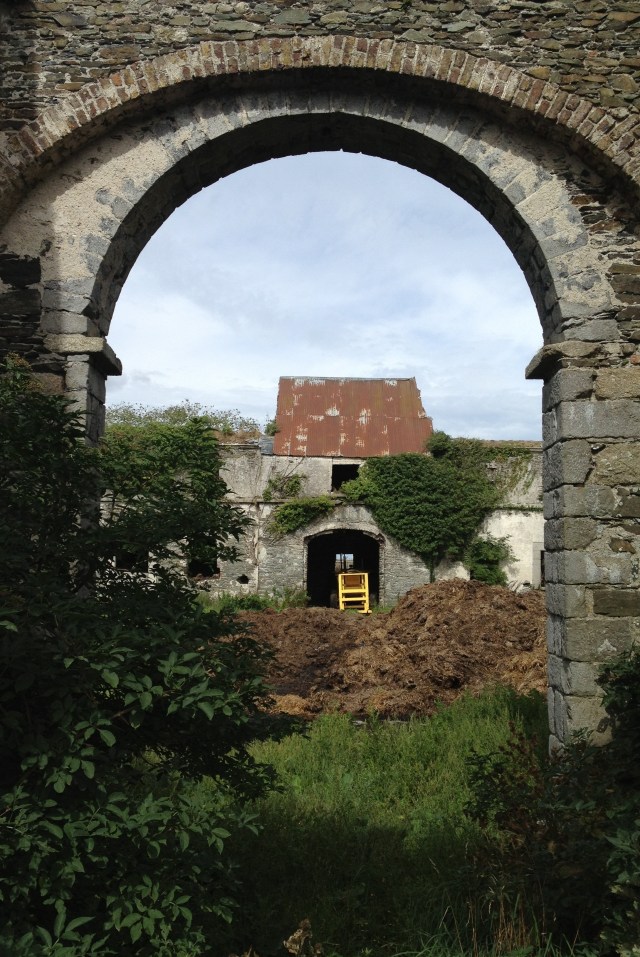
Driving along a minor road in south County Kildare, one’s eye is caught by the sight of ruins rising high above a field of maize. These roofless blocks were once the stables attached to and now all that remain of Belan, seat of the Stratford family, Earls of Aldborough. That Belan was once rather splendid cannot be doubted: in 1786 George Powell who was related to the family through marriage, wrote ‘The Mansion House of Belan is most Magnificent as is also the Demesne thereto, containing 12 porters Lodges Erected by the present Earl at the six Approaches, who hath also added thereto a Fruitery, Green, Hot and Tea Houses, a Square of Offices, a Chappel & a Theatre & Expended near £8000 on the Estate…’
Almost all of this is now gone, and the only evidence of Belan’s former resplendence are the aforementioned stables, the shell of an octagonal tea house, a few obelisks and a small domed temple. For once, however, decline and fall occurred not during the last century but earlier and while members of the Stratford family were still, if only nominally, great landowners.

image

image

Originally from Warwickshire, the Stratfords seem to have settled in Ireland about the time of Charles II’s restoration in 1660. Within a few years Robert Stratford had acquired land around Baltinglass, County Wicklow and thereafter their rise was assured, not least through the ability to return two members to the Irish House of Commons. By 1690 they already owned property at Belan, since in July of that year Edward Stratford found himself successively entertaining the two rival Kings James and William, his personal sympathies lying with the latter. As William ultimately proved the victor, the Stratfords’ political and financial status was further strengthened. Edward Stratford’s third son John (who was made first Earl of Aldborough shortly before he died in 1777) inherited Belan around 1740 and soon afterwards commenced either to build anew or to enlarge his residence there. The architects for this property are held to have been Richard Castle and Francis Bindon.
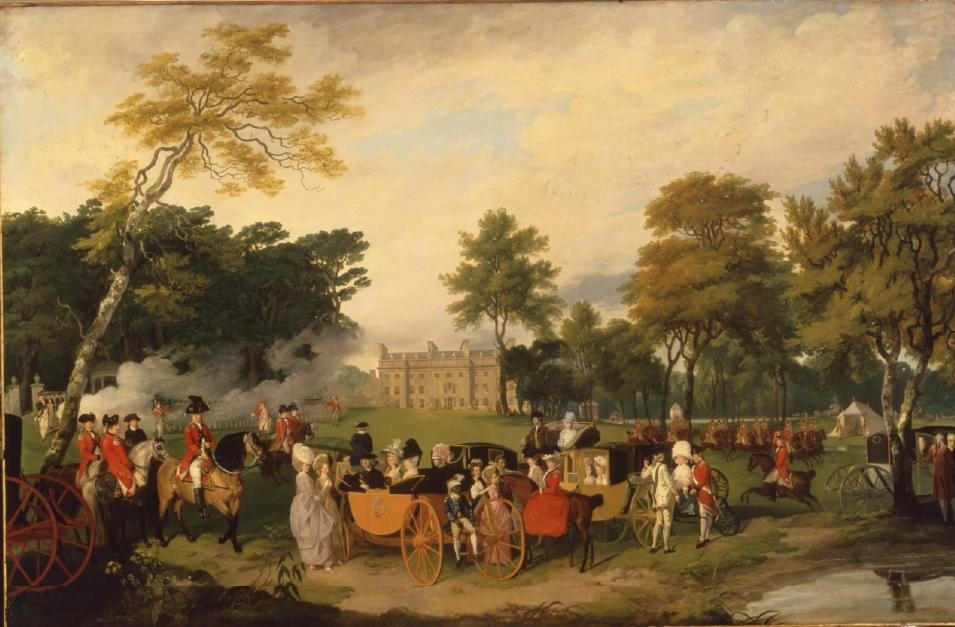
We cannot say for certain what the house looked like since paintings in which it features by William Ashford (from which the engraving at the top of this piece is taken) and Francis Wheatley (see the very last picture, showing the second Earl reviewing the Aldborough Volunteers at Belan) display differences that suggest to some extent they reflected the owner’s aspirations for the building rather than its actual appearance. Nevertheless we do know the main block, large and plain, was 120 feet long and 44 feet deep, of three storeys with a gabled attic and projecting end bays. To its right were the pair of parallel stable blocks that still survive (albeit in ruinous state), the first of them linked to the house by a curved portico.

image

image

Here are some extracts from the delightful reminiscences of Georgina Sartoris (née Lyster) published in the Journal of the Kildare Archaeological Society in January 1908 during which she recalls visiting Belan as a little girl in the 1830s:…’a fine stone mansion, a magnificent flight of granite steps, with two stone vases at the top, led to the entrance door. Though uninhabited for fully ten years, the house was in perfect repair, no trace of damp or decay and to all appearance, might have been lived in a week before. I have not a distinct recollection of all the rooms; but the dining room is fresh in my memory, also the saloon, and his late lordship’s bedroom. The dining room, not very large was panelled, family portraits being set in the panelling. I was too young to care much about them, but feel sure they were all of men. Had there been lovely ladies or pretty children amongst them, I should have remembered them. The saloon was lovely, with a polished floor of narrow oak boards…. on one occasion (why I know not) my sister and myself occupied his late lordship’s bedroom, very comfortable it was of moderate size, the fireplace like those of the other bedrooms surrounded with the prettiest tiles I have ever seen, the ground white with pink and blue landscapes, figures and flowers on it; a fine four post mahogany bedstead, Indian chintz curtains, some Chippendale chairs, and a wardrobe are all I remember of its furniture…The grounds of Belan were very beautiful, and of considerable extent. On one side though not seen from the house, were the celebrated fish ponds (not that in my time there was a fish in them), large and deep, the trees around them giving them a secluded and fascinating look. Here, on hot summers’ evenings, we used to sit and watch the dragon flies. I had never seen dragonflies before, and could not associate them with flies – I could only think of them as tiny winged spirits, whispering messages from afar to the reeds and irises which grew at the water’s edge. The gardens were at some distance from the house, and were large and walled in. I do not think I was often in them. What struck me most was the enormous quantity of lily of the valley. I have never seen anything like it elsewhere and its scent lingers with me still…’

image

image

The fall of the house of Stratford was as spectacular as its rise. The second Earl, a man of great energy, not only greatly improved the house and demesne at Belan but was also responsible for developing Stratford Place in London and for building the immense (and now sadly dilapidated) Aldborough House in Dublin in the years preceding his death in 1801. Although twice married, he had no children and so a younger brother inherited. The last member of the family to live at Belan, he was likewise childless meaning everything passed to another brother, the fourth Earl who preferred to occupy a house elsewhere on the estate, Stratford Lodge (subsequently destroyed by fire) and who abandoned Belan to an agent more interested in helping himself than in looking after his employer’s property. The next heir, Mason Gerard Stratford, fifth Earl was a hopeless spendthrift who, when short of funds, would visit London money lenders with a gun and threaten to shoot himself if they did not give him cash. He was also a bigamist, possibly even a trigamist, and on his death the eldest son from one of these marriages had trouble claiming a right to the title and what remained of the family property. Sixth and final Earl of Aldborough, he died without heirs in 1875.
By that date Belan was already in poor condition and some thirty years later Mrs Sartoris, who remembered the house intact, could write that ‘Beautiful Belan lies in ruins, the wind blowing where it listheth, sighs over the desolate grounds and gardens once so beautiful, a herd lives in the yard, sole occupant of that once lovely demesne.’ As late as the 1940s the main walls of the house still stood, but this shell was subsequently swept away. Today only the remnants of the stables survive to remind us of what once stood on this site and to serve as a warning that nothing is eternal.

image

Castles in the Air

image

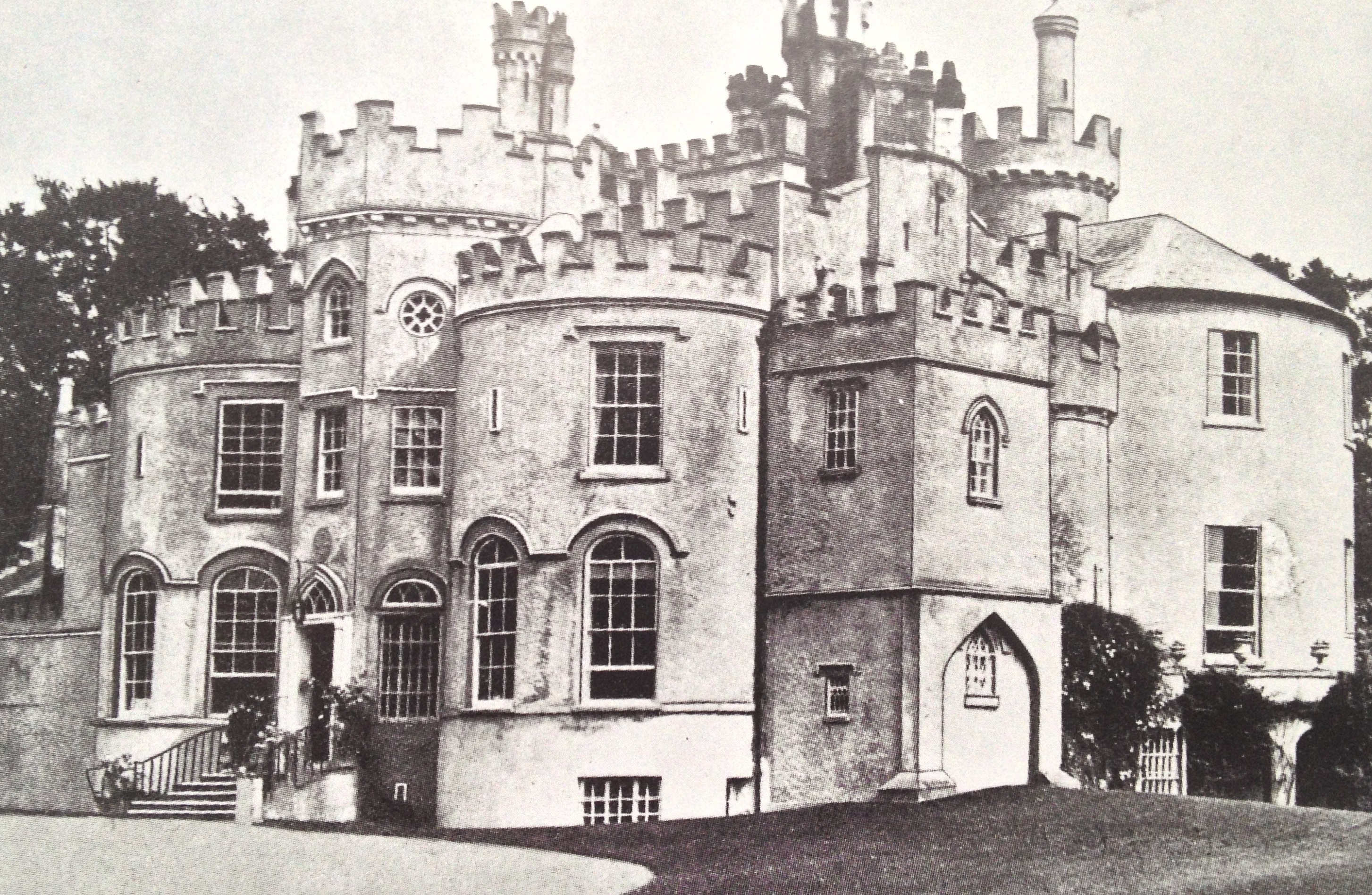
An old photograph of Shanganagh Castle, County Dublin showing the house when all its external decoration was still intact (some has since been removed/lost). Although there have been buildings of that name on the site since the early 15th century, the core of the present structure dates from c.1760 when a plain classical residence was constructed. At the start of the 19th century the property was bought by Major-General Sir George Cockburn who in 1805 commissioned Sir Richard Morrison to remodel the house: the addition of what has been accurately described as ‘a profusion of battlements and turrets’ transformed the place into a fantastical toy fort. The interiors were more restrained not least because Cockburn, who was something of an aesthetically-minded career soldier and had acquired a collection of antiquities, sculptures and paintings during his military career, required a top-lit gallery in which these could be displayed.
As with so many Irish houses, the history of Shanganagh in the last century was not a happy one: after serving for some time as a Church of Ireland college of education it was converted into an open prison and remained such until closed ten years ago. Since then the building has suffered from being left vacant, but earlier this month Dún Laoghaire-Rathdown County Council announced it had acquired Shanganagh and immediately surrounding acreage as part of a complex land-exchange programme. Inevitably the property is now in poor condition and so remedial work must be undertaken to make it secure. One awaits further developments, not least whether Shanganagh will be returned to the appearance it presents in this photograph.

The Luck of the Barrys

image

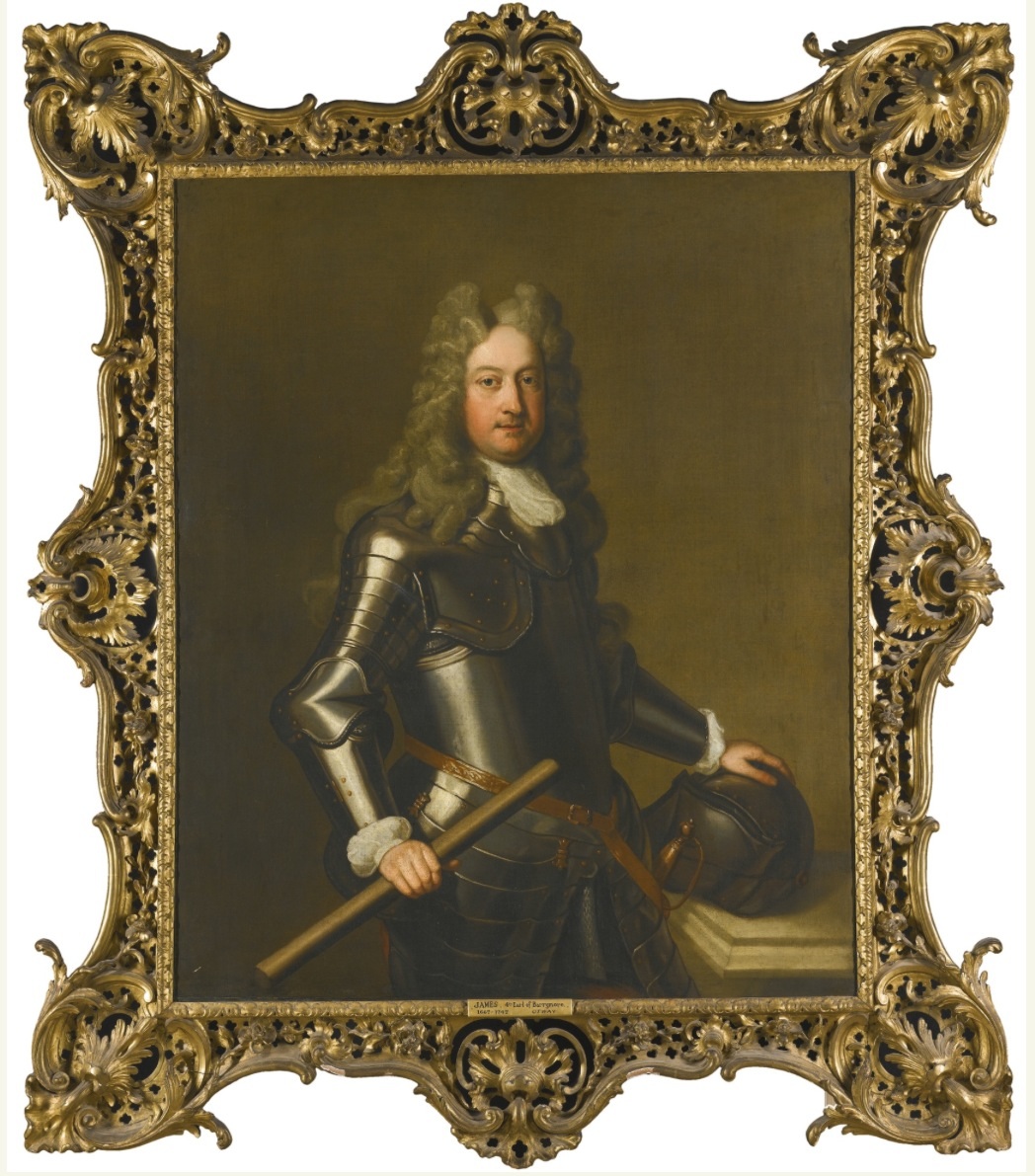
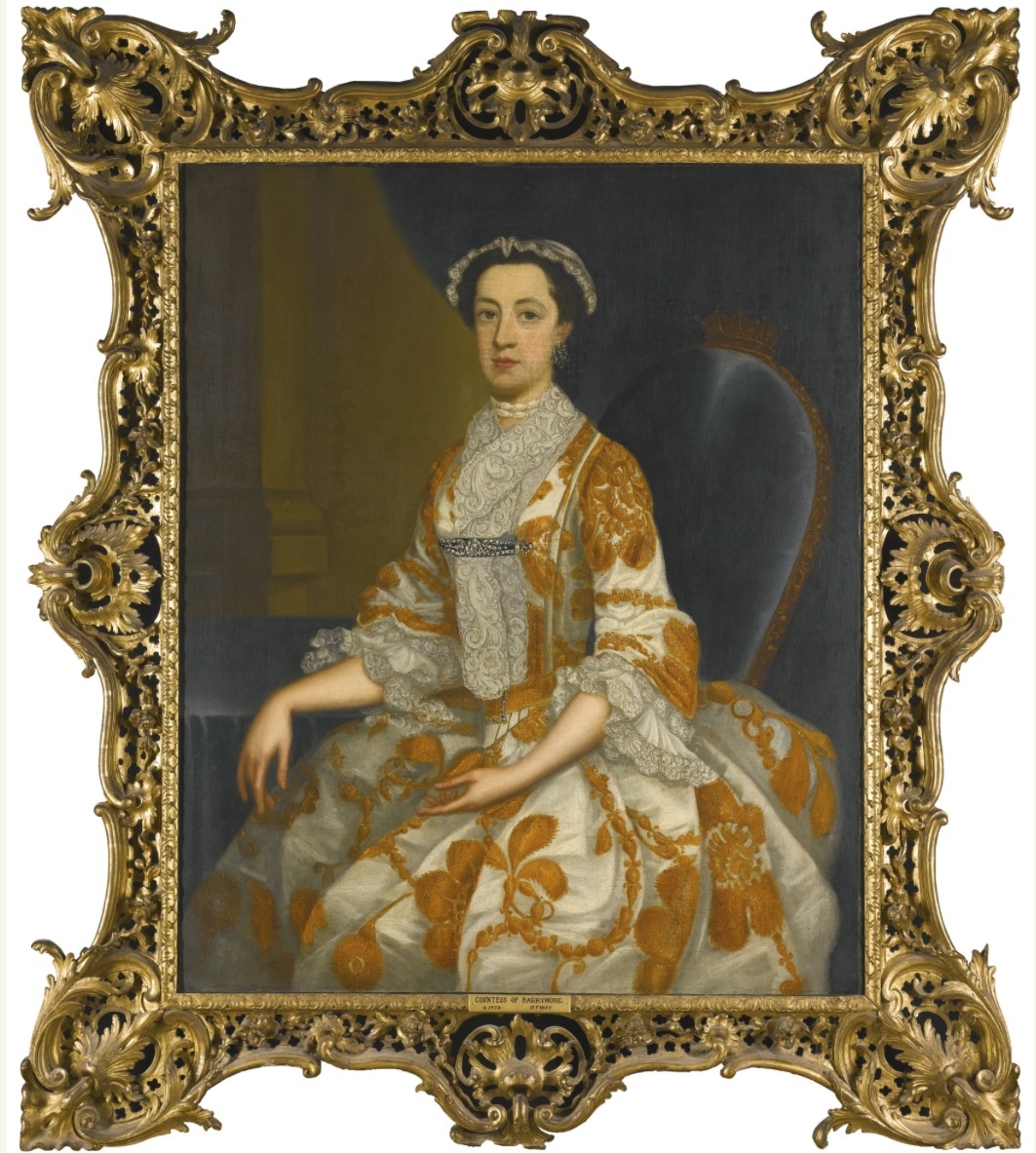
These two portraits of James Barry, fourth Earl of Barrymore and his third wife Lady Anne Chichester are being offered for sale today at Sotheby’s in London. The Barrys were an old, but relatively impoverished Irish family although their finances were greatly improved by the fourth Earl making a succession of advantageous marriages. In the later 18th century they also became noted for their eccentricity: the seventh (and penultimate) Earl who died at the age of 23 in 1793 was one of the period’s most infamous rakes, commonly known as ‘Hellgate.’ (His sister was nicknamed ‘Billingsgate’ owing to her dreadful language, while his younger brothers were respectively called ‘Cripplegate’ due to a club foot and ‘Newgate’ since, as it was a women’s prison, he had never spent time there; in 1791 James Gillray produced a splendid caricature of the three men mocking their various distinctive characteristics). Their rackety lives were not dissimilar from that of another man with the same surname, Redmond Barry, eponymous hero of Thackeray’s 1844 picaresque novel The Luck of Barry Lyndon, and like him they all ended badly.
Meanwhile descendants of the fourth Earl’s fourth son became Smith Barrys and inherited a large estate on Fota Island, County Cork at the centre of which stood what was originally a hunting lodge. This building was enlarged and embellished c.1820 to the designs of Sir Richard Morrison and his son William Vitruvius Morrison. In their charming George II rococo fames, the two portraits (that above judged to be from the studio of Sir Godfrey Kneller, that below attributed to Philip Hussey) formerly hung in Fota House which today is managed by the Irish Heritage Trust and open to the public. How wonderful it would be if this tale concluded better than did that of the Barrys, and after today the portraits once more returned to the house…

image

Update: on Tuesday, 24th September the two portraits sold for ₤60,000 and ₤43,750 respectively.

Bon anniversaire

image

In 1970 the early 18th century Damer House in Roscrea, County Tipperary stood empty and unused, and plans were announced to demolish the building; the local authority intended to replace the house with an amenity centre comprising swimming pool, car park, playground and civic centre. North Tipperary County Council chairman Tom Shanahan justified this proposal with the argument that as long as the house stood, ‘it reminds the Irish people of their enslavement to British rule’ and dismissed objectors to the scheme as ‘a crowd of local cranks.’ The notion that Damer House represented the outstanding qualities of Georgian craftsmanship, or that it might be a major tourist attraction for the area clearly never occurred to Mr Shanahan.
Both these factors have since come to be understood, but four decades ago, the building’s inherent worth was grossly under-appreciated. Damer House dates from the 1720s and is believed to have been built for John Damer soon after he bought the town of Roscrea in 1722. Damer’s uncle, Joseph Damer, originally from Dorset, settled in Ireland in the aftermath of Charles II’s restoration in 1660 and prospered as a Dublin moneylender, to the extent that he was able to purchase estates in North Tipperary. Having no children of his own, he brought over his nephew John both to assist him in the business and to inherit his wealth.

image

image

Damer House is unusual in that it stands in the centre of a 13th century castle on which work commenced during the reign of King John although the present structure is of a slightly later date; it survives largely intact, not least the immense gate tower rising more than 90 feet with walls some eight feet thick. This castle was under the control of the Butler family, if only sometimes theoretically, until 1703 when the second Duke of Ormonde sold his Roscrea territory to the King’s Hospital in Kilmainham; less than twenty years later the place was sold again, this time to John Damer whose uncle had since died and left him extremely wealthy. Given that peace had only recently come to the country, one can understand why Roscrea’s latest owner might have thought it best to build his new residence within the protective walls of the castle, but he and his descendants do not seem to have spent much time there, since they also developed a large estate elsewhere in the county and, following John Damer’s own death without direct heirs, his nephew – another Joseph Damer – preferred to live in England where in 1792 he was created first Earl of Dorchester; in the following century Damer House passed into the hands of another branch of the family, the Dawson-Damers who were Earls of Portarlington and whose main seat was Emo Court, County Laois. Meanwhile the house in Roscrea became an army barracks, then at the start of the last century successively a school, a tuberculosis sanatorium and a local library.

image

image

Of three storeys over basement and with unusually tall narrow windows spread across nine bays, the pre-Palladian Damer House has a large annexe to one side, probably added during its time as a military barracks. Internally the finest extant feature is a carved pine staircase, in style not dissimilar to that of the slightly later Cashel Palace. Whatever other decorative features the Damers may have commissioned did not survive changes of use, but the building retains a purity of form that makes it of enormous importance in the history of Irish architecture.
Yet by the early 1970s Damer House was suffering from the consequences of long-term neglect, hence the local authority’s proposal to sweep it away rather than engage in a programme of restoration. Fortunately at this point the Irish Georgian Society then intervened and offered to take over the building on a lease and assume responsibility for its salvation. Work on this project began in August 1974 and was overseen by one of the IGS’s most industrious and committed members, Brian Molloy whose death four years later is still to be regretted. Much of the work was undertaken by volunteers who cleared away accumulated rubbish and debris, and removed unsightly additions to the house such as partition walls while professionals worked on repairing the roof and so forth. In 1976 the early 18th century carved pine staircase, which was coated in centuries of paint, was cleaned and restored to its original splendour and the following year the house was officially opened to the public.
With aid from a number of public bodies, the house’s annexe was next restored for use as a heritage centre; the first of its kind in Ireland, this opened to the public in 1983 and shortly afterwards won a special award from the adjudicators of European Museum of the Year. At the end of that year, control of Damer House was handed over to the Roscrea Heritage Society which later in turn leased the premises to the Irish State; by this means Damer House’s future has been secured. During the 1990s more work was completed not just on the house, but also on Roscrea Castle and its gardens. Today the entire complex has been refurbished and welcomes visitors.

image

image

image

Aside from its evident merits, Damer House is personally special because in 1983 my first job after university was to act as curator of the building, contentedly living in a first-floor flat on the premises (those two windows furthest right on the first floor were my bedroom) and gaining knowledge that has proven invaluable ever since; this month marks the thirtieth anniversary of my taking up that position.
Meanwhile this week marks the first anniversary of the advent of The Irish Aesthete. It has been a fascinating year in which I have likewise learnt an enormous amount (and become something of a proselytiser on behalf of social media). I should like to thank all those who have been following the site for the twelve months past and hope that you will continue to do so for the twelve ahead during which there will be abundant opportunities to explore further Ireland’s architectural heritage. Comments and enquiries are always welcome, as are suggestions of where else might be discussed; every writer needs readers and I am most appreciative of anyone who has taken the trouble to participate in and engage with The Irish Aesthete since September 2012.
It is also worth noting that The Irish Aesthete has been short-listed for the 2013 Ireland Blog Awards in two categories: Best Arts and Culture and Best Newcomer. Finalists will be announced next week.
In conclusion, today provides an opportunity to remember Brian Molloy the twenty-fifth anniversary of whose death fell recently and whose dedication to the causes many of us hold dear remains an inspiration.

image