Fit for a King

8

Boyle, County Roscommon is a provincial market town, seemingly indistinguishable from many others throughout the country. Once of importance as a centre of trade for the locality, it now appears to have slipped into irreversible decline. Somewhere, in other words, to by-pass except that rising in the middle of the town and towering over all other buildings is an immense early 18th century townhouse.
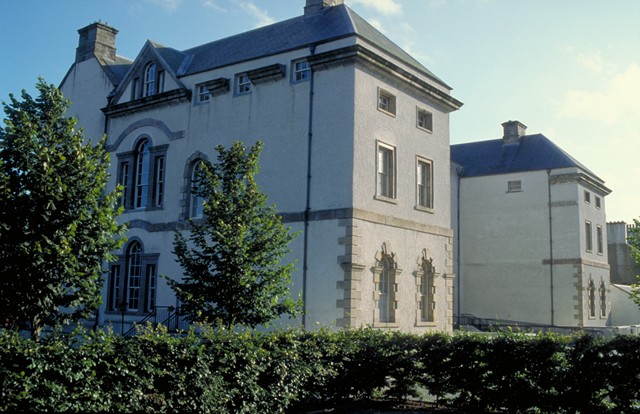
Known as King House, the name taken from the family responsible for its construction, this marvellous edifice is reminiscent of the seigneurial chateaux one finds in regional French urban centres, evidence of a powerful dynasty determined to wield and enforce authority. The family association with Boyle was due to John King (d.1637), an English adventurer who had come to Ireland with Sir Richard Bingham, the royal-appointed Governor of Connacht. In 1603 the Boyle estate running to over 4,000 acres and originally developed by the Cistercian monks whose abbey had since been dissolved, was leased to King and another soldier but in 1617 the former was granted the entire property as a reward for ‘reducing the Irish to obedience.’ One of his children Edward King, a fellow of Christ’s College, Cambridge drowned while on a boat sailing to Ireland in August 1637 and was soon eulogised by his friend John Milton in the poem Lycidas. However, Sir John had six sons and thereafter successive generations of the family increased its holdings until the Kings became the area’s most prominent land owner.
5

6

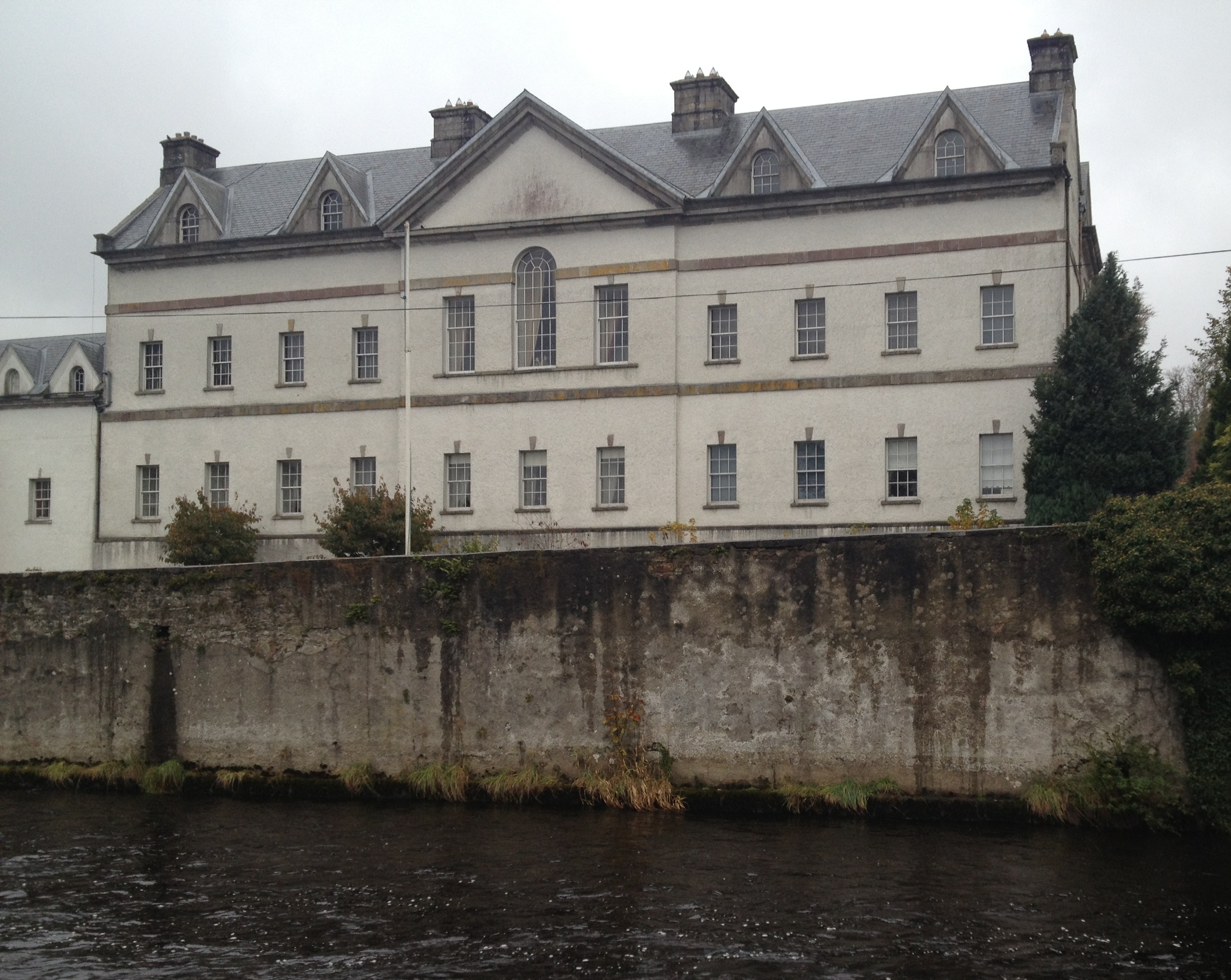
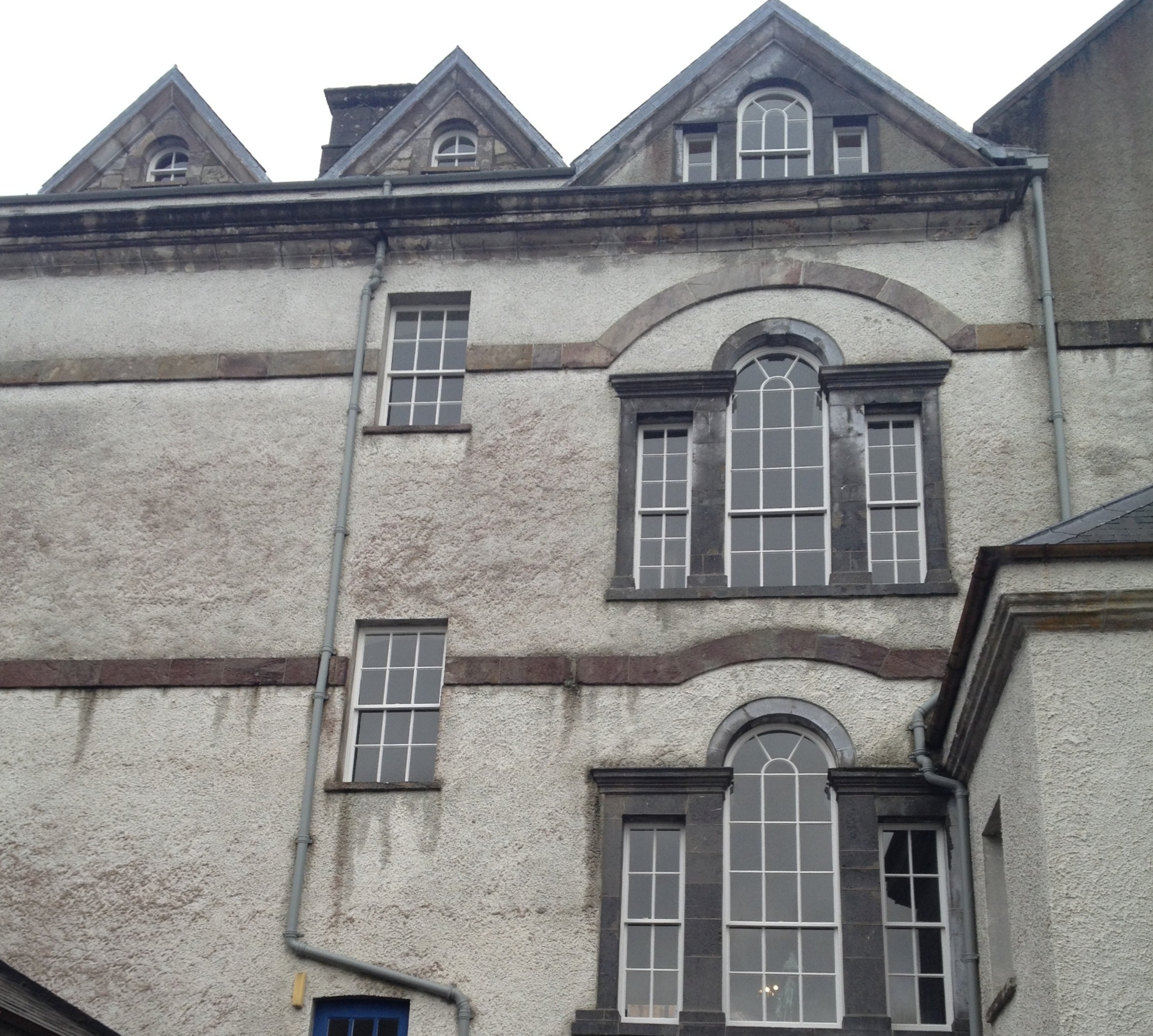
Of three storeys over basement, King House was built for Sir Henry King, dates from 1720-30 and is believed to occupy the site of an earlier structure. As ever, we do not know the architect responsible. Both Pearce and Castle have been mentioned, but so too has William Halfpenny (d.1755), an Englishman who worked in Ireland during the 1730s in Dublin, Hillsborough, County Down and Waterford City. There is also some speculation that the building as seen today is incomplete; the pedimented north front is strikingly plain, so it has been posited that the two-bay projecting wings were meant to be joined by another block so as to form an enclosed courtyard. If this was the intention, then it helps to explain the want of external decoration. The rear of the house, which looks south to the river Boyle and would once have had a pleasure garden running down to water’s edge, is more satisfactory if rather too rigorously symmetrical. In fact the best views are those of the two sides, where a pair of Venetian windows sits one above the other. Roughcast render suggests a variety of material was used for the building, although all the window and door surrounds are of fine cut limestone.
Not a lot of the original interior remains, but there is an explanation why this should be the case. The Kings used their house for little more than half a century before it was damaged by fire in 1788. By this date tastes had changed and it was considered more desirable to reside in the countryside, so the family moved to the nearby estate of Rockingham (of which more in the months ahead). King House was first leased and then in 1795 sold for £3,000 to the government. Subsequently it was converted into an army barracks and during the 19th century was occupied by the Connaught Rangers; presumably during this period was added the large extension to the south-west of the main block. As evidence of its size the house was able to accommodate 12 officers and 260 non-commissioned officers and private foot soldiers, as well as a 30-bed hospital and stabling for horses. Following Independence, the building continued to serve the same purpose for members of the Free State Army until the 1960s when King House passed into private hands and was used as a store and fuel depot. Its condition quickly deteriorated and by the 1970s tenders were invited for the building’s demolition to make way for a car park. I remember first seeing the place at that time, when the chances of its survival looked slim. Thankfully in 1987 King House was acquired by Roscommon County Council with a full programme of restoration work beginning two years later.
2

3

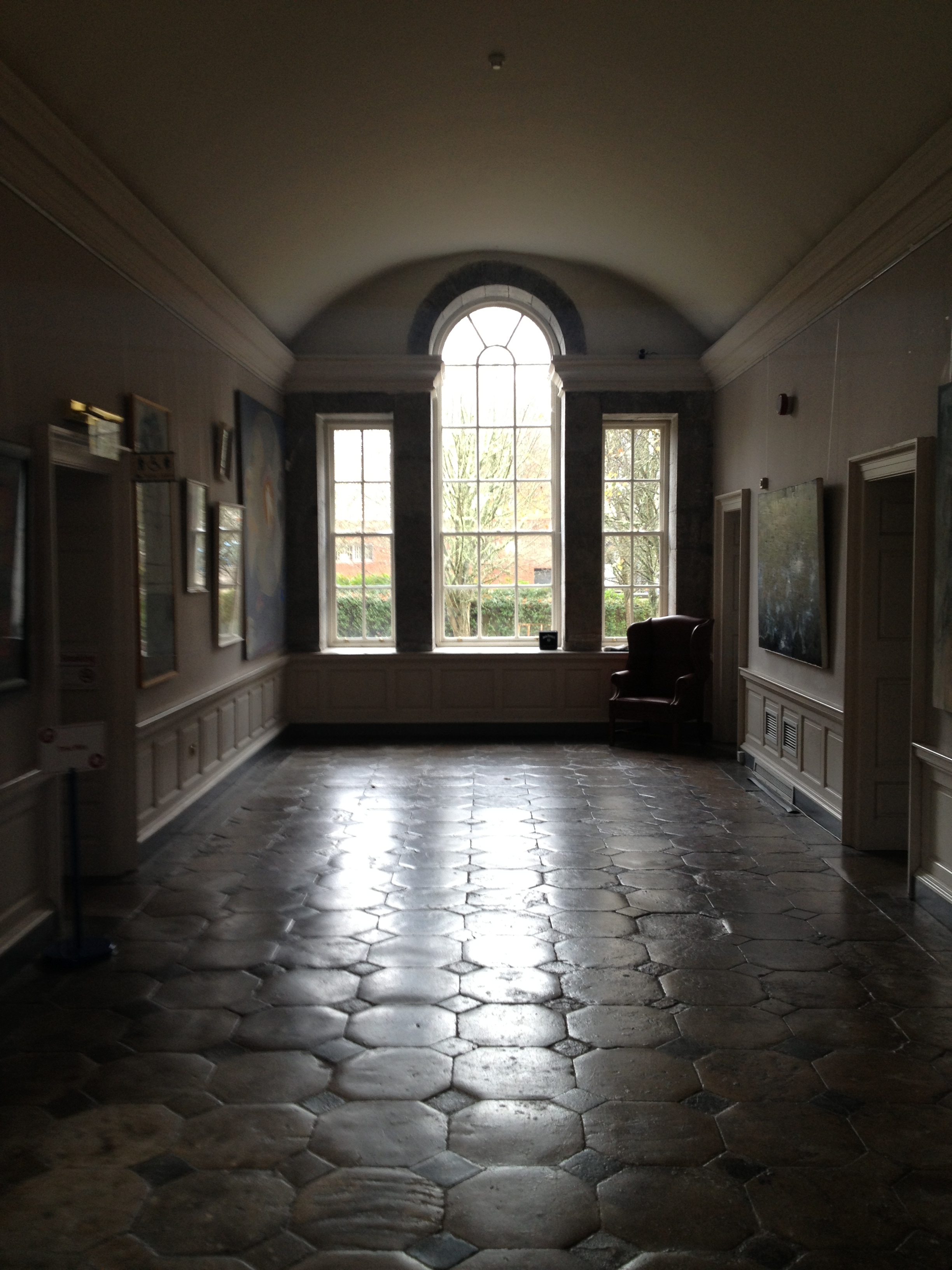
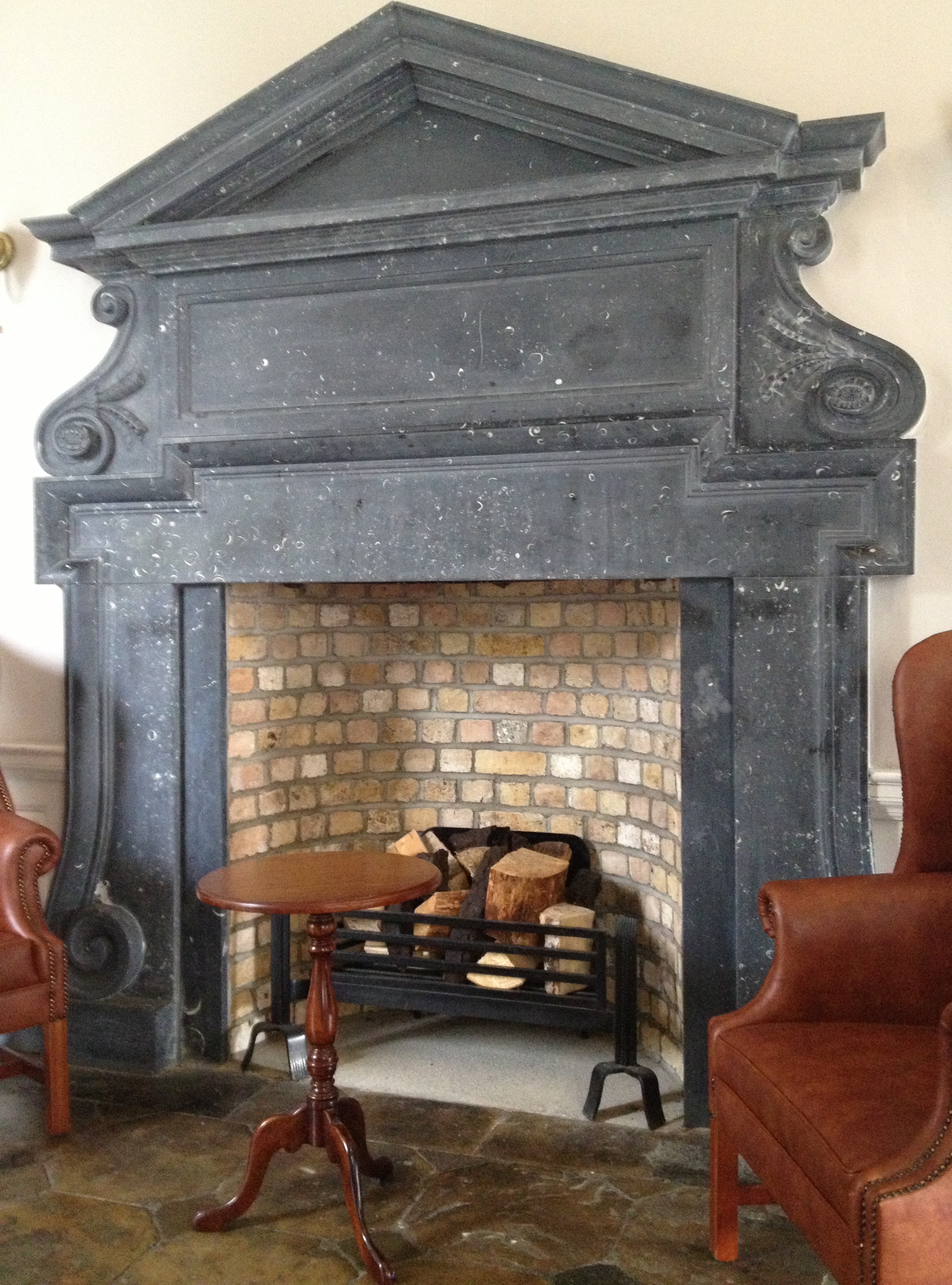
Today King House is a public amenity, a museum and a facility used for various purposes, from wedding receptions to library services. Given its chequered history, the building’s want of interior ornamentation does not come as a surprise. The 1788 fire, followed by conversion for use as a barracks helps to explain the lack of an elaborate staircase, for example, and also the absence of much plasterwork embellishment. The most striking extant feature is the gallery found running the length of the house on each floor and lit at either end by the aforementioned Venetian windows. That on the groundfloor retains a splendid stone flagging and two immense baroque chimneypieces of Kilkenny marble. The vaulted ceilings of red brick are unusual since this is customarily only found in basements. Seemingly the notion was that vaulting would prevent the spread of fire, a theory soundly disproved by the conflagration of 1788. Elsewhere some rooms have decorative cornicing but overall the impression is of refined purity.
Or at least that would be the case if those responsible for King House would allow the building to speak for itself. Loath as one is to speak ill of any organisation prepared to ensure a future for the country’s architectural heritage, what a shame that in this case the relevant authorities have shown scant confidence in the house’s inherent qualities. The restoration work has been exemplary but rather than allow the interior’s handsome proportions to make an impression, everywhere is filled with furniture, display units, information panels, mannequins and assorted bric-a-brac relating to a disparate variety of topics. The place is so busy one is constantly denied an opportunity to assess architectural merit (or, incidentally, to take a decent picture). A dissapointment as the building is of such rare merit it deserves to be cherished as and for itself, and not treated as the setting in which much less interesting material is shown. The current style of presentation is unquestionably to the building’s detriment. King House dominates not just Boyle but much of the surrounding region since nothing else can begin to approach its resplendence. Accordingly nothing else ought to be required. Here is an instance where less would achieve more.
10

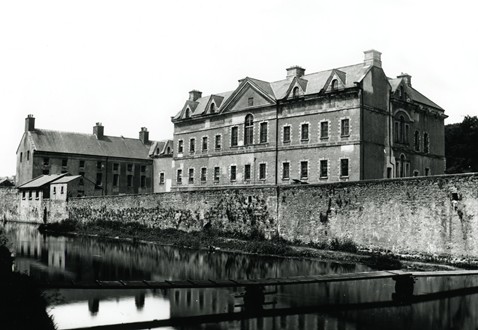
This last is an old photograph of King House when still a military barracks (and, by the looks of it, already in poor shape).

With Good Grace

IMG_0775

Lying in the shadow of the Knockmealdown Mountains, Castle Grace, County Tipperary is believed to have been built by the de Bermingham family around the mid-13th century. Its substantial square keep originally had a tower at each corner but only the two seen here remain. Today the ruins serve as a walled garden for an adjacent mid-19th century house, about which more later in the spring.
If Castle Grace looks familiar, this is because it appeared in Stanley Kubrick’s incomparably beautiful 1975 film Barry Lyndon. The relevant scene: after our eponymous anti-hero has fled his home, been robbed at gunpoint and forced by penury to join the army, he camps here and engages in a bare-knuckle fight with one of his fellow soldiers.

IMG_1034
Apologies for the poor quality screen grab: with good reason this blog is called The Irish Aesthete and not The Irish Techno-Wizard.

A Man of Some Importance

????????????????????????????????????????????????????????????????????????????????????????????????????

So here is Castletown, County Kildare, famed as Ireland’s first, largest and grandest Palladian house. Astonishingly in the mid-1960s it was threatened with destruction and only saved through the ceaseless endeavours of the Irish Georgian Society. Among those most closely associated with securing Castletown’s future, both then and now, was Professor Kevin B Nowlan who died earlier this week at the age of 91.
Small of stature, stout of heart Kevin was an indefatigable campaigner on behalf of Ireland’s architectural heritage, member of countless boards and committees – on a number of which I have also sat – and always both passionate and articulate in the cause of conservation. Aside from being intelligent and well-informed and determined, one of his chief merits was a complete lack of self-interest: nobody could ever accuse Kevin of deriving personal benefit from his involvement in any enterprise.
The other great quality he possessed was tirelessness; for over half a century Kevin never grew bored or despondent, even when a campaign met with setback. Interviewed by the Irish Times on the occasion of his 90th birthday, he remarked, ‘As long as you’re in good health and keep your mind active you can’t ask for much more.’ Kevin certainly did remain active. Until just a couple of weeks ago, one was most liable to see him either going to or coming from a meeting. His funeral takes place this morning but I suspect he is not at rest: no doubt right now he is chairing a new group established to ensure a proposal for the reconfiguration of the Pearly Gates will be defeated.

IMG_0982

Building on a Prelate’s Ambition

IMG_0407

In 1751 an impoverished but well-connected Anglican clergyman came to Ireland and within a year had been consecrated as Bishop of Killala. Over the next decade he advanced through two further sees before being appointed Archbishop of Armagh in 1765. Richard Robinson (1709-94) was the sixth son of a Yorkshire landowner and as such it was inevitable that after graduating from Christ Church, Oxford he should have considered the Church as a lucrative career. Few of his clerical contemporaries, however, acquired so much or spent so lavishly.
He arrived in Dublin as chaplain to the then-Lord Lieutenant, Lionel Sackville, Duke of Dorset, whose support helped secure that first episcopacy. But it is clear that Robinson was always destined to make a mark. After his death it was said that during his time there Armagh had been converted ‘from an unsightly crowd of mud cabins into a handsome city of stone dwellings.’ Among the buildings for which he was responsible are the public library, the Royal School, the barracks, a county gaol, the public infirmary and, most famously, in 1793 the Armagh Observatory for which he created an endowment. Long before that date, finding the Archbishop’s residence unsatisfactory, he had a new one built for him on a 300 acre demesne, together with stables, farmyard and a chapel. No wonder Methodism’s founder John Wesley accused him of being more interested in building that in the care of souls.

IMG_0408

Robinson behaved like a continental prince-bishop. In his memoirs the playwright Richard Cumberland, whose father was Bishop of Clonfert, recalled accompanying the Archbishop to Armagh Cathedral one Sunday: ‘He went in his chariot with six horses, attended by three footmen behind… On our approach the great western door was thrown open, and my friend (in person one of the finest men that could be seen) entered, like another Archbishop Laud, in high prelatical state, preceded by his officers and ministers of the church conducting him in files to the robing-chamber and back again to the throne.’
Robinson’s lofty aspirations – the reliably-waspish Horace Walpole judged him ‘a proud but superficial man’ – led him to seek secular as well as religious preferment and in 1777 he was created Baron Rokeby in the Irish peerage. Some years later he acquired an estate in Marlay, County Louth and here built a house which was given the name Rokeby Hall (http://www.rokeby.ie). By so doing he evoked the Robinson family’s Yorkshire seat which his older brother Sir Thomas, an amateur architect but professional spendthrift, had been obliged to sell in 1769. So the new Rokeby in Ireland was intended not just to serve as a country retreat but also to replace a lost estate and provide an alternative dynastic base: although the Archbishop never married, there were several potential heirs among his siblings’ offspring.

IMG_0391

IMG_0394

IMG_0400

As his architect for the house, Robinson chose Thomas Cooley who had already been responsible for many of the new buildings in Armagh, including the Archbishop’s Palace. Unfortunately Cooley died in 1784 and so his plans were handed over to the youthful Francis Johnston. Born in Armagh, Johnston’s abilities had been noticed by Robinson who sent him as an apprentice to Cooley in 1778. Nevertheless, although the younger architect oversaw Rokeby’s construction surviving plans show just how much its layout is as originally devised by Cooley.
Rokeby’s limestone exterior looks somewhat severe, the facade relieved only by the slightly advanced three centre bays with first-floor Ionic pilasters beneath a pediment. To the immediate right and reticently recessed is a long extension which might appear to be a later addition but is in fact contemporaneous with the main house and originally contained many of the necessary services such as a large kitchen. The main house is often described as being two-storey over basement. However there is a splendid attic storey tucked behind the parapet and centred on a striking circular room lit by glazed dome; as a result of an acoustic trick when you stand directly beneath this your sense of hearing is affected.

IMG_0431

IMG_0428

While obviously not a small house, Rokeby is by no means palatial and the appeal of its interiors lies in their neo-classical refinement devoid of superfluous ornamentation. This is evident in the entrance hall where the space is simply but effectively divided by the intervention of two Doric columns. There is relatively little plasterwork decoration, except on the main staircase and the upper landing. The latter is one of the finest features of the house: a circular lobby off which open various bedrooms and dressing rooms, every second door topped by an oculus providing light for this space.
These rooms look to have retained their original chimneypieces, sadly not the case on the groundfloor. On his death Archbishop Robinson left Rokeby to a nephew, John Robinson, Archdeacon of Armagh (created a baronet in 1819) but he fled Ireland after his father-in-law, Captain James Spencer of Rathangan House, County Kildare, was killed by rebels during the 1798 Rising. Rokeby was then rented to a sequence of tenants; James Brewer’s The Beauties of Ireland published in 1826 noted that the house ‘is now, we believe, in the hands of a farmer, and the chief apartments are let furnished to casual inmates.’ Only some time after Archdeacon Robinson’s death in England in 1832 did his son Sir Richard return to Rokeby and presumably embark on a programme of refurbishment necessary after almost half a century of neglect. Hence the chimneypieces in the main rooms are of a later date as are some doors, evident in the different disposition of their panelling.

Rokeby 1

IMG_0384

Descendants of the Robinsons remained in possession, although not necessarily in occupation of Rokeby until the middle of the last century, after which the house passed through a variety of hands often with unfortunate consequences. When the present owners bought the place in 1995, for example, the library had been stripped of its bookcases and divided in two with one half used as a kitchen.
Over the past eighteen years, a process of gradual restoration has taken place at Rokeby, driven by just the right balance of enthusiasm, commitment and ongoing research into the house’s history. At the moment, the owners are undertaking the restoration of Rokeby’s most notable 19th century addition: a substantial conservatory designed c.1870 by Richard Turner. This is due to be reinstated later in the spring. One feels confident that even if members of his family are no longer in residence, Archbishop Robinson would be delighted to see the country house he commissioned so well maintained and loved.

Robinson-Reynolds

A mezzotint produced in 1764 by Richard Houston and based on a portrait of Richard Robinson painted by Joshua Reynolds the previous year and now in Christ Church, Oxford. Reynolds painted Robinson three times and a version of the last of these hung in Rokeby until the last century. Today it is in the collection of the Barber Institute of Fine Arts, Birmingham.

The Beauty of Birr

IMG_0896

Anne, Countess of Rosse (1902-1992) was one of the best looking and most stylish women of her generation. Birr Castle, County Offaly is full of mementoes of her tenure as chatelelaine including this chalk portrait which hangs above a mahogany chest on the return of the main staircase. Proposing her as an 18th century beauty, the artist was Anne Rosse’s brother, Oliver Messel (1904-1978). Originally renowned as a stage designer, in later years he achieved fame for the houses he created in the Caribbean.

Dowth Update

Dowth pic

For those of you who have been concerned about the future of Dowth Hall (see my piece Netterville! Netterville! Where Have You Been? on December 24th last), the estate was sold at auction yesterday. Seemingly there were three interested bidders, the buyer is Irish and paid €5 million for Dowth and surrounding 420 acres (a considerably higher figure than the €3.75m guide price). A lot more will need to be spent if the house, with its ravishing rococo plasterwork, is to be brought back to good condition. Let us hope the new owner is prepared to undertake this task…
*On Thursday February 7th The Irish Times reported that Dowth’s new owner is a County Meath resident, Owen Brennan, who owns a successful agri-technology business.

The Wellspring of Health

Kentstown water 3

On the road leading from Kentstown to Balrath, County Meath can be seen this drinking fountain which, as the inscription explains, was erected by Sir William Somerville in 1855. Look at the way creeping moss has extended the lion’s beard all the way to the basin. The water for this amenity comes from a well some miles distant from which, according to ancient legend, St Patrick drank while on his way from Slane to Tara.
Sir William Somerville (1802-1873) was a Liberal politician who served as Chief Secretary for Ireland from 1847-1852; just over a decade later he was made a peer as Lord Athlumney. The fountain is set into the demesne wall of what was once his family seat, also called Somerville.

A Royal Progress

royal-canal-harbour-1825

This is an engraving of Broadstone on the north side of Dublin dating from 1821 and based on a picture by George Petrie. The most prominent building is the King’s Inns, designed by James Gandon in 1800 and by that date nearing completion. It looks little different today but the surprise is to find a harbour immediately in front since this has long gone. As the picture’s caption reveals, the harbour was constructed to serve the Royal Canal, its site chosen because of proximity to many key resources such as the city markets as well as the Linen Hall and various penitentiaries and workhouses.
Although Broadstone Harbour is no more the Royal Canal survives, despite sundry attempts over the past 150-plus years to damage it irreparably. Linking Dublin to the river Shannon and intended to encourage greater trade between the west and east of the country, the enterprise was plagued with problems from the very start. Not the least of these was the presence of the rival Grand Canal which follows a similar route further south and on which work had started in 1757. Construction of the Royal Canal on the other hand only began in 1790 by which time the senior waterway was almost finished and already taking large quantities of commercial and passenger traffic. So when a group of investors established the Royal Canal Company, they had to petition the Irish Parliament for financial support, receiving £66,000 to add to the £134,000 already raised from subscribers.

Royal Canal 1

Among the key shareholders of the Royal Canal scheme was the second Duke of Leinster, who insisted that the waterway pass by Maynooth, the County Kildare town beside his estate at Carton. This necessitated cutting through extensive rock at Clonsilla and creating an aqueduct to cross the river Ryewater at Leixlip, both of which added greatly to costs. By 1796 the canal had reached Kilcock and the first passengers were able to travel between this town and Dublin at a cost of one shilling and one penny, cheaper than a seat on the traditional stagecoach. However progress on moving the route further west was slow and more expensive than had been anticipated.
By 1811, despite being given almost £144,000 in government grants, the Royal Canal Company’s debts stood at £862,000. A parliamentary investigation into the business was undertaken and two years later the company was dissolved with responsibility for the project handed over to the Directors General of Inland Navigation who were instructed to complete work on the canal at public expense and with all due speed. In 1817 the Royal Canal finally joined the Shannon at a total cost of £1,421,954, seven times more than the original estimate. The following year a new Royal Canal Company assumed responsibility for the concern and built a branch line to Longford town which opened in 1830.
Now as then the Royal Canal runs for 90 miles (146 kilometres) through Counties Dublin, Kildare, Meath, Westmeath and Longford. The main water supply comes from Lough Owel near Mullingar which feeds the canal’s highest level. Its creation involved the building of 46 locks, four aqueducts and 86 bridges.

Royal Canal 4

By the mid-1830s, goods traffic on the canal had grown to 134,000 tons annually, and passenger numbers stood at 46,000 in 1837 by which time the journey between Dublin and Mullingar took an average eight hours. But even at its peak, the Royal Canal was never as successful as the Grand Canal. And the arrival of railways the following decade had an immediate and devastating effect. In 1845 the Midland Great Western Railway Company bought the canal in its entirety for £289,059 with the intention of laying railway tracks on top of the route. The government did not allow this plan to proceed, but it explains why trains heading west from Dublin do so directly alongside the canal for many miles. In 1877 the old Broadstone canal harbour was filled in and the site used as a forecourt for the railway company’s new termimus; a branch line of the canal had already connected it to the Liffey at what is now known as Spencer Dock.
Meanwhile, the Royal Canal went into steady decline, with the annual quantity of goods being carried on its route falling to 30,000 tons and passenger traffic gone. In 1938 ownership was transferred to the Great Southern Railway and six years later to the national rail company Coras Iompair Eireann. In 1955 the last boat officially to pass the length of the canal made its journey and the waterway was closed to navigation in 1961 after which it fell into serious disrepair. In the mid-1970s a group of enthusiasts started a Save the Royal Canal campaign and thanks to their sterling efforts, the route, which passed into the care of the Office of Public Works in 1978, was gradually restored. It took longer to refurbish than it had to construct: work on the last part of the Royal Canal was only completed in 2010.

Royal Canal 5

There are many reasons to celebrate the Royal Canal the most frequently cited being that it is an amenity beneficial to the tourist industry. That is certainly true and boats navigating its length bring visitors and income to towns and villages along the route. But let us leave matters economic to one side, not least because for over two centuries the Royal Canal has failed as a viable commercial proposition, inevitably costing more money than it generates. Though it might seem perverse to do so, this aspect of the waterway should be judged a cause for celebration, especially in the present era when the merit of everything and everyone seems to be based solely on the grounds of cost-effectiveness. Applying that criterion to the Royal Canal makes no sense, but instead demonstrates the fatuity of assessing value on economic grounds alone.
What’s more important in this instance is that the Royal Canal provides an example of successful intervention in the natural landscape. We are inclined to believe all man-made intrusions damage the environment, but the Royal Canal offers conclusive evidence this need not be the case: far from impairing its surroundings, the waterway often enhances them. And that is what matters most: the Royal Canal as an object of beauty. The original scheme may have been ill-conceived and sometimes ill-executed, over-time and over-budget in its completion, but we are all now the grateful beneficiaries. That gives it a value beyond price.

royal canal 1830

Taking to the Air

IMG_0462

Woodbrook, County Wexford is believed to date from the 1770s but was badly damaged during the 1798 Rising. As a result, the building appears to have undergone considerable reconstruction in the first decade of the 19th century which is presumably when the tripartite Wyatt windows were inserted. One of them provides ample light to the rear hall which contains the house’s principal feature: a wooden flying spiral staircase, the only one of its kind in Ireland. As you ascend or descend, the steps lightly quiver with every tread.